Prev Post
State Government Approves 8,015 Sq Ft Land on Senapati Bapat Road for Pune Press ClubForest Trails Residents Raise Alarm Over Alleged Illegal Construction on Reserved Land
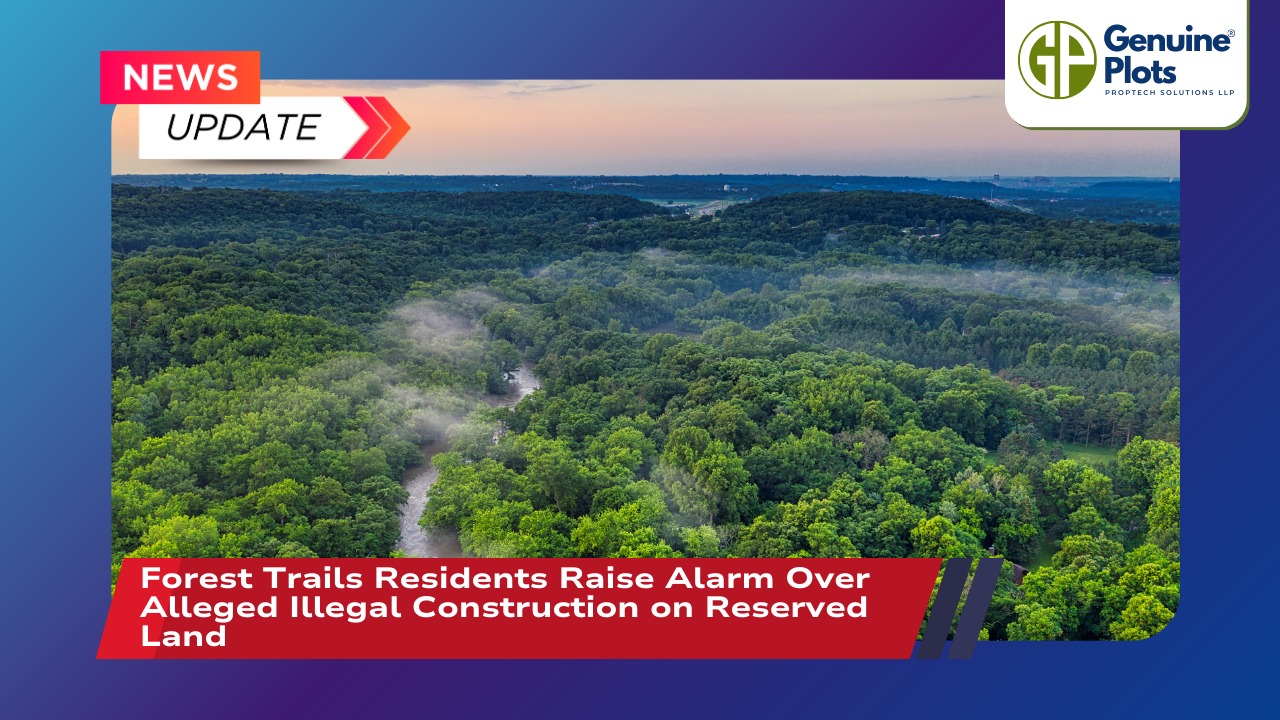
Residents of Bhugaon's Forest Trails Township have expressed grave concerns about what they see as unlawful construction occurring on property designated as an (NDZ) No-Development Zone.
What the Residents Are Saying
According to the Forest Trails Welfare Association (FTWA), heavy machinery and construction materials have been transported into the area despite clear restrictions on development. The land in question falls under the Bhugaon Development Plan (DP), which designates portions of the area as Forest, Bio-Diversity Park (BDP), or No-Development Zone.
Residents argue that:
- A truckload of red soil was dumped on the NDZ land.
- This activity happened near the Daffodil building within the township.
- The work was halted only after residents confronted the workers.
- FTWA had already filed an official complaint with PMRDA in December 2020 regarding earlier attempts at construction.
Reserved Land Must Not Be Altered
Under the Bhugaon DP, certain open spaces are meant to be preserved as natural buffers, ensuring sustainable development. Residents emphasise that any alteration— even levelling land or dumping soil— can permanently damage the area’s ecology.
The concern is not only environmental. Residents also worry that:
- Unauthorised construction may set a dangerous precedent.
- Builders may later claim that “work has already begun” to justify future permissions.
- PMRDA’s alleged inaction could undermine public trust in planning authorities.
What Paranjape Builders Have Explained
Representatives of Paranjape Schemes have clarified that:
- The land belongs to the builder, but as per the Development Plan, it is officially classified as open land.
- A compound wall has been constructed around the bungalow plots to protect the property.
- The soil-filled area was cleaned solely for maintenance, and no construction has been carried out.
- They claim they have complied with the DP and assert that no development work has violated the law.
PMRDA’s Position
PMRDA officials have stated that:
- They will investigate the issue raised by residents.
- Any construction in the No-Development Zone is strictly prohibited.
- Action will be taken if any violation is confirmed.
However, residents argue that despite multiple complaints over the years, no visible steps have been taken to prevent further attempts at altering the land.
Why This Issue Matters
Bhugaon lies on the outskirts of Pune and is part of a region rich in biodiversity. Illegal hill cutting, soil dumping, and construction have long-term effects such as:
- Soil erosion
- Change in natural drainage patterns
- Loss of green cover
- Increased environmental vulnerability
Residents believe that protecting these buffer zones is essential for the ecological health of Pune’s western corridor.
26 Booked in ₹33-Crore Illegal Sale of Animal Husbandry Land in Tathawade

Police have registered a case against 26 people, including a sub-registrar, for allegedly orchestrating the illegal sale of 15 acres of government-owned land belonging to the Animal Husbandry Department (AHD) in Tathawade for ₹33 crore.
According to officials, the accused wrongfully projected the disputed 6.32-hectare land as their private property by using an outdated 2023 7/12 extract. However, the updated records clearly show that AHD has been the true owner since 1945-1946, which prohibits its sale.
The buyers, sellers claiming to be “legal heirs,” and sub-registrar Vidya Shankar Bade-Sangale have all been named in the FIR. Investigators say mandatory digital verification was allegedly bypassed to approve the transaction.
AHD officials discovered the scam during a routine inspection and immediately filed a complaint. The Registration Department has suspended the sub-registrar, and the AHD is preparing a civil suit to cancel the sale deed.
Police are probing possible wider collusion and undervaluation, calling the case a “major attempt to convert high-value government land into private property illegally.
Source- Pune Mirror
Maharashtra Eases Land Fragmentation Rules; 60 Lakh Families to Receive Ownership Relief

The Maharashtra government has introduced major reforms to ease land fragmentation restrictions, enabling the legalisation of thousands of small land parcels. This move is expected to benefit 60 lakh families who have struggled for decades to secure legal land ownership due to technical violations under the Fragmentation (Tukdebandi) Act.
1. Key Decision Highlights
- Government eases land fragmentation rules across Maharashtra.
- Around 60 lakh families (nearly three crore individuals) are to gain clarity on legal ownership.
- Past land transactions violating fragmentation norms can now be regularised.
- Major administrative relief for small landholders and middle-class families.
2. Removal of Restrictive Remarks on 7/12 Extract
- The remark “transaction against the Fragmentation Act” will be removed from land records.
- This allows previously irregular or small, fragmented plots to be recognised as legal.
- Thousands of landowners will now be able to update ownership entries without obstacles.
3. Time Period of Eligible Transactions
Regularisation applies to deals made between:
- 15 November 1965 and
- October 2024
- Covers decades of informal or partially documented land transactions.
- Mutation entries that were earlier cancelled will be re-evaluated and approved.
4. Areas Where the New Rules Apply
The reform covers multiple planning, urban, and semi-urban regions, including:
- MMRDA, PMRDA, NMRDA areas
- Municipal corporation and council limits
- Residential and commercial zones
- Cantonment board areas
- Non-agricultural (NA) designated zones
- Peri-urban village zones
This ensures both urban and adjoining rural belt families receive benefits.
5. Regularisation of Notarised or Unregistered Land Deals
In the past, notarised agreements rather than official sale deeds were used for a large number of land transactions in Maharashtra. The new process provides relief: circle officers and talathis will help with deed registration.
- At the time of registration, landowners must pay stamp duty.
- Names will be added to the 7/12 extract as legitimate occupants following registration.
- This gives "gunthewari-style" informal land sales the much-needed recognition they deserve.
6. Effect on Transfer and Ownership Rights
All prior limitations on sale, transfer, or redevelopment will be lifted after regularisation is finished.
Full legal rights will be granted to owners, allowing:
- Property sale
- Lending money through mortgages
- Permissions for redevelopment
- Land will become legally tradable and have a more distinct market value.
7. Part of a Larger Policy Reversal
The state’s decision is linked to broader amendments to the Fragmentation Act:
- The Fragmentation Act was relaxed or repealed in urban and NA areas.
- Plots up to 1 guntha (1,089 sq ft) created before 1 January 2025 can be legalised.
- No penalty or regularisation fee to be charged — the process is free of cost.
- A state-level committee is preparing a Standard Operating Procedure (SOP) for implementation.
Mundhwa Land Fraud Case Company Accused of Creating Fake ₹147-Crore Payment Letter

A company named Amadea Enterprises LLP is accused of using forged documents in a land deal involving a 40-acre plot in Mundhwa, Pune.
The controversy mainly revolves around a letter claiming a ₹147-crore payment, which authorities suspect is fake.
Type of Land Involved
The land is classified as Inam Class 2F land, which generally means:
- It is government-owned.
- It cannot be bought or sold freely.
- Extra legal permissions are required for any transfer.
What Authorities Are Investigating
- Whether the premium payment letter (nazrana) was forged.
- Whether government rules for stamp duty, tax, and approval were bypassed.
- Whether government officials helped in any irregularities.
- A tehsildar linked to the paperwork has been suspended.
Why the Deal Became Controversial
- If the payment letter is fake, it means the company may have claimed ownership without actual payment.
- Authorities say a stamp duty waiver was wrongly claimed through an incorrect Letter of Intent.
- Full stamp duty + penalty is now being demanded from the company.
Actions Currently Taken
- FIR registered.
- Revenue and stamp duty departments are reviewing documents.
- A high-level committee is investigating whether rules were bypassed.
- Authorities are checking if any fraud or forgery occurred.
Viral Highway Map Between Chhatrapati Sambhajinagar and Pune Sparks Land Purchase Controversy

A leaked map of a proposed new highway between Chhatrapati Sambhajinagar, formerly Aurangabad, and Pune has set off a wave of speculation, real-estate activity and outrage among farmers. Before the government made any announcement officially, the leaked map went viral on social media and stirred controversy over land deals apparently operated by those with insider information.
Unreleased Map Triggers Real-Estate Rush
The viral map purportedly shows the alignment of a yet-to-be-announced highway project. Local reports say there has been a sudden rush in buying plots of land along the supposed alignment since its circulation. Local property agents and investors have been actively acquiring land parcels in anticipation of a massive increase in land value once the highway project is officially declared.
In the meantime, many farmers, unaware of their ancestral lands falling under the scope of the project, have begun selling at relatively low prices — a move likely to result in major financial losses in case the highway indeed passes through their region.
Questions Over the Leak
Sources say that only three government agencies — the surveying agency, the concerned state department, and NHAI — had access to the route map. The fact that this map has surfaced in the open market raises many questions on how this sensitive piece of information was leaked and who benefits from it.
The leak has sparked calls by local activists and opposition politicians for an investigation.
Farmers Demand Transparency
Farmers' associations have been pressing the government to make the compensation policy clear and publish the official highway alignment as soon as possible. They said the absence of such information makes for a selective playing field where only those with access to insider details can gain.
"Ordinary farmers are selling their land in good faith, without knowing that within months, the value of the land would increase. This is exploitation in plain sight," said a local farmers' union representative.
Authorities Under Pressure
Officials have not confirmed whether this viral map is indeed the actual alignment of the proposed highway. It is believed, however, that the MSIDC is working on a preliminary survey for the project. Senior government sources say no official route has been decided upon yet, and public notification would follow only after technical and environmental clearances.
Despite these assurances, speculative buying is unabated, and land prices in some talukas between Chhatrapati Sambhajinagar and Pune have witnessed steep hikes.
Call for Accountability
Opposition leaders and civic activists are demanding that the state government order an investigation into the leak to identify the culprits and protect farmers from being short-changed. Experts say if the issue is not addressed promptly, it may shake the confidence of the public in any future infrastructure projects. The leaked map, meanwhile, has turned the still-unannounced highway into a flashpoint of land speculation, political blame, and rural anxiety — well before asphalt has even been laid.
Registry Is Not Ownership Anymore: New 2025 Land Rules for Property Ownership

Starting in 2025, property registration alone will no longer prove ownership of land or property in India. Under the new land rules, completing the mutation (Dakhil Kharij) process after registration is now mandatory to be legally recognized as the owner.
What the New Rule Means
Earlier, property buyers believed that once the sale deed was registered, ownership was transferred.
Now, registration is only the first step.
Ownership is confirmed only after the property is mutated in the buyer’s name in the government land records.
Purpose of the Rule
- To prevent fraud and disputes where land remains in the seller’s name despite a sale deed.
- To ensure that government land records match the actual ownership details.
- To make property transactions transparent, traceable, and legally verified.
Steps to Become a Legal Owner
1. Register the property and pay stamp duty and registration fees.
2. Apply for mutation (Dakhil Kharij) at the local revenue or municipal office (or online if available).
3. Submit documents like the sale deed, ID proof, and tax receipts.
4. Once approved, your name is entered into official land records, confirming full ownership.
Why Mutation Is Important
Only the person whose name appears in government land records is considered the legal owner.
Mutation is required for:
- Selling or transferring property
- Applying for home loans
- Receiving government compensation or subsidies
Without mutation, ownership disputes or loan rejections may occur.
Government’s Goal
- To create a digitally integrated and fraud-free land record system.
- To ensure that every registered property is automatically reflected in land records with correct ownership details.
Recent Posts
Tags
Bhunaksha,
genuine plots,
Land For Sale,
Maharashtra Bhunaksha,
plots for sale,
Gunthewari,
Gunthewari Land,
Gunthewari Rules,
Extract Documents,
Plots and Lands,
Saat Baara,
Extract Saat,
Baara Utara,
Jamabandi,
property tax payments,
Gram Panchayat,
lower prices,
non-agricultural land,
Lower Investment Cost,
Gram Panchayat lands,
Fresh Land Settlements,
Growing demand,
affordable homes,
genuine p,
legal Land,
bungalow plots,
Konkan,
Maharashtra,
Purandar,
Pune,
Karnataka,
Bangalore,
Farm Land,
Kolkata,
Rajarhat,
Indore,
Chhatrapati Sambhajinagar,
Aurangabad,
Mundhwa,
Agricultural Land,
Farmhouse Plot,
Rules And Penalties,
Residential Plots,
NA PLots,
Residential NA Plots,
Commercial NA Plots,
Animal Husbandry Land,
Tathawade,
Vahivat Land Maps,
Vahivat,
Indian Land Records,
Ownership Rights,
Red zone,
PCMC,
Dehu Road,
Land Registration Rules,
Land Investing,
Infrastructure Growth,
Land Ownership,
Land Encroachment,
Panshet Dam,
Varasgaon Dam,
Verified Land,
Plot For Sale,
Land Investment,
Verified Plots,
Land Acquisiton,
Hydrological Survey,
Invest In Land,
Verified Land Plots,
Panshet,
Khadakwasla,
Land Rules,
Dakhil Kharij,
Land Registry,
Property Onwership,
Clean Title Check List,
Property Verification,
Digital Registry,
Farm Plots,
Agro Property,
Land Value Growth,
Urban Expansion,
Senapati Bapat Road,
Registered Land,
Agricultral Plot,
Purandar Airport,
Safe Investment,
Secure Property,
Plot Buyers,
Approved Plots,
Land ROI,
NA Approved Plots,
NA Land,
Welspun One,
Logistic Park,
Talegaon,
PMC Bharat Mandapam,
Urban Development,
Lohgaon,
Close To Nature,
Gated Community Plots,
Buy Land VS Gold Investment,
NRI Investment,
Future Ready Living,
Trusted Plots,
Plot Investment,
Authentic Land,
Safe Land Buying,
Mumbai,
Premium Plots,
MMR Land Investment,
MMR Infrastructure,
Metro Connectivity,
Plots in Mahabaleshwar hill station investment,
Mahabaleshwar land prices and future growth,
Scenic residential plots in Mahabaleshwar,
Mumbai 3.0,
Mumbai 3.0 vs Mumbai 2.0,
Mumbai property investment,
Real estate investment in Mumbai,
Upcoming residential projects in Mumbai,
CIDCO plot auctions,
CIDCO auction Navi Mumbai,
Upcoming CIDCO plot auctions 2026,
CIDCO land auction dates,
Navi Mumbai plot auctions,
CIDCO plots in Navi Mumbai,
CIDCO plots in Kharghar,
CIDCO plots in Ulwe,
NMIA investment opportunities,
Mumbai 3.0 plotted development,
Mumbai 3.0 real estate,
Plots in Mumbai 3.0,
Land investment in Maharashtra,
Residential plots near Mumbai,
Land appreciation in Mumbai 3.0,
Residential land for sale in Mumbai 3.0,
Altamura NA Plots,
Altamura Nadar City,
NA Plots in Nadar City,
Nadar City Plots,
Plots in Nadar City,
YEIDA plots,
YEIDA plots near Noida Airport,
Noida Airport plots,
Jewar Airport investment,
Yamuna Expressway plots,
YEIDA plot scheme 2026,
Noida Airport real estate,
Zepto,
Zepto effect,
D2C brands India,
Urban consumer trends,
Marketplace evolution,
Urban infrastructure growth,
YEIDA Residential Plot Scheme,
Yamuna Expressway Plot Scheme,
YEIDA Residential Plots,
Yamuna Expressway Authority,
Noida Investment,
Residential Plots in Lucknow,
LDA Plots in Lucknow,
Lucknow Real Estate,
LDA Approved Plots,
Plots for Sale in Lucknow,
Lucknow Property Investment,
Land Investment in Lucknow,
Residential Land in Lucknow,
Buy Plot in Lucknow,
Lucknow Development Authority,
Maharashtra Fragmentation Law 2025,
Fragmentation Act Maharashtra,
Maharashtra land law update 2025,
Maharashtra land reforms 2025,
Land subdivision rules Maharashtra,
Maharashtra agriculture land purchase rules,
Agricultural land purchase restrictions Maharashtra,
Can non-farmers buy agricultural land in Maharashtra,
NA conversion process Maharashtra,
Collector permission for land purchase,
farmland prices in Nagpur,
agricultural land price in Nagpur per acre,
farmland cost in Nagpur Maharashtra,
Nagpur agricultural land investment,
per acre agricultural land rate in Nagpur,
Tukdebandi Law Maharashtra,
Maharashtra Fragmentation Act update,
Land subdivision law Maharashtra,
Agricultural land division Maharashtra,
Maharashtra land reform ordinance,
Plot registration Maharashtra,
Farmland prices Nagpur,
Nagpur agricultural land rates,
Farmland per acre Maharashtra,
Agricultural land price Nagpur,
Farm land cost Nagpur,
Nagpur real estate trends,
Land investment Nagpur,
Avani Farms,
Avani Farms Pune,
Farmland near Pune,
Farm plots for sale,
Agricultural land investment,
Gated farmland near Pune,
NRI agricultural land rules India,
Can NRI buy agricultural land in India,
FEMA rules for NRI property purchase,
RBI guidelines for NRI land investment,
NRI farmland investment India,
Agricultural land purchase by NRI,
Maharashtra Fragmentation Act,
Minimum plot size in Maharashtra,
Guntha rules Maharashtra,
Agricultural land division rules,
Minimum land area for sale in Maharashtra,
Legal plot size in guntha,
Guntha conversion rules,
NRI land purchase in India,
Can NRIs buy agricultural land in India,
NRI property investment India,
NRI buying residential land,
NRI real estate guidelines India,
Investment tips for NRIs in India,
Mutation Entry Process,
Land Mutation in India,
Property Mutation Process,
Land Ownership Transfer,
1 guntha na plot prices in pune 2026,
1 guntha plot price in pune,
na plots in pune,
residential na plots pune,
guntha plot rate in pune,
na plot investment in pune,
plots near purandar airport,
1 Acre Land Price in Pune,
Pune Land Rates 2025,
Pune Land Price 2026,
Pune Acre Land Cost,
Land Value Pune,
Agricultural Land Price Pune,
gated community plots in Hinjewadi,
Hinjewadi plots for sale,
residential plots in Hinjewadi Pune,
premium plots in Hinjewadi,
plots near Rajiv Gandhi Infotech Park,
land for sale in Hinjewadi Pune,
Pune property investment,
plots for sale in Pune below 5 lakhs,
Pune rural land investment,
gated plotting projects Pune,
MIDC growth corridor plots,
Residential plots for sale in Hinjewadi,
Plots in Hinjewadi Pune,
Land for sale in Hinjewadi,
Residential NA plots Hinjewadi,
Hinjewadi real estate trends 2026,
Nashik land investment,
Trimbakeshwar land for sale,
Simhastha Kumbh 2026,
Simhastha Kumbh 2027 real estate impact,
Trimbakeshwar property investment,
Land appreciation in Nashik,
plots for sale in pune,
types of plots in pune,
residential plots in pune,
agricultural land in pune,
villa plots in pune,
NRI agricultural land purchase India,
NRI property investment in India,
Agricultural land rules for NRIs,
NRI real estate investment India,
NA plot meaning,
what is NA land,
NA land in Maharashtra,
land investment guide,
NRI agricultural land in Telangana,
Telangana land laws for NRI,
Telangana real estate laws,
NRI investment guide Telangana,
Legal compliance for NRI property,
NRI farmhouse purchase India,
RBI guidelines for NRI property,
NRI land buying rules,
Godham Eco Village,
Godham Eco Village for NRIs,
NRI land investment in India,
Investment plots for NRIs,
Secure land investment India,
NRI property buying guide,
plots in Pune,
NRI buying property in India,
NRI guide to buying land in Pune,
NRI land investment in Pune,
NRI property documents checklist,
Maharashtra land reform 2025,
Maharashtra land laws update,
Agricultural land rules in Maharashtra,
Buying agricultural land in Maharashtra,
Non-agricultural land conversion Maharashtra,
Maharashtra agricultural land rules 2024,
agricultural land purchase in Maharashtra,
non agriculturist land purchase rules,
who can buy agricultural land in Maharashtra,
Maharashtra land laws for non farmers,
Guntha based land rules,
Minimum guntha rule Maharashtra,
Maharashtra land laws,
Maharashtra agricultural land laws,
farmland investment Maharashtra,
buying farmland legally in Maharashtra,
NA conversion rules Maharashtra,
agricultural land eligibility criteria,
Property Mutation in India,
Land Record Update,
Revenue Records,
Property Ownership Transfer,
Mutation of Property,
Farmhouse Plots Near Pune,
NRI Investment in Pune,
Pune Real Estate,
Plots for Sale Near Pune,
Luxury Farmhouse Plots,
Pune plot scams,
Plot buying checklist,
Legal verification for plots,
NA plot verification,
Plot buying tips Pune,
Godrej Properties,
Evora Estate Panipat,
Luxury plots in Panipat,
Premium land investment,
Residential plots in Panipat,
Lodha Developers,
Lodha Developers Q3 acquisition,
Lodha land parcels Q3,
Indian real estate news,
New residential projects India,
Real estate investment news,
Premium housing projects,
Srijan Group,
Kolkata Tech Park,
Commercial Real Estate,
Real Estate Investment,
Real Estate Deal News,
NRI investment in India,
NRI land investment,
Plots for sale in India,
NRI property investment,
Can NRI buy residential plot in India,
NRI land purchase rules,
Residential plots for NRIs,
NRI real estate investment,
NRIs buying property in India,
Can NRIs buy plots in India 2026,
RBI rules for NRI property purchase,
NRI land investment rules,
MMR 3.0,
MMR real estate 2026,
Mumbai real estate market,
Navi Mumbai investment,
Thane property market,
Mumbai property trends 2026,
Land investment in MMR,
Mumbai smart city project,
Korea Mumbai partnership,
MMRDA infrastructure projects,
Korean investment in India,
MMR GDP growth,
MMR economic roadmap 2030,
Mumbai real estate,
Public private partnership projects Mumbai,
Investment opportunities in MMR,
Mumbai Metropolitan Region,
Mumbai urban development,
MMR 2047 vision,
Mumbai infrastructure projects,
Navi Mumbai development,
Goa property investment,
Invest in Goa 2026,
Goa real estate market 2026,
Best places to invest in Goa,
North Goa property,
Property appreciation in Goa,
Goa plots for sale,
Commercial property in Goa,
Buy property in Goa,
YEIDA plots 2026,
Residential plots in YEIDA,
YEIDA new scheme update,
Plots near Noida International Airport,
Yamuna Expressway Authority plots,
YEIDA housing scheme details,
Lucknow land investment,
Property in Lucknow,
Buy plots in Lucknow,
Nashik plots for sale,
Kumbh Mela 2026 Nashik,
Land investment in Nashik,
Nashik property market 2026,
Plots near Kumbh Mela Nashik,
Residential plots in Nashik,
Upcoming projects in Nashik,
Property appreciation in Nashik,
Maharashtra land investment,
Nashik Kumbh Mela 2026,
Kumbh Mela investment opportunities,
Infrastructure development in Nashik,
Plots near Nashik Kumbh Mela,
High ROI land investment,
MIHAN,
MIHAN Nagpur,
Nagpur Real Estate,
Agricultural Land Nagpur,
Nagpur Property,
Plots Near In MIHAN,
Pune residential plots,
best areas to buy plots in Pune,
Pune land investment,
investment plots in Pune,
buy land in Pune,
real estate investment in Pune,
Godrej Plots Doddaballapur,
Doddaballapur plots for sale,
Plots in North Bangalore,
Godrej Properties plots,
Residential plots in Doddaballapur,
Investment plots near Bangalore,
Gated community plots Bangalore,
Premium plots in Doddaballapur,
plots in Mahabaleshwar,
Mahabaleshwar villa plots,
farmhouse plots in Mahabaleshwar,
land for sale in Mahabaleshwar,
bungalow plots in Mahabaleshwar,
hill station property investment,
agricultural land in Mahabaleshwar,
premium land in Mahabaleshwar,
Plots in Pune under 3 lakhs for sale,
Budget residential plots near Pune,
Low cost plots near Pune highway connectivity,
plots in Pune under 3 lakhs,
farmland plots near Pune city,
Investment plots near Pune under budget,
Residential land near Pune,
Godrej plots in Pune,
Premium plotted development by Godrej in Pune,
Residential land for sale by Godrej,
Premium plot by Godrej,
Plots for sale in Hadapsar Pune,
Residential plots in Hadapsar,
Investment plots in Hadapsar,
Gated community plots in Hadapsar,
Ready to build plots in Hadapsar,
1 Guntha plot in Pune,
1 Guntha plot in Pune for sale,
1 Guntha plots near Pune city,
Residential 1 Guntha land in Pune,
Clear title 1 Guntha plot in Pune,
1 guntha plot price in village,
village plot rate per guntha,
affordable 1 guntha land in rural area,
residential plot in village Pune,
farmland plot price per guntha,
Residential 1 Guntha plot near Pune city,
Investment plots in Pune 1 Guntha,
Clear title 1 Guntha land in Pune,
Agricultural 1 Guntha plot near Pune,
1 Guntha plot in Pune Katraj for sale,
Residential plot in Katraj Pune 1 Guntha,
Katraj Pune land for home construction,
1 Guntha NA plot in Katraj Pune,
Pune Katraj plot near highway connectivity,
Gated plot project in Katraj Pune,
NA plots in Pune under 10 lakhs,
Affordable NA plots near Pune city,
NA residential plots in Pune,
NA approved plots in Pune under 10 lakhs,
Investment plots in Pune under 10 lakhs,
Residential NA plots near Pune highway,
Best plots in Pune below 10 lakhs,
Premium villa plots in Pune,
Residential villa plots in Pune near city outskirts,
Luxury villa plots in Pune,
Gated villa plot project in Pune,
Villa plot site visit in Pune,
NA plots in Pimpri Chinchwad for sale,
Residential NA plots in PCMC area,
NA approved plots in Pimpri Chinchwad,
NA land with clear title in PCMC,
NA plots near Pune Mumbai Highway PCMC,
Godrej Villa Plots Doddaballapur,
Godrej plotted development Bangalore,
villa plots in North Bangalore,
premium villa plots Bangalore,
Godrej Properties plots Bangalore,
Brigade Plots Malur,
Brigade Malur plots,
plots in Malur East Bangalore,
investment plots in East Bangalore,
residential plots in Malur Bangalore,
Brigade Group plots Bangalore,
land investment in East Bangalore,
gated community plots in Malur,
prestige plots devanahalli,
prestige plots in devanahalli bangalore,
plots for sale in devanahalli,
prestige plots investment,
premium plots in devanahalli,
residential plots near kempegowda airport,
What is NA plot in real estate,
NA land meaning in property,
NA approved plotsDifference between NA and agricultural land,
Buying NA plots in Maharashtra,
NA plot vs agricultural land,
Plot prices in Mysore,
Mysore infrastructure projects,
Mysore property investment,
Land investment in Mysore,
Plot investment opportunities,
land buying guide in goa,
buy land in goa,
plots for sale in goa,
legal process to buy land in goa,
property in goa,
residential plots in goa,
Nashik Simhastha Kumbh Mela 2026,
Sadhugram expansion Nashik,
Maharashtra Kumbh Mela planning,
Nashik Kumbh Mela preparations,
tourism development in Nashik,
plots in Nagpur,
Nagpur plot investment,
land for sale in Nagpur,
residential plots in Nagpur,
golden rules before buying plots in Nagpur,
Nagpur land investment,
plot investment in Nagpur,
land investment in Nagpur,
plots for sale in Nagpur,
best areas to buy plots in Nagpur,
buying plots in Nagpur,
plot purchase checklist,
legal checklist for buying land,
documents required for plot purchase,
NA plots in Nagpur,
Tattvana,
Tattvana in Kamshet,
Moregaon Farmland Estates,
farmland investment Pune,
agricultural land investment,,
farmland for sale near Pune,
farm plots in Pune,
gated farmland projects,
agricultural plots Maharashtra,
open plot vs NA plot,
difference between open plot and NA plot,
what is NA plot in India,
open plot meaning in real estate,
NA land vs agricultural land,
residential NA plots benefits,
land investment in India,
buying NA plot vs open land,
capital gains on agricultural land,
rural vs urban agricultural land tax,
agricultural land tax rules India,
capital gains tax India property,
is agricultural land taxable,
rural agricultural land exemption,
urban agricultural land tax India,
Runwal Enterprises Alibaug township,
Alibaug real estate,
coastal real estate India,
township projects in Alibaug,
luxury properties in Alibaug,
Mumbai weekend homes investment,
Alibaug property investment,
isprava south goa,
ultra luxury villas in goa,
south goa real estate,
luxury homes in goa,
isprava projects goa,
premium villas in south goa,
land investment advisory services,
secure land investment,
real estate advisory services,
verified land deals,
investment plots near Pune,
land buying guide India,,
#KanpurRealEstate,
#KDAPlots,
#KanpurProperty,
#RealEstateKanpur,
#PropertyTrends,
Gokul Plots investment,,
real estate investment Gokul,,
plots with high appreciation potential,
smart land investment strategies,
plots for sale in North Bangalore,
land investment Bangalore,,
emerging areas in North Bangalore,
residential plots Bangalore,,
Bangalore real estate investment,,
North Bangalore property trends,,
plots near airport Bangalore,,
HUDA plots in Gurgaon,
HUDA plots in Faridabad,
residential plots Haryana,
HUDA approved plots,
plots for sale in Gurgaon,
plots in Faridabad investment,
Prestige Marigold plots,,
Bangalore plotted developments,
land investment Bangalore,
best plots in North Bangalore,
#PlotsForSaleInNellore,
#NelloreRealEstate,
#NellorePlots,
#RealEstate2026,
#PropertyInvestment,
#NelloreProperty,
#AndhraPradeshRealEstate,
GMADA E Auction 2026,
GMADA plots Mohali,
plots in Mohali for sale,
GMADA Mohali auction process,
buy plots in Mohali,
Punjab property investment,
GMADA scheme 2026,
Mohali real estate,
HSVP plots 2026,
HSVP plot investment,
HSVP plots Haryana,
land investment benefits,
residential plots investment,
government approved plots,
buy plot in New Chandigarh,
flats in New Chandigarh,
New Chandigarh real estate,
property investment in New Chandigarh,
residential plots in New Chandigarh,
apartments in New Chandigarh,
#WaveCityGhaziabad,
#GhaziabadPlots,
#PlotsInGhaziabad,
#NCRRealEstate,
#RealEstateInvestment,
#ResidentialPlots,
APIIC vacant plots,
APIIC plots for sale,
industrial plots in Andhra Pradesh,
commercial land for MSMEs,
startup investment plots,
APIIC industrial land,
HUDA plots,
HUDA plots investment,
property appreciation,
plot investment benefits,
high return property investment,
land appreciation,
#GDAPlotsInGhaziabad,
#PlotsForSaleInGhaziabad,
#ResidentialPlotsGhaziabad,
#InvestmentPlots,
#RealEstateGhaziabad,
#GDAApprovedPlots,
#BaliProperty,
#PropertyInBali,
#IndiansInBali,
#BaliRealEstate,
#InternationalPropertyInvestment,
buy plots in Sarjapur Road Bangalore,
plots in Sarjapur Road,
residential plots in Sarjapur Road,
land for sale in Sarjapur Road Bangalore,
investment plots in Bangalore,
plots near IT corridor Bangalore,
how Indians can buy property in Bali,
buy property in Bali for Indians,
Bali property investment,
property in Bali for Indian buyers,
Bali real estate guide,
foreign property investment Bali,
legal checks before buying property in Bali,
Indians invest in Bali property,
due diligence for Bali property,
Bali real estate for Indians,
Bali property legal verification,
verified farmland plots,
100% verified farmland plots,
farmland investment India,
legal farmland plots,
farmland plots for sale,
Konkan land investment,,
high-growth corridors Maharashtra,
land investment 2026,
plots for sale in Maharashtra,



