Prev Post
How to maximize Returns through Pune's Land DevelopmentWhy is the 7/12 Extract Document vital for property owners in Maharashtra
The 7/12 extract is an important document providing detailed information about a specific land in Maharashtra, India.
It includes essential details such as the survey number, area, and the current owner's name. This extract is actually a combination of two forms: Form 7 and Form 12. Form 7 contains information about the landowner and their rights. It covers details such as the owner's name and any rights or claims they may have on the land. On the other hand, Form 12 provides specific information about the type of land and its designated usage.
This helps determine if the land is meant for residential, commercial, agricultural, or other specific purposes.
Saat- Baara- Utara
In Maharashtra, the regional term for the 7/12 extract document is "Saat-Baara-Utara." It is maintained by the revenue department of the state for the purpose of tax collection. The document is usually issued by the Tehsildar or the relevant land authority.
If someone wishes to obtain a copy of the 7/12 extract, they can pay the official fee. Alternatively, they can file a petition under the Right to Information Act to request a copy of the document.
Importance of 7/12 Extract Document
The 7/12 Extract Document serves various important purposes related to land ownership and transactions in Maharashtra:
- It acts as proof of ownership, providing concrete evidence of who owns the land. This is crucial when dealing with property-related matters.
- It contains valuable information about the land type and the permitted activities on the land, such as whether it is designated for residential, commercial, agricultural, or other specific purposes. This helps individuals make informed decisions about land use and potential investments.
- The 7/12 Extract Document is often required during property sale transactions, as it verifies the ownership and details of the sold land. It is also vital when applying for bank loans, as it provides the necessary information to assess the land's value and potential risks. The document can be used as evidence to resolve land ownership or usage disputes in civil litigation cases.
- The extract is a valuable source of agricultural information, as it contains details about the land's agricultural potential, including its classification and history of cultivation.
To obtain the 7/12 Utara online in Maharashtra, follow these steps:
- Visit the official MahaBhulekh website, the land record portal of Maharashtra.
- Follow the provided instructions to access and download the required 7/12 extract online.
Step 1- Visit the bhulekh.mahabhumi.gov.in
Step 2 -Select the relevant section from the homepage based on your location, such as Amravati, Aurangabad, Konkan, Nagpur, Nashik, or Pune. Once you have chosen the appropriate section, click on the "Go" button.
Step 3-After accessing the specific section on the MahaBhulekh website, navigate to the 7/12 option. From there, you must select the district, taluka, and village corresponding to the land you are interested in.
Step 4- To search for the 7/12 extract, use the Survey Number, First Name, Middle Name, Last Name, or Full Name, and fill in the corresponding details. Required details will be displayed like this
Jadid in Land Terminology: A Closer Look at Fresh Land Settlements
Land transactions can be like a puzzle; understanding the terminology is the key to unlocking its secrets. One term you might come across is "Jadid," which means new in the Indian land language. Let Genuine Plots guide you through the nuances and help you understand the various types of land settlements.
Taxguru
Understanding "Jadid": What Does It Mean?
The word "Jadid" translates to new, and in the realm of Indian land terminologies, it signifies a fresh or entirely revised settlement – a Jadid settlement. This term is crucial in keeping land records updated and legally sound, forming the bedrock for clear and lawful land transactions.
What is a Jadid Settlement?
A Jadid settlement involves a thorough re-measurement while considering existing land records. Why might we need such a completely revised settlement? Changes in market conditions, unforeseen events, or the necessity to modify terms for mutual benefit can be reasons. Essentially, Jadid settlements ensure land agreements stay relevant and effective over time by providing updated and legally compliant land records.
Banjar Jadid: Another Twist to the Term
There's another phrase in the world of land records - Banjar Jadid. This refers to a new fellow land not cultivated for four consecutive harvests. It's another facet of the term "Jadid" emphasizing the newness or untouched nature of the land.
Differences Between Jadid and Regular Settlements
In the land terminology dictionary, Jadid settlement means a complete revision, while a regular or Kanooni settlement refers to a legal agreement where the previous record is non-existent. In simple terms, Jadid settlements allow parties to adapt to changing market conditions, resolve disputes, and ensure ongoing compliance with legal requirements.
Why Are Jadid Settlements Important?
Picture it as giving your land agreement a fresh coat of paint. Jadid settlements help parties navigate changing circumstances, settle disagreements, and maintain compliance with the law. They pave the way for smooth and sustainable land transactions by providing updated and legally sound records.
With this newfound knowledge, you can confidently navigate the land labyrinth, making informed decisions for a brighter land-owning future. Stay updated on the latest developments in plot properties in Maharashtra by following Genuine Plots.
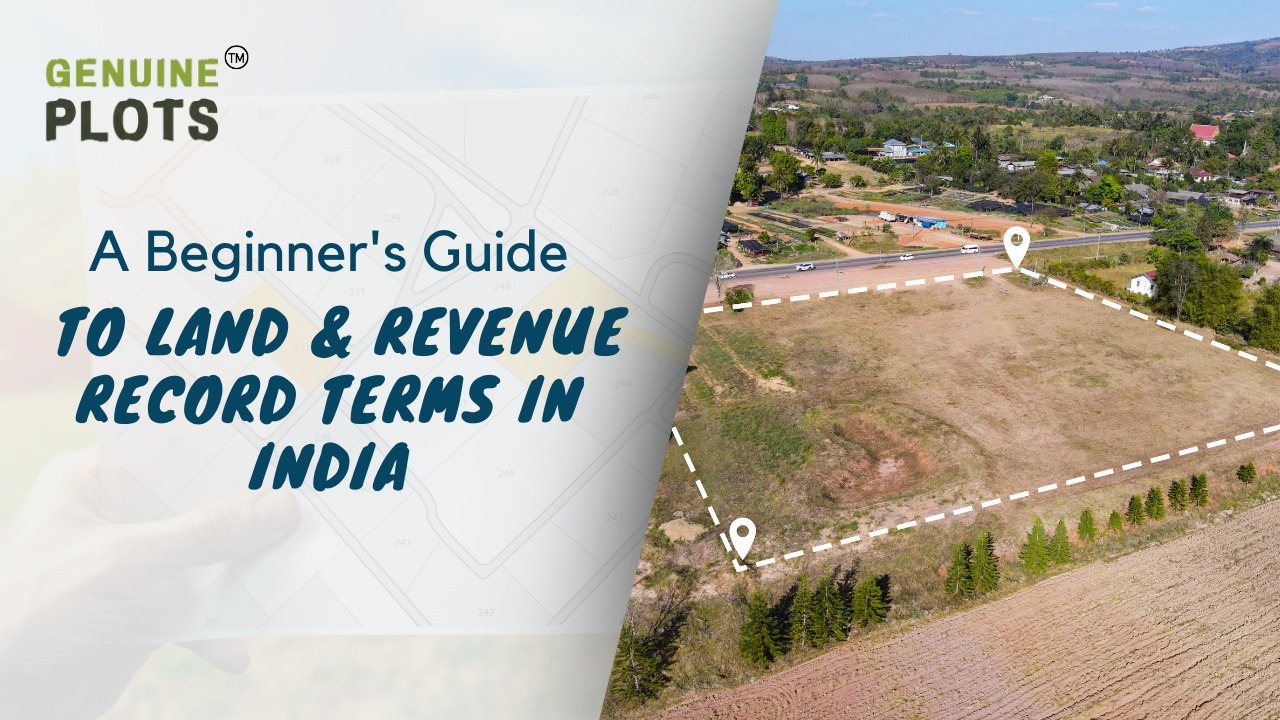
Land transactions can be a labyrinth of confusing terms, especially when checking records online. In this simplified guide, Genuine Plots unravels key terms, empowering you to make informed decisions and ensuring smooth navigation through the world of land transactions. Let's embark on this journey together, where understanding land records becomes as easy as a walk in the park.
Jamabandi
- Jamabandi serves as the Records of Rights (RoR), providing intricate details about land ownership, including information about owners and cultivators.
Nakal
- Nakal is a document that encapsulates all essential information about a piece of land, covering ownership patterns, revenues, and other pertinent details.
Khata
- Khata is a crucial revenue document that assesses a property's size, location, and build-up area. It also pinpoints the individual responsible for property tax payments.
Khasra or DAG Number
- Often referred to as DAG number, Khasra is a unique identifier assigned to a land parcel in a village. In urban areas, it corresponds to the survey number.
Khewat
- Khewat is a number assigned to landowners who collectively own a piece of land. Think of it as an account number granted to various owners of the same parcel.
Mauza
- Mauza is the term used to refer to a village, a significant geographical unit in land records.
Bainama
- Bainama is synonymous with a sale deed, providing a comprehensive transaction record.
Khatauni
- Khatauni acts as a comprehensive account book, detailing all landholdings and their respective landowners.
Patta
- Patta is a record of rights, a document that unveils the name of the legal owner of a piece of land property.
Khudkasht
- This document signifies that the land is cultivated by its owners, not external cultivators.
Embarking on a land transaction journey can be daunting, but armed with these simplified explanations, you'll be better equipped to decode the complexities of land records.
Recent Posts
Tags
Bhunaksha,
genuine plots,
Land For Sale,
Maharashtra Bhunaksha,
plots for sale,
Gunthewari,
Gunthewari Land,
Gunthewari Rules,
Extract Documents,
Plots and Lands,
Saat Baara,
Extract Saat,
Baara Utara,
Jamabandi,
property tax payments,
Gram Panchayat,
lower prices,
non-agricultural land,
Lower Investment Cost,
Gram Panchayat lands,
Fresh Land Settlements,
Growing demand,
affordable homes,
genuine p,
legal Land,
bungalow plots,
Konkan,
Maharashtra,
Purandar,
Pune,
Karnataka,
Bangalore,
Farm Land,
Kolkata,
Rajarhat,
Indore,
Chhatrapati Sambhajinagar,
Aurangabad,
Mundhwa,
Agricultural Land,
Farmhouse Plot,
Rules And Penalties,
Residential Plots,
NA PLots,
Residential NA Plots,
Commercial NA Plots,
Animal Husbandry Land,
Tathawade,
Vahivat Land Maps,
Vahivat,
Indian Land Records,
Ownership Rights,
Red zone,
PCMC,
Dehu Road,
Land Registration Rules,
Land Investing,
Infrastructure Growth,
Land Ownership,
Land Encroachment,
Panshet Dam,
Varasgaon Dam,
Verified Land,
Plot For Sale,
Land Investment,
Verified Plots,
Land Acquisiton,
Hydrological Survey,
Invest In Land,
Verified Land Plots,
Panshet,
Khadakwasla,
Land Rules,
Dakhil Kharij,
Land Registry,
Property Onwership,
Clean Title Check List,
Property Verification,
Digital Registry,
Farm Plots,
Agro Property,
Land Value Growth,
Urban Expansion,
Senapati Bapat Road,
Registered Land,
Agricultral Plot,
Purandar Airport,
Safe Investment,
Secure Property,
Plot Buyers,
Approved Plots,
Land ROI,
NA Approved Plots,
NA Land,
Welspun One,
Logistic Park,
Talegaon,
PMC Bharat Mandapam,
Urban Development,
Lohgaon,
Close To Nature,
Gated Community Plots,
Buy Land VS Gold Investment,
NRI Investment,
Future Ready Living,
Trusted Plots,
Plot Investment,
Authentic Land,
Safe Land Buying,
Mumbai,
Premium Plots,
MMR Land Investment,
MMR Infrastructure,
Metro Connectivity,
Plots in Mahabaleshwar hill station investment,
Mahabaleshwar land prices and future growth,
Scenic residential plots in Mahabaleshwar,
Mumbai 3.0,
Mumbai 3.0 vs Mumbai 2.0,
Mumbai property investment,
Real estate investment in Mumbai,
Upcoming residential projects in Mumbai,
CIDCO plot auctions,
CIDCO auction Navi Mumbai,
Upcoming CIDCO plot auctions 2026,
CIDCO land auction dates,
Navi Mumbai plot auctions,
CIDCO plots in Navi Mumbai,
CIDCO plots in Kharghar,
CIDCO plots in Ulwe,
NMIA investment opportunities,
Mumbai 3.0 plotted development,
Mumbai 3.0 real estate,
Plots in Mumbai 3.0,
Land investment in Maharashtra,
Residential plots near Mumbai,
Land appreciation in Mumbai 3.0,
Residential land for sale in Mumbai 3.0,
Altamura NA Plots,
Altamura Nadar City,
NA Plots in Nadar City,
Nadar City Plots,
Plots in Nadar City,
YEIDA plots,
YEIDA plots near Noida Airport,
Noida Airport plots,
Jewar Airport investment,
Yamuna Expressway plots,
YEIDA plot scheme 2026,
Noida Airport real estate,
Zepto,
Zepto effect,
D2C brands India,
Urban consumer trends,
Marketplace evolution,
Urban infrastructure growth,
YEIDA Residential Plot Scheme,
Yamuna Expressway Plot Scheme,
YEIDA Residential Plots,
Yamuna Expressway Authority,
Noida Investment,
Residential Plots in Lucknow,
LDA Plots in Lucknow,
Lucknow Real Estate,
LDA Approved Plots,
Plots for Sale in Lucknow,
Lucknow Property Investment,
Land Investment in Lucknow,
Residential Land in Lucknow,
Buy Plot in Lucknow,
Lucknow Development Authority,
Maharashtra Fragmentation Law 2025,
Fragmentation Act Maharashtra,
Maharashtra land law update 2025,
Maharashtra land reforms 2025,
Land subdivision rules Maharashtra,
Maharashtra agriculture land purchase rules,
Agricultural land purchase restrictions Maharashtra,
Can non-farmers buy agricultural land in Maharashtra,
NA conversion process Maharashtra,
Collector permission for land purchase,
farmland prices in Nagpur,
agricultural land price in Nagpur per acre,
farmland cost in Nagpur Maharashtra,
Nagpur agricultural land investment,
per acre agricultural land rate in Nagpur,
Tukdebandi Law Maharashtra,
Maharashtra Fragmentation Act update,
Land subdivision law Maharashtra,
Agricultural land division Maharashtra,
Maharashtra land reform ordinance,
Plot registration Maharashtra,
Farmland prices Nagpur,
Nagpur agricultural land rates,
Farmland per acre Maharashtra,
Agricultural land price Nagpur,
Farm land cost Nagpur,
Nagpur real estate trends,
Land investment Nagpur,
Avani Farms,
Avani Farms Pune,
Farmland near Pune,
Farm plots for sale,
Agricultural land investment,
Gated farmland near Pune,
NRI agricultural land rules India,
Can NRI buy agricultural land in India,
FEMA rules for NRI property purchase,
RBI guidelines for NRI land investment,
NRI farmland investment India,
Agricultural land purchase by NRI,
Maharashtra Fragmentation Act,
Minimum plot size in Maharashtra,
Guntha rules Maharashtra,
Agricultural land division rules,
Minimum land area for sale in Maharashtra,
Legal plot size in guntha,
Guntha conversion rules,
NRI land purchase in India,
Can NRIs buy agricultural land in India,
NRI property investment India,
NRI buying residential land,
NRI real estate guidelines India,
Investment tips for NRIs in India,
Mutation Entry Process,
Land Mutation in India,
Property Mutation Process,
Land Ownership Transfer,
1 guntha na plot prices in pune 2026,
1 guntha plot price in pune,
na plots in pune,
residential na plots pune,
guntha plot rate in pune,
na plot investment in pune,
plots near purandar airport,
1 Acre Land Price in Pune,
Pune Land Rates 2025,
Pune Land Price 2026,
Pune Acre Land Cost,
Land Value Pune,
Agricultural Land Price Pune,
gated community plots in Hinjewadi,
Hinjewadi plots for sale,
residential plots in Hinjewadi Pune,
premium plots in Hinjewadi,
plots near Rajiv Gandhi Infotech Park,
land for sale in Hinjewadi Pune,
Pune property investment,
plots for sale in Pune below 5 lakhs,
Pune rural land investment,
gated plotting projects Pune,
MIDC growth corridor plots,
Residential plots for sale in Hinjewadi,
Plots in Hinjewadi Pune,
Land for sale in Hinjewadi,
Residential NA plots Hinjewadi,
Hinjewadi real estate trends 2026,
Nashik land investment,
Trimbakeshwar land for sale,
Simhastha Kumbh 2026,
Simhastha Kumbh 2027 real estate impact,
Trimbakeshwar property investment,
Land appreciation in Nashik,
plots for sale in pune,
types of plots in pune,
residential plots in pune,
agricultural land in pune,
villa plots in pune,
NRI agricultural land purchase India,
NRI property investment in India,
Agricultural land rules for NRIs,
NRI real estate investment India,
NA plot meaning,
what is NA land,
NA land in Maharashtra,
land investment guide,
NRI agricultural land in Telangana,
Telangana land laws for NRI,
Telangana real estate laws,
NRI investment guide Telangana,
Legal compliance for NRI property,
NRI farmhouse purchase India,
RBI guidelines for NRI property,
NRI land buying rules,
Godham Eco Village,
Godham Eco Village for NRIs,
NRI land investment in India,
Investment plots for NRIs,
Secure land investment India,
NRI property buying guide,
plots in Pune,
NRI buying property in India,
NRI guide to buying land in Pune,
NRI land investment in Pune,
NRI property documents checklist,
Maharashtra land reform 2025,
Maharashtra land laws update,
Agricultural land rules in Maharashtra,
Buying agricultural land in Maharashtra,
Non-agricultural land conversion Maharashtra,
Maharashtra agricultural land rules 2024,
agricultural land purchase in Maharashtra,
non agriculturist land purchase rules,
who can buy agricultural land in Maharashtra,
Maharashtra land laws for non farmers,
Guntha based land rules,
Minimum guntha rule Maharashtra,
Maharashtra land laws,
Maharashtra agricultural land laws,
farmland investment Maharashtra,
buying farmland legally in Maharashtra,
NA conversion rules Maharashtra,
agricultural land eligibility criteria,



