Prev Post
Mumbai 3.0 vs Mumbai 2.0 - What's New for Homebuyers & Investors?Upcoming CIDCO plot auctions in Navi Mumbai - Dates, Location & Tips

- What are the upcoming CIDCO plot auctions in Navi Mumbai?
The upcoming CIDCO plot auctions in Navi Mumbai typically include residential, commercial, and mixed-use plots located in key nodes like Kharghar, Ulwe, Kamothe, New Panvel, and Dronagiri. Based on recent cycles, CIDCO plot auction dates usually fall between October–November each year, with announcements made through CIDCO’s official portal. These auctions focus on plots close to the upcoming Navi Mumbai International Airport, making them sought after among investors.
- What is included in a CIDCO plot auction in Navi Mumbai?
A CIDCO plot auction in Navi Mumbai includes leasehold plots offered through an online e-auction system. These include:
Residential plots
Commercial plots
Mixed-use plots
All plots are auctioned on an “as is where is” basis, and the highest eligible bidder secures the allotment. These CIDCO plots for sale in Navi Mumbai fall in rapidly developing nodes with strong infrastructure upgrades.
- What are the latest CIDCO plot auction dates?
Although CIDCO releases dates officially through its portal, earlier auction rounds were scheduled around mid-October 2025, with results announced within 1–2 days. New CIDCO plot auction dates are expected to follow a similar pattern for the 2025–2026 cycle. Buyers can track real-time updates through the CIDCO auction website.
- Where are the CIDCO land auction locations in Navi Mumbai?
The CIDCO land auction Navi Mumbai typically features plots in top-demand and emerging nodes such as:
Kharghar
Ulwe
Kamothe
New Panvel
Dronagiri
These nodes offer excellent connectivity and many of the CIDCO e-auction plots Navi Mumbai lie close to the Navi Mumbai International Airport influence zone, increasing future value potential.
- How does the CIDCO e-auction process work?
The CIDCO e-auction plots in Navi Mumbai process is completely online. Buyers must:
Register on the CIDCO e-auction portal
Upload all required documents (PAN, Aadhaar, partnership deed, company papers)
Pay the Earnest Money Deposit (EMD) within the deadline
Participate in the live online bidding during the allotted window
This digital format ensures transparency and equal opportunity for all participants.
- What documents do I need for a CIDCO plot auction?
To participate in CIDCO plot auctions in Navi Mumbai, buyers need:
PAN Card
Aadhaar Card
Digital Signature Certificate
Entity documents (if bidding as a firm/company)
Ensuring these are ready in advance increases the chances of successful participation, especially since CIDCO plot auction dates are strict and time-bound.
- How should I prepare to bid on CIDCO plots for sale in Navi Mumbai?
Preparation tips include:
Inspect the plot beforehand, especially in nodes like Kharghar, Ulwe, or Dronagiri.
Study reserve prices and past bid trends (previous bids ranged approx. ₹48 lakh–₹97 lakh).
Plan your bidding strategy based on budget and competition.
Monitor official updates regularly, as new auction booklets or extended dates are often announced.
A well-prepared investor stands a better chance of winning CIDCO plots for sale in Navi Mumbai.
- Why are CIDCO e-auction plots in Navi Mumbai attractive for buyers?
CIDCO e-auction plots Navi Mumbai attract strong demand due to:
Proximity to Navi Mumbai International Airport
Fast infrastructure growth (Metro, MTHL link, coastal road extension)
Lower fraud risk due to CIDCO’s transparent process
High capital appreciation potential in nodes like Ulwe and Dronagiri
This makes the CIDCO land auction Navi Mumbai a preferred choice for long-term investors and developers.
- What types of plots are typically offered in upcoming CIDCO plot auctions?
The upcoming CIDCO plot auctions in Navi Mumbai usually include:
Residential plots suitable for villas, apartments, or townships
Commercial plots ideal for retail, offices, and mixed-use spaces
High-potential plots near airport corridors
These options appeal to both individual buyers and builders looking to invest in CIDCO plots for sale in Navi Mumbai.
Westcon of the Solitaire Group Pays ₹129 Crore to Purchase Almost 10 Acres in Wagholi, Pune
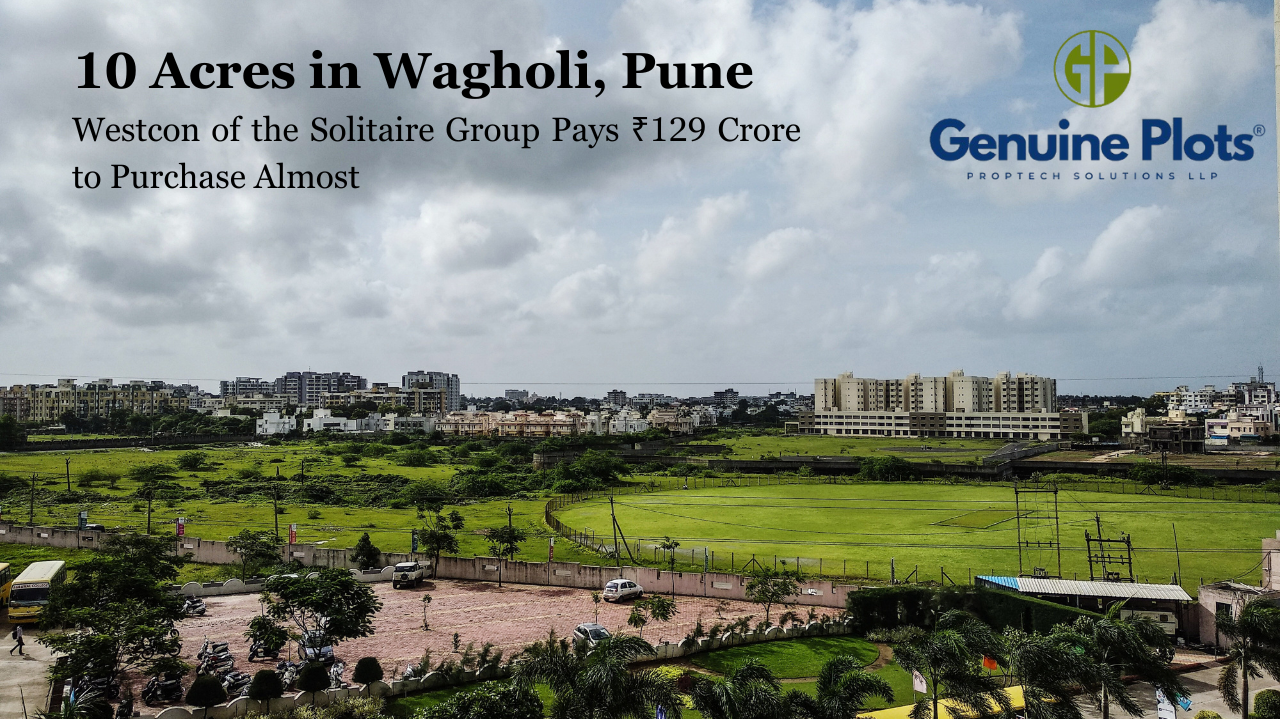
Westcon Spaces Pvt. Ltd., a division of Solitaire Group, has paid more than ₹129 crore for nearly 10 acres (roughly 4 hectares) of land in Wagholi. The acquisition was completed through four separate transactions on February 6, 2025. A 4-acre plot was bought for ₹40 crore, and the largest parcel, which was about 5 acres, was bought for ₹50 crore. For ₹28 crore and ₹11 crore, respectively, two smaller parcels of 0.5 acres were purchased. The premium nature of the location was demonstrated by the several crores in stamp duty payments for all four transactions.
Why Wagholi?
Situated in Pune's quickly expanding northeastern corridor, Wagholi has become a popular residential and business area. Both developers and homebuyers find it appealing due to its close proximity to the Kharadi IT hub, enhanced infrastructure, and improved connectivity.
Significant urban development is taking place in the area, and a number of real estate companies are making large investments to capitalise on the potential for future growth.
This purchase is indicative of a larger pattern of aggressive land banking by leading developers in India's largest cities. More than 2,000 acres were covered by land deals in the top eight urban markets in 2024, up 47% year over year, according to CBRE India. Pune continues to be one of the busiest real estate markets due to migration inflows, infrastructure improvements, and IT-led jobs.
Strategic Move for Solitaire Group
Solitaire Group made a calculated decision to expand the scope of its Pune project portfolio by purchasing the Wagholi land. The large plot of land can accommodate large-scale mixed-use, residential, or commercial projects that would help the organisation achieve its expansion objectives and increase its exposure in high-potential locations.
With this acquisition, the developer is well-positioned to meet the rising demand for quality housing and integrated living spaces in one of Pune’s fastest-evolving neighbourhoods.
Source:Hindustan Times
Maharashtra Makes Tentative Layout Approval Mandatory Before Land Measurement

Pune: The Maharashtra government has made tentative layout approval mandatory prior to any land measurement, which is a major policy change intended to increase transparency and regulation in land transactions.
Implemented by the state's Land Records Department under the direction of Dr. Suhas Diwase, Settlement Commissioner and Director of Land Records, the decision aims to stop unlawful land division, stop unapproved construction, and shield purchasers from deceptive transactions.
The New Process
Any developer or individual requesting land measurement under the updated system must first provide the appropriate authority with a draft layout plan. The proposed division of land, roads, and open spaces will be shown in this plan.
The Land Records Department will complete the required measurement work after receiving the preliminary layout.
After that, the information will be sent to the local planning authority for review and approval.
The revised and approved layout will be entered into the official land records following approval.
This step ensures that no land measurement happens without proper planning permissions, reducing disputes and ensuring that layouts comply with development regulations.
Legal and Planning Framework
It also supports government objectives such as reserving 20% of plots (in layouts over 4 hectares) for low- and very low-income groups, thereby promoting affordable housing.
Benefits of the Rule
Transparency: Buyers can be assured that the land they are purchasing is measured and approved in accordance with legal norms.
Prevention of Fraud: Reduces the chances of illegal plotting or sale of unapproved land.
Clear Demarcation: Accurate measurements prevent future boundary disputes.
Urban Planning Compliance: Ensures layouts meet infrastructure, open space, and road requirements.
Source: Punekar News
.png)
Selling a plot of land can be highly profitable—if done right. Whether you're an investor or an individual owner, these tips will help you get the best value from your land sale:
- Know Your Buyer
Understand who your ideal buyer is—developers, end users, or investors. Tailoring your marketing strategy to match their expectations which will make a huge difference in closing the deal.
- Improve the Visual Appeal
A clean, well-maintained plot creates a positive first impression. Clear debris, trim overgrowth, and, if possible, landscape the area. Even minor improvements can boost perceived value.
- Ensure Accessibility and Utility Readiness
Buyers prefer land with proper road access and available utilities. If your plot lacks these, mention possibilities for easy connections or adjust pricing accordingly.
- Highlight Development Potential
Mention if the plot is zoned for residential, commercial, or industrial use—or if rezoning is possible. Development potential adds investment appeal.
- Set the Right Price
Compare recent sales in your locality to price your land competitively. Avoid overpricing or undervaluing—both can push away serious buyers.
- Market Smartly
Use high-quality photos, drone shots if possible, and clear descriptions across real estate platforms and social media. Visibility and clarity attract more genuine interest.
- Take Expert Help
A real estate agent with land sale experience will advise you on pricing, negotiating, and documents. Their network will introduce you to the best buyers in record time.
Conclusion
Getting maximum value for your land is a matter of getting it in position, showing it off, and pricing it tactically. The effort you make will pay great dividends in acquiring the best value.
Buying a plot of land is a big decision—whether it’s for building your dream home or making a smart investment. But for many, the process can seem confusing. That’s why we’ve created this simple guide to take you through every step—from your first site visit to the final registration of your sale deed.
Step 1: Do Your Research
Start with choosing the right place in Pune. Look for Bhor, Kamshet, or Mulshi, which have good roads, schools, hospitals, and a scope for development. Also, decide on your budget, including hidden costs like stamp duty and registration charges.
Step 2: Site Visit
After shortlisting a couple of choices, visit the plot in person. Observe the area around the road connectivity and ensure that the actual boundaries are the same as on paper. Take photographs or videos so that you can decide later.
Step 3: Legal Checks
This is a very important step. Make sure the seller actually owns the land and that there are no legal problems, like loans or disputes. You should:
Ask for the Encumbrance Certificate (shows if the land has loans or claims)
Check the title documents to confirm legal ownership
Make sure the land use is approved (residential, commercial, etc.)
Step 4: Sign the Agreement to Sell
Once you’re sure everything is clear, the seller will prepare a document called the Agreement to Sell. This paper includes the price, payment schedule, and other terms. You usually pay a token amount (advance) at this stage.
Step 5: Register the Sale Deed
The Sale Deed, the final document that transfers ownership to you. It must be registered at the sub-registrar’s office. To do this, you’ll need:
The signed sale deed
Identity proof (Aadhaar, PAN)
Passport-size photos
Property tax receipts
Encumbrance certificate
You also need to pay stamp duty and registration fees, which vary by state.
Step 6: After Registration
Once registered, update land records (mutation) with your name. After that, you officially own the plot and can begin construction or development.
Secure Your Investment with Genuine Plots
Your trusted partner in plot investments across Pune. From circle rate analysis to ROI calculation, buying, selling, loan guidance, and agri-certificate application, Genuine Plots supports you at every step.

Selling a plot of land can be highly profitable—if done right. Whether you're an investor or an individual owner, these tips will help you get the best value from your land sale:
- Know Your Buyer
Understand who your ideal buyer is—developers, end users, or investors. Tailoring your marketing strategy to match their expectations which will make a huge difference in closing the deal.
- Improve the Visual Appeal
A clean, well-maintained plot creates a positive first impression. Clear debris, trim overgrowth, and, if possible, landscape the area. Even minor improvements can boost perceived value.
- Ensure Accessibility and Utility Readiness
Buyers prefer land with proper road access and available utilities. If your plot lacks these, mention possibilities for easy connections or adjust pricing accordingly.
- Highlight Development Potential
Mention if the plot is zoned for residential, commercial, or industrial use—or if rezoning is possible. Development potential adds investment appeal.
- Set the Right Price
Compare recent sales in your locality to price your land competitively. Avoid overpricing or undervaluing—both can push away serious buyers.
- Market Smartly
Use high-quality photos, drone shots if possible, and clear descriptions across real estate platforms and social media. Visibility and clarity attract more genuine interest.
- Take Expert Help
A real estate agent with land sale experience will advise you on pricing, negotiating, and documents. Their network will introduce you to the best buyers in record time.
Conclusion
Getting maximum value for your land is a matter of getting it in position, showing it off, and pricing it tactically. The effort you make will pay great dividends in acquiring the best value.
Recent Posts
Tags
Bhunaksha,
genuine plots,
Land For Sale,
Maharashtra Bhunaksha,
plots for sale,
Gunthewari,
Gunthewari Land,
Gunthewari Rules,
Extract Documents,
Plots and Lands,
Saat Baara,
Extract Saat,
Baara Utara,
Jamabandi,
property tax payments,
Gram Panchayat,
lower prices,
non-agricultural land,
Lower Investment Cost,
Gram Panchayat lands,
Fresh Land Settlements,
Growing demand,
affordable homes,
genuine p,
legal Land,
bungalow plots,
Konkan,
Maharashtra,
Purandar,
Pune,
Karnataka,
Bangalore,
Farm Land,
Kolkata,
Rajarhat,
Indore,
Chhatrapati Sambhajinagar,
Aurangabad,
Mundhwa,
Agricultural Land,
Farmhouse Plot,
Rules And Penalties,
Residential Plots,
NA PLots,
Residential NA Plots,
Commercial NA Plots,
Animal Husbandry Land,
Tathawade,
Vahivat Land Maps,
Vahivat,
Indian Land Records,
Ownership Rights,
Red zone,
PCMC,
Dehu Road,
Land Registration Rules,
Land Investing,
Infrastructure Growth,
Land Ownership,
Land Encroachment,
Panshet Dam,
Varasgaon Dam,
Verified Land,
Plot For Sale,
Land Investment,
Verified Plots,
Land Acquisiton,
Hydrological Survey,
Invest In Land,
Verified Land Plots,
Panshet,
Khadakwasla,
Land Rules,
Dakhil Kharij,
Land Registry,
Property Onwership,
Clean Title Check List,
Property Verification,
Digital Registry,
Farm Plots,
Agro Property,
Land Value Growth,
Urban Expansion,
Senapati Bapat Road,
Registered Land,
Agricultral Plot,
Purandar Airport,
Safe Investment,
Secure Property,
Plot Buyers,
Approved Plots,
Land ROI,
NA Approved Plots,
NA Land,
Welspun One,
Logistic Park,
Talegaon,
PMC Bharat Mandapam,
Urban Development,
Lohgaon,
Close To Nature,
Gated Community Plots,
Buy Land VS Gold Investment,
NRI Investment,
Future Ready Living,
Trusted Plots,
Plot Investment,
Authentic Land,
Safe Land Buying,
Mumbai,
Premium Plots,
MMR Land Investment,
MMR Infrastructure,
Metro Connectivity,
Plots in Mahabaleshwar hill station investment,
Mahabaleshwar land prices and future growth,
Scenic residential plots in Mahabaleshwar,
Mumbai 3.0,
Mumbai 3.0 vs Mumbai 2.0,
Mumbai property investment,
Real estate investment in Mumbai,
Upcoming residential projects in Mumbai,
CIDCO plot auctions,
CIDCO auction Navi Mumbai,
Upcoming CIDCO plot auctions 2026,
CIDCO land auction dates,
Navi Mumbai plot auctions,
CIDCO plots in Navi Mumbai,
CIDCO plots in Kharghar,
CIDCO plots in Ulwe,
NMIA investment opportunities,
Mumbai 3.0 plotted development,
Mumbai 3.0 real estate,
Plots in Mumbai 3.0,
Land investment in Maharashtra,
Residential plots near Mumbai,
Land appreciation in Mumbai 3.0,
Residential land for sale in Mumbai 3.0,
Altamura NA Plots,
Altamura Nadar City,
NA Plots in Nadar City,
Nadar City Plots,
Plots in Nadar City,
YEIDA plots,
YEIDA plots near Noida Airport,
Noida Airport plots,
Jewar Airport investment,
Yamuna Expressway plots,
YEIDA plot scheme 2026,
Noida Airport real estate,
Zepto,
Zepto effect,
D2C brands India,
Urban consumer trends,
Marketplace evolution,
Urban infrastructure growth,
YEIDA Residential Plot Scheme,
Yamuna Expressway Plot Scheme,
YEIDA Residential Plots,
Yamuna Expressway Authority,
Noida Investment,
Residential Plots in Lucknow,
LDA Plots in Lucknow,
Lucknow Real Estate,
LDA Approved Plots,
Plots for Sale in Lucknow,
Lucknow Property Investment,
Land Investment in Lucknow,
Residential Land in Lucknow,
Buy Plot in Lucknow,
Lucknow Development Authority,
Maharashtra Fragmentation Law 2025,
Fragmentation Act Maharashtra,
Maharashtra land law update 2025,
Maharashtra land reforms 2025,
Land subdivision rules Maharashtra,
Maharashtra agriculture land purchase rules,
Agricultural land purchase restrictions Maharashtra,
Can non-farmers buy agricultural land in Maharashtra,
NA conversion process Maharashtra,
Collector permission for land purchase,
farmland prices in Nagpur,
agricultural land price in Nagpur per acre,
farmland cost in Nagpur Maharashtra,
Nagpur agricultural land investment,
per acre agricultural land rate in Nagpur,
Tukdebandi Law Maharashtra,
Maharashtra Fragmentation Act update,
Land subdivision law Maharashtra,
Agricultural land division Maharashtra,
Maharashtra land reform ordinance,
Plot registration Maharashtra,
Farmland prices Nagpur,
Nagpur agricultural land rates,
Farmland per acre Maharashtra,
Agricultural land price Nagpur,
Farm land cost Nagpur,
Nagpur real estate trends,
Land investment Nagpur,
Avani Farms,
Avani Farms Pune,
Farmland near Pune,
Farm plots for sale,
Agricultural land investment,
Gated farmland near Pune,
NRI agricultural land rules India,
Can NRI buy agricultural land in India,
FEMA rules for NRI property purchase,
RBI guidelines for NRI land investment,
NRI farmland investment India,
Agricultural land purchase by NRI,
Maharashtra Fragmentation Act,
Minimum plot size in Maharashtra,
Guntha rules Maharashtra,
Agricultural land division rules,
Minimum land area for sale in Maharashtra,
Legal plot size in guntha,
Guntha conversion rules,
NRI land purchase in India,
Can NRIs buy agricultural land in India,
NRI property investment India,
NRI buying residential land,
NRI real estate guidelines India,
Investment tips for NRIs in India,
Mutation Entry Process,
Land Mutation in India,
Property Mutation Process,
Land Ownership Transfer,
1 guntha na plot prices in pune 2026,
1 guntha plot price in pune,
na plots in pune,
residential na plots pune,
guntha plot rate in pune,
na plot investment in pune,
plots near purandar airport,
1 Acre Land Price in Pune,
Pune Land Rates 2025,
Pune Land Price 2026,
Pune Acre Land Cost,
Land Value Pune,
Agricultural Land Price Pune,
gated community plots in Hinjewadi,
Hinjewadi plots for sale,
residential plots in Hinjewadi Pune,
premium plots in Hinjewadi,
plots near Rajiv Gandhi Infotech Park,
land for sale in Hinjewadi Pune,
Pune property investment,
plots for sale in Pune below 5 lakhs,
Pune rural land investment,
gated plotting projects Pune,
MIDC growth corridor plots,
Residential plots for sale in Hinjewadi,
Plots in Hinjewadi Pune,
Land for sale in Hinjewadi,
Residential NA plots Hinjewadi,
Hinjewadi real estate trends 2026,
Nashik land investment,
Trimbakeshwar land for sale,
Simhastha Kumbh 2026,
Simhastha Kumbh 2027 real estate impact,
Trimbakeshwar property investment,
Land appreciation in Nashik,
plots for sale in pune,
types of plots in pune,
residential plots in pune,
agricultural land in pune,
villa plots in pune,
NRI agricultural land purchase India,
NRI property investment in India,
Agricultural land rules for NRIs,
NRI real estate investment India,
NA plot meaning,
what is NA land,
NA land in Maharashtra,
land investment guide,
NRI agricultural land in Telangana,
Telangana land laws for NRI,
Telangana real estate laws,
NRI investment guide Telangana,
Legal compliance for NRI property,
NRI farmhouse purchase India,
RBI guidelines for NRI property,
NRI land buying rules,
Godham Eco Village,
Godham Eco Village for NRIs,
NRI land investment in India,
Investment plots for NRIs,
Secure land investment India,
NRI property buying guide,
plots in Pune,
NRI buying property in India,
NRI guide to buying land in Pune,
NRI land investment in Pune,
NRI property documents checklist,
Maharashtra land reform 2025,
Maharashtra land laws update,
Agricultural land rules in Maharashtra,
Buying agricultural land in Maharashtra,
Non-agricultural land conversion Maharashtra,
Maharashtra agricultural land rules 2024,
agricultural land purchase in Maharashtra,
non agriculturist land purchase rules,
who can buy agricultural land in Maharashtra,
Maharashtra land laws for non farmers,
Guntha based land rules,
Minimum guntha rule Maharashtra,
Maharashtra land laws,
Maharashtra agricultural land laws,
farmland investment Maharashtra,
buying farmland legally in Maharashtra,
NA conversion rules Maharashtra,
agricultural land eligibility criteria,
Property Mutation in India,
Land Record Update,
Revenue Records,
Property Ownership Transfer,
Mutation of Property,
Farmhouse Plots Near Pune,
NRI Investment in Pune,
Pune Real Estate,
Plots for Sale Near Pune,
Luxury Farmhouse Plots,
Pune plot scams,
Plot buying checklist,
Legal verification for plots,
NA plot verification,
Plot buying tips Pune,
Godrej Properties,
Evora Estate Panipat,
Luxury plots in Panipat,
Premium land investment,
Residential plots in Panipat,
Lodha Developers,
Lodha Developers Q3 acquisition,
Lodha land parcels Q3,
Indian real estate news,
New residential projects India,
Real estate investment news,
Premium housing projects,
Srijan Group,
Kolkata Tech Park,
Commercial Real Estate,
Real Estate Investment,
Real Estate Deal News,
NRI investment in India,
NRI land investment,
Plots for sale in India,
NRI property investment,
Can NRI buy residential plot in India,
NRI land purchase rules,
Residential plots for NRIs,
NRI real estate investment,
NRIs buying property in India,
Can NRIs buy plots in India 2026,
RBI rules for NRI property purchase,
NRI land investment rules,
MMR 3.0,
MMR real estate 2026,
Mumbai real estate market,
Navi Mumbai investment,
Thane property market,
Mumbai property trends 2026,
Land investment in MMR,
Mumbai smart city project,
Korea Mumbai partnership,
MMRDA infrastructure projects,
Korean investment in India,
MMR GDP growth,
MMR economic roadmap 2030,
Mumbai real estate,
Public private partnership projects Mumbai,
Investment opportunities in MMR,
Mumbai Metropolitan Region,
Mumbai urban development,
MMR 2047 vision,
Mumbai infrastructure projects,
Navi Mumbai development,
Goa property investment,
Invest in Goa 2026,
Goa real estate market 2026,
Best places to invest in Goa,
North Goa property,
Property appreciation in Goa,
Goa plots for sale,
Commercial property in Goa,
Buy property in Goa,
YEIDA plots 2026,
Residential plots in YEIDA,
YEIDA new scheme update,
Plots near Noida International Airport,
Yamuna Expressway Authority plots,
YEIDA housing scheme details,
Lucknow land investment,
Property in Lucknow,
Buy plots in Lucknow,
Nashik plots for sale,
Kumbh Mela 2026 Nashik,
Land investment in Nashik,
Nashik property market 2026,
Plots near Kumbh Mela Nashik,
Residential plots in Nashik,
Upcoming projects in Nashik,
Property appreciation in Nashik,
Maharashtra land investment,
Nashik Kumbh Mela 2026,
Kumbh Mela investment opportunities,
Infrastructure development in Nashik,
Plots near Nashik Kumbh Mela,
High ROI land investment,
MIHAN,
MIHAN Nagpur,
Nagpur Real Estate,
Agricultural Land Nagpur,
Nagpur Property,
Plots Near In MIHAN,
Pune residential plots,
best areas to buy plots in Pune,
Pune land investment,
investment plots in Pune,
buy land in Pune,
real estate investment in Pune,
Godrej Plots Doddaballapur,
Doddaballapur plots for sale,
Plots in North Bangalore,
Godrej Properties plots,
Residential plots in Doddaballapur,
Investment plots near Bangalore,
Gated community plots Bangalore,
Premium plots in Doddaballapur,
plots in Mahabaleshwar,
Mahabaleshwar villa plots,
farmhouse plots in Mahabaleshwar,
land for sale in Mahabaleshwar,
bungalow plots in Mahabaleshwar,
hill station property investment,
agricultural land in Mahabaleshwar,
premium land in Mahabaleshwar,
Plots in Pune under 3 lakhs for sale,
Budget residential plots near Pune,
Low cost plots near Pune highway connectivity,
plots in Pune under 3 lakhs,
farmland plots near Pune city,
Investment plots near Pune under budget,
Residential land near Pune,
Godrej plots in Pune,
Premium plotted development by Godrej in Pune,
Residential land for sale by Godrej,
Premium plot by Godrej,
Plots for sale in Hadapsar Pune,
Residential plots in Hadapsar,
Investment plots in Hadapsar,
Gated community plots in Hadapsar,
Ready to build plots in Hadapsar,
1 Guntha plot in Pune,
1 Guntha plot in Pune for sale,
1 Guntha plots near Pune city,
Residential 1 Guntha land in Pune,
Clear title 1 Guntha plot in Pune,
1 guntha plot price in village,
village plot rate per guntha,
affordable 1 guntha land in rural area,
residential plot in village Pune,
farmland plot price per guntha,
Residential 1 Guntha plot near Pune city,
Investment plots in Pune 1 Guntha,
Clear title 1 Guntha land in Pune,
Agricultural 1 Guntha plot near Pune,
1 Guntha plot in Pune Katraj for sale,
Residential plot in Katraj Pune 1 Guntha,
Katraj Pune land for home construction,
1 Guntha NA plot in Katraj Pune,
Pune Katraj plot near highway connectivity,
Gated plot project in Katraj Pune,
NA plots in Pune under 10 lakhs,
Affordable NA plots near Pune city,
NA residential plots in Pune,
NA approved plots in Pune under 10 lakhs,
Investment plots in Pune under 10 lakhs,
Residential NA plots near Pune highway,
Best plots in Pune below 10 lakhs,
Premium villa plots in Pune,
Residential villa plots in Pune near city outskirts,
Luxury villa plots in Pune,
Gated villa plot project in Pune,
Villa plot site visit in Pune,
NA plots in Pimpri Chinchwad for sale,
Residential NA plots in PCMC area,
NA approved plots in Pimpri Chinchwad,
NA land with clear title in PCMC,
NA plots near Pune Mumbai Highway PCMC,
Godrej Villa Plots Doddaballapur,
Godrej plotted development Bangalore,
villa plots in North Bangalore,
premium villa plots Bangalore,
Godrej Properties plots Bangalore,
Brigade Plots Malur,
Brigade Malur plots,
plots in Malur East Bangalore,
investment plots in East Bangalore,
residential plots in Malur Bangalore,
Brigade Group plots Bangalore,
land investment in East Bangalore,
gated community plots in Malur,
prestige plots devanahalli,
prestige plots in devanahalli bangalore,
plots for sale in devanahalli,
prestige plots investment,
premium plots in devanahalli,
residential plots near kempegowda airport,
What is NA plot in real estate,
NA land meaning in property,
NA approved plotsDifference between NA and agricultural land,
Buying NA plots in Maharashtra,
NA plot vs agricultural land,
Plot prices in Mysore,
Mysore infrastructure projects,
Mysore property investment,
Land investment in Mysore,
Plot investment opportunities,
land buying guide in goa,
buy land in goa,
plots for sale in goa,
legal process to buy land in goa,
property in goa,
residential plots in goa,
Nashik Simhastha Kumbh Mela 2026,
Sadhugram expansion Nashik,
Maharashtra Kumbh Mela planning,
Nashik Kumbh Mela preparations,
tourism development in Nashik,
plots in Nagpur,
Nagpur plot investment,
land for sale in Nagpur,
residential plots in Nagpur,
golden rules before buying plots in Nagpur,
Nagpur land investment,
plot investment in Nagpur,
land investment in Nagpur,
plots for sale in Nagpur,
best areas to buy plots in Nagpur,
buying plots in Nagpur,
plot purchase checklist,
legal checklist for buying land,
documents required for plot purchase,
NA plots in Nagpur,
Tattvana,
Tattvana in Kamshet,
Moregaon Farmland Estates,
farmland investment Pune,
agricultural land investment,,
farmland for sale near Pune,
farm plots in Pune,
gated farmland projects,
agricultural plots Maharashtra,
open plot vs NA plot,
difference between open plot and NA plot,
what is NA plot in India,
open plot meaning in real estate,
NA land vs agricultural land,
residential NA plots benefits,
land investment in India,
buying NA plot vs open land,
capital gains on agricultural land,
rural vs urban agricultural land tax,
agricultural land tax rules India,
capital gains tax India property,
is agricultural land taxable,
rural agricultural land exemption,
urban agricultural land tax India,
Runwal Enterprises Alibaug township,
Alibaug real estate,
coastal real estate India,
township projects in Alibaug,
luxury properties in Alibaug,
Mumbai weekend homes investment,
Alibaug property investment,
isprava south goa,
ultra luxury villas in goa,
south goa real estate,
luxury homes in goa,
isprava projects goa,
premium villas in south goa,
land investment advisory services,
secure land investment,
real estate advisory services,
verified land deals,
investment plots near Pune,
land buying guide India,,
#KanpurRealEstate,
#KDAPlots,
#KanpurProperty,
#RealEstateKanpur,
#PropertyTrends,
Gokul Plots investment,,
real estate investment Gokul,,
plots with high appreciation potential,
smart land investment strategies,
plots for sale in North Bangalore,
land investment Bangalore,,
emerging areas in North Bangalore,
residential plots Bangalore,,
Bangalore real estate investment,,
North Bangalore property trends,,
plots near airport Bangalore,,
HUDA plots in Gurgaon,
HUDA plots in Faridabad,
residential plots Haryana,
HUDA approved plots,
plots for sale in Gurgaon,
plots in Faridabad investment,
Prestige Marigold plots,,
Bangalore plotted developments,
land investment Bangalore,
best plots in North Bangalore,
#PlotsForSaleInNellore,
#NelloreRealEstate,
#NellorePlots,
#RealEstate2026,
#PropertyInvestment,
#NelloreProperty,
#AndhraPradeshRealEstate,
GMADA E Auction 2026,
GMADA plots Mohali,
plots in Mohali for sale,
GMADA Mohali auction process,
buy plots in Mohali,
Punjab property investment,
GMADA scheme 2026,
Mohali real estate,
HSVP plots 2026,
HSVP plot investment,
HSVP plots Haryana,
land investment benefits,
residential plots investment,
government approved plots,
buy plot in New Chandigarh,
flats in New Chandigarh,
New Chandigarh real estate,
property investment in New Chandigarh,
residential plots in New Chandigarh,
apartments in New Chandigarh,
#WaveCityGhaziabad,
#GhaziabadPlots,
#PlotsInGhaziabad,
#NCRRealEstate,
#RealEstateInvestment,
#ResidentialPlots,
APIIC vacant plots,
APIIC plots for sale,
industrial plots in Andhra Pradesh,
commercial land for MSMEs,
startup investment plots,
APIIC industrial land,
HUDA plots,
HUDA plots investment,
property appreciation,
plot investment benefits,
high return property investment,
land appreciation,
#GDAPlotsInGhaziabad,
#PlotsForSaleInGhaziabad,
#ResidentialPlotsGhaziabad,
#InvestmentPlots,
#RealEstateGhaziabad,
#GDAApprovedPlots,
#BaliProperty,
#PropertyInBali,
#IndiansInBali,
#BaliRealEstate,
#InternationalPropertyInvestment,
buy plots in Sarjapur Road Bangalore,
plots in Sarjapur Road,
residential plots in Sarjapur Road,
land for sale in Sarjapur Road Bangalore,
investment plots in Bangalore,
plots near IT corridor Bangalore,
how Indians can buy property in Bali,
buy property in Bali for Indians,
Bali property investment,
property in Bali for Indian buyers,
Bali real estate guide,
foreign property investment Bali,
legal checks before buying property in Bali,
Indians invest in Bali property,
due diligence for Bali property,
Bali real estate for Indians,
Bali property legal verification,
verified farmland plots,
100% verified farmland plots,
farmland investment India,
legal farmland plots,
farmland plots for sale,
Konkan land investment,,
high-growth corridors Maharashtra,
land investment 2026,
plots for sale in Maharashtra,