Prev Post
Clean Title Verification Checklist (Before You Buy Any Property)Maharashtra Makes Land Records Fully Digital — A Big Win for Property Owners

The Maharashtra Revenue Department has made a landmark decision: digital land records such as the 7/12 extract, 8-A extract and mutation (ferfar) extracts will now be legally valid without requiring a physical signature or stamp from the village talathi. Instead, these documents will carry a digital signature, a QR code, and a unique 16-digit verification number.
What Does This Mean for Land Owners?
-
Instant online access: Citizens can now download their land records from the official portal in just a few clicks — no need to visit the talathi’s office or wait in long queues. The records cost a nominal fee (₹15) for a digital extract.
-
Legally valid documents: The digitally signed extracts are now accepted across all government departments, banks, courts, registration offices, and other authorities for official use.
-
Better transparency & security: With digital verification features (signature + QR code + 16-digit ID), the scope of forgery or tampering is significantly reduced. It’s a move toward building a more trustworthy, corruption-resistant land record system.
Why The Change Was Needed
Traditionally, obtaining valid land records in Maharashtra meant physically visiting the talathi’s office—a process often plagued by delays, bureaucratic hassles, and, at times, unofficial middlemen. Manual signatures and stamps left room for tampering or fraudulent documents. Many property transactions got stuck or delayed due to outdated or unclear records.
What Titles & Extracts Are Covered
-
7/12 extract (Satbara Utara) — the essential land record extract showing ownership and land-use status.
-
8-A extract (also known as “Khata” in some regions) — summarises a landowner’s rights, liabilities, and revenue payment history.
-
Mutation / Ferfar extract — records changes in ownership due to sale, inheritance, gift or other legal transfers.
Who Benefits from This Reform?
-
Home-buyers and land investors — easier access to legit documentation without delays or paperwork hassles.
-
Farmers and rural landowners — instant access to agricultural land records, reducing dependence on intermediaries.
-
Banks, financial institutions, and courts make property verification easier for loans, disputes, and legal proceedings.
-
General public — increased transparency and fewer chances of fake or forged documents.
What You Should Do Next If You Hold Land in Maharashtra
-
Visit the official portal (e.g. the state’s land-records website, e.g., “MahaBhoomi”).
-
Download your latest 7/12, 8-A or Mutation extract — costs just ₹15.
-
Verify the digital signature, QR code and 16-digit code to confirm authenticity.
-
Use these digital documents for bank loans, property transfer, registrations, legal work, etc.
-
Keep digital copies safe — they are now legally valid and equivalent to physical documents under the new rules.
Maharashtra Tables Bill to Remove Non-Farm Use Certificate Requirement for Conversion of Agricultural Land
The Maharashtra government has made a substantial step toward streamlining land-use procedures. During the winter session, Revenue Minister Chandrashekhar Bawankule presented the long-standing requirement of a non-farm use certificate called Sanad to the Legislative Assembly.
What Is Being Changed?
Until now, landowners in the state seeking to convert agricultural land into non-agricultural use had to navigate a multi-layered approval process. Even after securing the necessary non-agricultural (NA) permission, they still needed to obtain a Sanad — a legal certificate issued by revenue authorities — before legally developing or selling the land. This added layer often resulted in delays, higher costs, and bureaucratic hassles for ordinary landowners.
Under the Maharashtra Land Revenue Code (Second Amendment) Bill, 2025, the requirement to obtain this Sanad will be completely eliminated. Instead, landowners will be required to pay a one-time nominal premium based on the Ready Reckoner rate to regularise the change in land use. The new structure is as follows:
- Up to 1,000 sq. metres: 0.1% of the Ready Reckoner value
- 1,001 to 4,000 sq. metres: 0.25% of the Ready Reckoner value
- Above 4,001 sq. metres: 0.5% of Ready Reckoner value
This premium replaces the need for the Sanad, making the process simpler and more predictable for landowners.
Why This Matters
For decades, the Sanad certificate was seen as a bureaucratic bottleneck that slowed down land conversion and deterred investment and development. Even after earlier reforms between 2014 and 2018 relaxed the NA permission requirement, the Sanad remained a hurdle. The new amendment aims to eliminate that final administrative barrier.
Benefits for Citizens and Landowners
The reform is expected to have several practical benefits:
- Faster Approvals: Land use change will be processed more quickly without the need for a separate Sanad certificate.
- Reduced Costs: With a predictable premium based on Ready Reckoner rates, landowners can better plan their finances without multiple fees.
- Encourages Development: Simplified rules are likely to encourage more residential and commercial development, particularly in peri-urban and rural areas.
- Ease of Doing Business: By cutting red tape, Maharashtra is aligning its land administration with broader national goals of improving the business environment.
Government Assurances
The state government has clarified that the removal of the Sanad requirement will not impact the revenue of local self-governing bodies — such as municipal corporations and panchayats — which will continue to receive their share of taxes and fees as before.
What Happens Next?
The bill has been tabled in the Assembly and must be passed by both houses of the state legislature and receive the Governor’s assent before becoming law. If enacted, it would mark one of the most significant simplifications of land conversion procedures in the state in recent years.
Pune Collector Meets Farmers Affected by Purandar Airport Project: What’s the Update

The office of the Pune District Collectorate convened a meeting with farmers and residents from villages in Purandar taluka whose land is proposed to be acquired for the new Purandar International Airport. The session, led by Jitendra Dudi, aimed to address farmer concerns about compensation, rehabilitation, and the future implications of the project.
What Was Discussed: Farmers’ Concerns & Administration’s Assurances
During the meeting, many of the key issues raised by the affected landowners were heard carefully. These included:
- Demand for fair land valuation and compensation
- Request for rehabilitation plots or housing for displaced families
- Compensation for ancillary assets: houses, wells, borewells, fruit-bearing trees, cattle sheds, etc.
- Requests for tax and stamp-duty exemptions, and other concessions for impacted families
- Assurance of transparent crop surveys and fair asset valuation for non-land assets like borewells, trees, and structures
- Consideration of employment opportunities or skill development for locals affected by the acquisition
Collector Dudi reassured the attendees that the administration would maintain transparency throughout the process — in land valuation, compensation disbursement, and rehabilitation. He also indicated that updates would be shared regularly.
What Compensation Package is Being Offered (Proposed)
Earlier in November 2025, the administration proposed a base compensation of ₹1 crore per acre for the land being acquired under the airport project. Farmers are also being offered double compensation for on-site assets (houses, wells, pipelines, trees, etc.) along with 10% of developed land in the upcoming Aero-City for those who lose their homes. The offer also covers:
- 250 sq m residential plots in the planned Aerocity zone for those whose homes are acquired.
-
Compensation for becoming landless or small land-holders under the relevant provisions.
Land Consent and Survey Status
As of September 2025, the administration claims to have secured consent from nearly 90% of the required landowners, covering around 2,700 acres out of 3,000 acres needed for the project.
What’s at Stake for Farmers & Locals
Thousands of rural families are waiting for justice and clarity regarding the more than 3,000 acres in seven villages designated for acquisition. Not only are landowners impacted, but many people who depend on small holdings, livestock, and agriculture are as well.
Fair compensation, an open process, rehabilitation, and the preservation of livelihoods are still at stake, even though the airport project promises urbanisation and development.
Forest Trails Residents Raise Alarm Over Alleged Illegal Construction on Reserved Land

Residents of Bhugaon's Forest Trails Township have expressed grave concerns about what they see as unlawful construction occurring on property designated as an (NDZ) No-Development Zone.
What the Residents Are Saying
According to the Forest Trails Welfare Association (FTWA), heavy machinery and construction materials have been transported into the area despite clear restrictions on development. The land in question falls under the Bhugaon Development Plan (DP), which designates portions of the area as Forest, Bio-Diversity Park (BDP), or No-Development Zone.
Residents argue that:
- A truckload of red soil was dumped on the NDZ land.
- This activity happened near the Daffodil building within the township.
- The work was halted only after residents confronted the workers.
- FTWA had already filed an official complaint with PMRDA in December 2020 regarding earlier attempts at construction.
Reserved Land Must Not Be Altered
Under the Bhugaon DP, certain open spaces are meant to be preserved as natural buffers, ensuring sustainable development. Residents emphasise that any alteration— even levelling land or dumping soil— can permanently damage the area’s ecology.
The concern is not only environmental. Residents also worry that:
- Unauthorised construction may set a dangerous precedent.
- Builders may later claim that “work has already begun” to justify future permissions.
- PMRDA’s alleged inaction could undermine public trust in planning authorities.
What Paranjape Builders Have Explained
Representatives of Paranjape Schemes have clarified that:
- The land belongs to the builder, but as per the Development Plan, it is officially classified as open land.
- A compound wall has been constructed around the bungalow plots to protect the property.
- The soil-filled area was cleaned solely for maintenance, and no construction has been carried out.
- They claim they have complied with the DP and assert that no development work has violated the law.
PMRDA’s Position
PMRDA officials have stated that:
- They will investigate the issue raised by residents.
- Any construction in the No-Development Zone is strictly prohibited.
- Action will be taken if any violation is confirmed.
However, residents argue that despite multiple complaints over the years, no visible steps have been taken to prevent further attempts at altering the land.
Why This Issue Matters
Bhugaon lies on the outskirts of Pune and is part of a region rich in biodiversity. Illegal hill cutting, soil dumping, and construction have long-term effects such as:
- Soil erosion
- Change in natural drainage patterns
- Loss of green cover
- Increased environmental vulnerability
Residents believe that protecting these buffer zones is essential for the ecological health of Pune’s western corridor.
State Government Approves 8,015 Sq Ft Land on Senapati Bapat Road for Pune Press Club

The Maharashtra State Government has approved the allocation of 8,015 square feet of land on Senapati Bapat Road for the construction of a new Pune Press Club building, which is a major development for the city's media community. For journalists and media professionals operating throughout the city, this long-pending proposal represents a significant accomplishment.
A Big Boost for Media Infrastructure
For years, Pune’s press community has been functioning from limited facilities. The newly approved land parcel will allow the Press Club to create a modern, upgraded space that can support:
- Press conferences
- Media events
- Training programs
- Community and public dialogues
- Journalist welfare initiatives
Prime Location Selected
One of Pune's most strategically significant thoroughfares, Senapati Bapat Road, is where the allotted land is located. SB Road, which is well-known for its business, corporate, and cultural significance, also guarantees:
- Better connectivity for journalists
- Easy access for government officials & public figures attending media events
- A prestigious location for an institution representing the media community
- The location is also close to major government offices, educational institutions, news bureaus, and corporate headquarters.
Government Approval After Long Wait
The approval comes after years of follow-ups and representations by Pune’s press associations. Journalists have long stressed the need for a well-equipped press club that matches the growth of Pune as a major metropolitan and media centre.
The government’s decision reflects an acknowledgement of the key role played by the press in:
- public accountability
- information dissemination
- social dialogue
- strengthening democracy
Expected Impact
1. Journalists & Media Staff
2. Public & Administrative Systems
3. Real Estate & Local Economy
4. Civic Transparency
A Step Toward a Stronger Press Community
This approval is seen as a step in the right direction toward bolstering Pune's press institutions and assisting media professionals. Building planning, design approvals, and construction schedules will follow the finalisation of the land allocation.
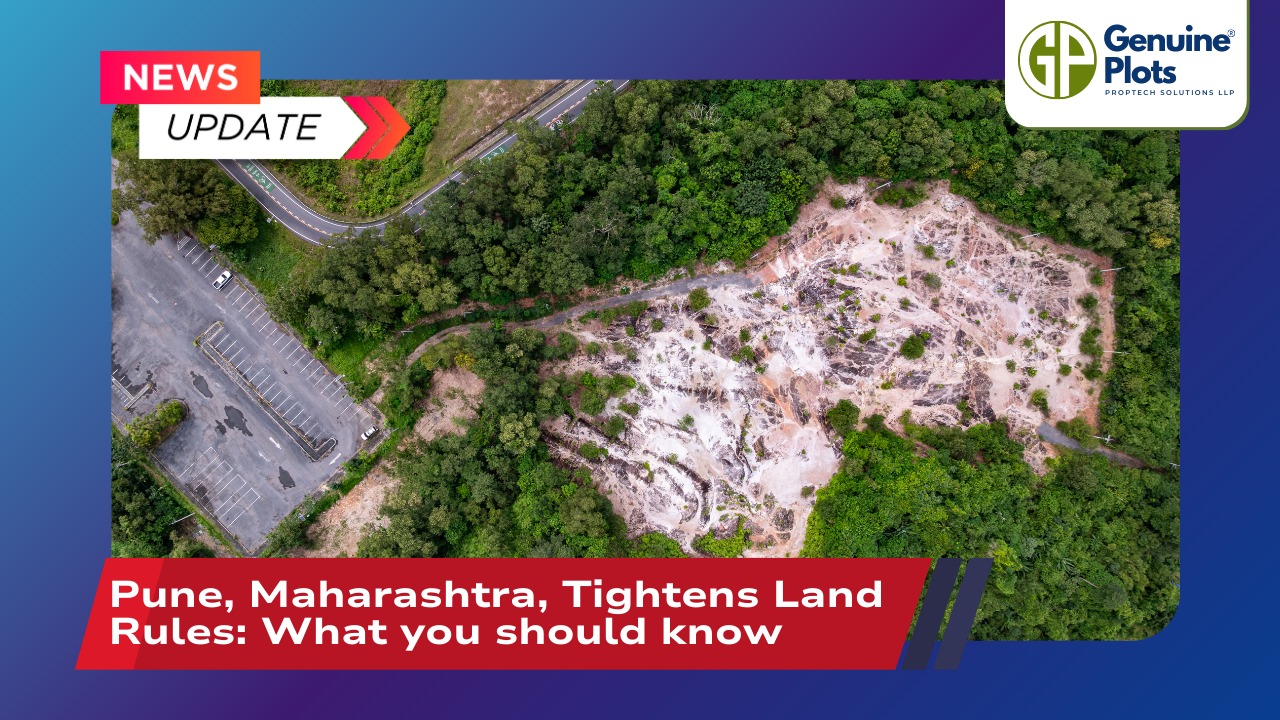
In a major shake-up for land buyers and investors, the Pune and wider Maharashtra authorities have tightened documentation requirements for the sale and registration of deals involving fragmented/small plots. This will put an end to decades of irregular and informal land dealings and protect buyers from legal and financial risks.
What’s Changed: New Mandatory Documents
-
Affidavit & Zone Certificate compulsorily required: Under the newly implemented amendments, sale deeds for small or previously fragmented plots must include a valid zone certificate confirming the land's approved use and an affidavit confirming that all legal and regulatory norms are met.
-
Strict verification before registration: Sub-registrars in the Pune district have been instructed not to register any land transactions without the property card and updated 7/12 extract.
-
Fragmentation-related legal changes: Recently, the state government repealed or relaxed portions of the “Fragmentation and Consolidation of Holdings Act” in urban and semi-urban zones, thereby making many small parcels legal.
Together, the steps turn what was often an informal or risky purchase into a more regulated, safer investment — but only if all documents are in order.
Why This Matters for Buyers & Investors
The reforms carry several advantages — and also new responsibilities for anyone buying land or plots:
- Clear, verifiable title deeds
- Protection from illegal or grey-area deals
- Better resale & development potential
- Regularisation for long-term security
Who This Impacts
-
First-time purchasers of plots
-
Investors in Pune's surrounding semi-urban areas
-
Regularising previous land transactions
-
Developers looking for well-documented, clean plots
Final Word
The new regulations have, therefore, made buying land in Pune and Maharashtra all the more transparent and secure. Proper verification, clean documentation, and understanding of zoning rules can save buyers from long-term legal and financial issues. A good development for serious investors, but also a reason why due diligence is more important than ever.
Source - Punekar News
Recent Posts
Tags
Bhunaksha,
genuine plots,
Land For Sale,
Maharashtra Bhunaksha,
plots for sale,
Gunthewari,
Gunthewari Land,
Gunthewari Rules,
Extract Documents,
Plots and Lands,
Saat Baara,
Extract Saat,
Baara Utara,
Jamabandi,
property tax payments,
Gram Panchayat,
lower prices,
non-agricultural land,
Lower Investment Cost,
Gram Panchayat lands,
Fresh Land Settlements,
Growing demand,
affordable homes,
genuine p,
legal Land,
bungalow plots,
Konkan,
Maharashtra,
Purandar,
Pune,
Karnataka,
Bangalore,
Farm Land,
Kolkata,
Rajarhat,
Indore,
Chhatrapati Sambhajinagar,
Aurangabad,
Mundhwa,
Agricultural Land,
Farmhouse Plot,
Rules And Penalties,
Residential Plots,
NA PLots,
Residential NA Plots,
Commercial NA Plots,
Animal Husbandry Land,
Tathawade,
Vahivat Land Maps,
Vahivat,
Indian Land Records,
Ownership Rights,
Red zone,
PCMC,
Dehu Road,
Land Registration Rules,
Land Investing,
Infrastructure Growth,
Land Ownership,
Land Encroachment,
Panshet Dam,
Varasgaon Dam,
Verified Land,
Plot For Sale,
Land Investment,
Verified Plots,
Land Acquisiton,
Hydrological Survey,
Invest In Land,
Verified Land Plots,
Panshet,
Khadakwasla,
Land Rules,
Dakhil Kharij,
Land Registry,
Property Onwership,
Clean Title Check List,
Property Verification,
Digital Registry,
Farm Plots,
Agro Property,
Land Value Growth,
Urban Expansion,
Senapati Bapat Road,
Registered Land,
Agricultral Plot,
Purandar Airport,
Safe Investment,
Secure Property,
Plot Buyers,
Approved Plots,
Land ROI,
NA Approved Plots,
NA Land,
Welspun One,
Logistic Park,
Talegaon,
PMC Bharat Mandapam,
Urban Development,
Lohgaon,
Close To Nature,
Gated Community Plots,
Buy Land VS Gold Investment,
NRI Investment,
Future Ready Living,
Trusted Plots,
Plot Investment,
Authentic Land,
Safe Land Buying,
Mumbai,
Premium Plots,
MMR Land Investment,
MMR Infrastructure,
Metro Connectivity,
Plots in Mahabaleshwar hill station investment,
Mahabaleshwar land prices and future growth,
Scenic residential plots in Mahabaleshwar,
Mumbai 3.0,
Mumbai 3.0 vs Mumbai 2.0,
Mumbai property investment,
Real estate investment in Mumbai,
Upcoming residential projects in Mumbai,
CIDCO plot auctions,
CIDCO auction Navi Mumbai,
Upcoming CIDCO plot auctions 2026,
CIDCO land auction dates,
Navi Mumbai plot auctions,
CIDCO plots in Navi Mumbai,
CIDCO plots in Kharghar,
CIDCO plots in Ulwe,
NMIA investment opportunities,
Mumbai 3.0 plotted development,
Mumbai 3.0 real estate,
Plots in Mumbai 3.0,
Land investment in Maharashtra,
Residential plots near Mumbai,
Land appreciation in Mumbai 3.0,
Residential land for sale in Mumbai 3.0,
Altamura NA Plots,
Altamura Nadar City,
NA Plots in Nadar City,
Nadar City Plots,
Plots in Nadar City,
YEIDA plots,
YEIDA plots near Noida Airport,
Noida Airport plots,
Jewar Airport investment,
Yamuna Expressway plots,
YEIDA plot scheme 2026,
Noida Airport real estate,
Zepto,
Zepto effect,
D2C brands India,
Urban consumer trends,
Marketplace evolution,
Urban infrastructure growth,
YEIDA Residential Plot Scheme,
Yamuna Expressway Plot Scheme,
YEIDA Residential Plots,
Yamuna Expressway Authority,
Noida Investment,
Residential Plots in Lucknow,
LDA Plots in Lucknow,
Lucknow Real Estate,
LDA Approved Plots,
Plots for Sale in Lucknow,
Lucknow Property Investment,
Land Investment in Lucknow,
Residential Land in Lucknow,
Buy Plot in Lucknow,
Lucknow Development Authority,
Maharashtra Fragmentation Law 2025,
Fragmentation Act Maharashtra,
Maharashtra land law update 2025,
Maharashtra land reforms 2025,
Land subdivision rules Maharashtra,
Maharashtra agriculture land purchase rules,
Agricultural land purchase restrictions Maharashtra,
Can non-farmers buy agricultural land in Maharashtra,
NA conversion process Maharashtra,
Collector permission for land purchase,
farmland prices in Nagpur,
agricultural land price in Nagpur per acre,
farmland cost in Nagpur Maharashtra,
Nagpur agricultural land investment,
per acre agricultural land rate in Nagpur,
Tukdebandi Law Maharashtra,
Maharashtra Fragmentation Act update,
Land subdivision law Maharashtra,
Agricultural land division Maharashtra,
Maharashtra land reform ordinance,
Plot registration Maharashtra,
Farmland prices Nagpur,
Nagpur agricultural land rates,
Farmland per acre Maharashtra,
Agricultural land price Nagpur,
Farm land cost Nagpur,
Nagpur real estate trends,
Land investment Nagpur,
Avani Farms,
Avani Farms Pune,
Farmland near Pune,
Farm plots for sale,
Agricultural land investment,
Gated farmland near Pune,
NRI agricultural land rules India,
Can NRI buy agricultural land in India,
FEMA rules for NRI property purchase,
RBI guidelines for NRI land investment,
NRI farmland investment India,
Agricultural land purchase by NRI,
Maharashtra Fragmentation Act,
Minimum plot size in Maharashtra,
Guntha rules Maharashtra,
Agricultural land division rules,
Minimum land area for sale in Maharashtra,
Legal plot size in guntha,
Guntha conversion rules,
NRI land purchase in India,
Can NRIs buy agricultural land in India,
NRI property investment India,
NRI buying residential land,
NRI real estate guidelines India,
Investment tips for NRIs in India,
Mutation Entry Process,
Land Mutation in India,
Property Mutation Process,
Land Ownership Transfer,
1 guntha na plot prices in pune 2026,
1 guntha plot price in pune,
na plots in pune,
residential na plots pune,
guntha plot rate in pune,
na plot investment in pune,
plots near purandar airport,
1 Acre Land Price in Pune,
Pune Land Rates 2025,
Pune Land Price 2026,
Pune Acre Land Cost,
Land Value Pune,
Agricultural Land Price Pune,
gated community plots in Hinjewadi,
Hinjewadi plots for sale,
residential plots in Hinjewadi Pune,
premium plots in Hinjewadi,
plots near Rajiv Gandhi Infotech Park,
land for sale in Hinjewadi Pune,
Pune property investment,
plots for sale in Pune below 5 lakhs,
Pune rural land investment,
gated plotting projects Pune,
MIDC growth corridor plots,
Residential plots for sale in Hinjewadi,
Plots in Hinjewadi Pune,
Land for sale in Hinjewadi,
Residential NA plots Hinjewadi,
Hinjewadi real estate trends 2026,
Nashik land investment,
Trimbakeshwar land for sale,
Simhastha Kumbh 2026,
Simhastha Kumbh 2027 real estate impact,
Trimbakeshwar property investment,
Land appreciation in Nashik,
plots for sale in pune,
types of plots in pune,
residential plots in pune,
agricultural land in pune,
villa plots in pune,
NRI agricultural land purchase India,
NRI property investment in India,
Agricultural land rules for NRIs,
NRI real estate investment India,
NA plot meaning,
what is NA land,
NA land in Maharashtra,
land investment guide,
NRI agricultural land in Telangana,
Telangana land laws for NRI,
Telangana real estate laws,
NRI investment guide Telangana,
Legal compliance for NRI property,
NRI farmhouse purchase India,
RBI guidelines for NRI property,
NRI land buying rules,
Godham Eco Village,
Godham Eco Village for NRIs,
NRI land investment in India,
Investment plots for NRIs,
Secure land investment India,
NRI property buying guide,
plots in Pune,
NRI buying property in India,
NRI guide to buying land in Pune,
NRI land investment in Pune,
NRI property documents checklist,
Maharashtra land reform 2025,
Maharashtra land laws update,
Agricultural land rules in Maharashtra,
Buying agricultural land in Maharashtra,
Non-agricultural land conversion Maharashtra,
Maharashtra agricultural land rules 2024,
agricultural land purchase in Maharashtra,
non agriculturist land purchase rules,
who can buy agricultural land in Maharashtra,
Maharashtra land laws for non farmers,
Guntha based land rules,
Minimum guntha rule Maharashtra,
Maharashtra land laws,
Maharashtra agricultural land laws,
farmland investment Maharashtra,
buying farmland legally in Maharashtra,
NA conversion rules Maharashtra,
agricultural land eligibility criteria,
Property Mutation in India,
Land Record Update,
Revenue Records,
Property Ownership Transfer,
Mutation of Property,
Farmhouse Plots Near Pune,
NRI Investment in Pune,
Pune Real Estate,
Plots for Sale Near Pune,
Luxury Farmhouse Plots,
Pune plot scams,
Plot buying checklist,
Legal verification for plots,
NA plot verification,
Plot buying tips Pune,
Godrej Properties,
Evora Estate Panipat,
Luxury plots in Panipat,
Premium land investment,
Residential plots in Panipat,
Lodha Developers,
Lodha Developers Q3 acquisition,
Lodha land parcels Q3,
Indian real estate news,
New residential projects India,
Real estate investment news,
Premium housing projects,
Srijan Group,
Kolkata Tech Park,
Commercial Real Estate,
Real Estate Investment,
Real Estate Deal News,
NRI investment in India,
NRI land investment,
Plots for sale in India,
NRI property investment,
Can NRI buy residential plot in India,
NRI land purchase rules,
Residential plots for NRIs,
NRI real estate investment,
NRIs buying property in India,
Can NRIs buy plots in India 2026,
RBI rules for NRI property purchase,
NRI land investment rules,
MMR 3.0,
MMR real estate 2026,
Mumbai real estate market,
Navi Mumbai investment,
Thane property market,
Mumbai property trends 2026,
Land investment in MMR,
Mumbai smart city project,
Korea Mumbai partnership,
MMRDA infrastructure projects,
Korean investment in India,
MMR GDP growth,
MMR economic roadmap 2030,
Mumbai real estate,
Public private partnership projects Mumbai,
Investment opportunities in MMR,
Mumbai Metropolitan Region,
Mumbai urban development,
MMR 2047 vision,
Mumbai infrastructure projects,
Navi Mumbai development,
Goa property investment,
Invest in Goa 2026,
Goa real estate market 2026,
Best places to invest in Goa,
North Goa property,
Property appreciation in Goa,
Goa plots for sale,
Commercial property in Goa,
Buy property in Goa,
YEIDA plots 2026,
Residential plots in YEIDA,
YEIDA new scheme update,
Plots near Noida International Airport,
Yamuna Expressway Authority plots,
YEIDA housing scheme details,
Lucknow land investment,
Property in Lucknow,
Buy plots in Lucknow,
Nashik plots for sale,
Kumbh Mela 2026 Nashik,
Land investment in Nashik,
Nashik property market 2026,
Plots near Kumbh Mela Nashik,
Residential plots in Nashik,
Upcoming projects in Nashik,
Property appreciation in Nashik,
Maharashtra land investment,
Nashik Kumbh Mela 2026,
Kumbh Mela investment opportunities,
Infrastructure development in Nashik,
Plots near Nashik Kumbh Mela,
High ROI land investment,
MIHAN,
MIHAN Nagpur,
Nagpur Real Estate,
Agricultural Land Nagpur,
Nagpur Property,
Plots Near In MIHAN,
Pune residential plots,
best areas to buy plots in Pune,
Pune land investment,
investment plots in Pune,
buy land in Pune,
real estate investment in Pune,
Godrej Plots Doddaballapur,
Doddaballapur plots for sale,
Plots in North Bangalore,
Godrej Properties plots,
Residential plots in Doddaballapur,
Investment plots near Bangalore,
Gated community plots Bangalore,
Premium plots in Doddaballapur,
plots in Mahabaleshwar,
Mahabaleshwar villa plots,
farmhouse plots in Mahabaleshwar,
land for sale in Mahabaleshwar,
bungalow plots in Mahabaleshwar,
hill station property investment,
agricultural land in Mahabaleshwar,
premium land in Mahabaleshwar,
Plots in Pune under 3 lakhs for sale,
Budget residential plots near Pune,
Low cost plots near Pune highway connectivity,
plots in Pune under 3 lakhs,
farmland plots near Pune city,
Investment plots near Pune under budget,
Residential land near Pune,
Godrej plots in Pune,
Premium plotted development by Godrej in Pune,
Residential land for sale by Godrej,
Premium plot by Godrej,
Plots for sale in Hadapsar Pune,
Residential plots in Hadapsar,
Investment plots in Hadapsar,
Gated community plots in Hadapsar,
Ready to build plots in Hadapsar,
1 Guntha plot in Pune,
1 Guntha plot in Pune for sale,
1 Guntha plots near Pune city,
Residential 1 Guntha land in Pune,
Clear title 1 Guntha plot in Pune,
1 guntha plot price in village,
village plot rate per guntha,
affordable 1 guntha land in rural area,
residential plot in village Pune,
farmland plot price per guntha,
Residential 1 Guntha plot near Pune city,
Investment plots in Pune 1 Guntha,
Clear title 1 Guntha land in Pune,
Agricultural 1 Guntha plot near Pune,
1 Guntha plot in Pune Katraj for sale,
Residential plot in Katraj Pune 1 Guntha,
Katraj Pune land for home construction,
1 Guntha NA plot in Katraj Pune,
Pune Katraj plot near highway connectivity,
Gated plot project in Katraj Pune,
NA plots in Pune under 10 lakhs,
Affordable NA plots near Pune city,
NA residential plots in Pune,
NA approved plots in Pune under 10 lakhs,
Investment plots in Pune under 10 lakhs,
Residential NA plots near Pune highway,
Best plots in Pune below 10 lakhs,
Premium villa plots in Pune,
Residential villa plots in Pune near city outskirts,
Luxury villa plots in Pune,
Gated villa plot project in Pune,
Villa plot site visit in Pune,
NA plots in Pimpri Chinchwad for sale,
Residential NA plots in PCMC area,
NA approved plots in Pimpri Chinchwad,
NA land with clear title in PCMC,
NA plots near Pune Mumbai Highway PCMC,
Godrej Villa Plots Doddaballapur,
Godrej plotted development Bangalore,
villa plots in North Bangalore,
premium villa plots Bangalore,
Godrej Properties plots Bangalore,
Brigade Plots Malur,
Brigade Malur plots,
plots in Malur East Bangalore,
investment plots in East Bangalore,
residential plots in Malur Bangalore,
Brigade Group plots Bangalore,
land investment in East Bangalore,
gated community plots in Malur,
prestige plots devanahalli,
prestige plots in devanahalli bangalore,
plots for sale in devanahalli,
prestige plots investment,
premium plots in devanahalli,
residential plots near kempegowda airport,
What is NA plot in real estate,
NA land meaning in property,
NA approved plotsDifference between NA and agricultural land,
Buying NA plots in Maharashtra,
NA plot vs agricultural land,
Plot prices in Mysore,
Mysore infrastructure projects,
Mysore property investment,
Land investment in Mysore,
Plot investment opportunities,
land buying guide in goa,
buy land in goa,
plots for sale in goa,
legal process to buy land in goa,
property in goa,
residential plots in goa,
Nashik Simhastha Kumbh Mela 2026,
Sadhugram expansion Nashik,
Maharashtra Kumbh Mela planning,
Nashik Kumbh Mela preparations,
tourism development in Nashik,
plots in Nagpur,
Nagpur plot investment,
land for sale in Nagpur,
residential plots in Nagpur,
golden rules before buying plots in Nagpur,
Nagpur land investment,
plot investment in Nagpur,
land investment in Nagpur,
plots for sale in Nagpur,
best areas to buy plots in Nagpur,
buying plots in Nagpur,
plot purchase checklist,
legal checklist for buying land,
documents required for plot purchase,
NA plots in Nagpur,
Tattvana,
Tattvana in Kamshet,
Moregaon Farmland Estates,
farmland investment Pune,
agricultural land investment,,
farmland for sale near Pune,
farm plots in Pune,
gated farmland projects,
agricultural plots Maharashtra,
open plot vs NA plot,
difference between open plot and NA plot,
what is NA plot in India,
open plot meaning in real estate,
NA land vs agricultural land,
residential NA plots benefits,
land investment in India,
buying NA plot vs open land,
capital gains on agricultural land,
rural vs urban agricultural land tax,
agricultural land tax rules India,
capital gains tax India property,
is agricultural land taxable,
rural agricultural land exemption,
urban agricultural land tax India,
Runwal Enterprises Alibaug township,
Alibaug real estate,
coastal real estate India,
township projects in Alibaug,
luxury properties in Alibaug,
Mumbai weekend homes investment,
Alibaug property investment,
isprava south goa,
ultra luxury villas in goa,
south goa real estate,
luxury homes in goa,
isprava projects goa,
premium villas in south goa,
land investment advisory services,
secure land investment,
real estate advisory services,
verified land deals,
investment plots near Pune,
land buying guide India,,
#KanpurRealEstate,
#KDAPlots,
#KanpurProperty,
#RealEstateKanpur,
#PropertyTrends,
Gokul Plots investment,,
real estate investment Gokul,,
plots with high appreciation potential,
smart land investment strategies,
plots for sale in North Bangalore,
land investment Bangalore,,
emerging areas in North Bangalore,
residential plots Bangalore,,
Bangalore real estate investment,,
North Bangalore property trends,,
plots near airport Bangalore,,
HUDA plots in Gurgaon,
HUDA plots in Faridabad,
residential plots Haryana,
HUDA approved plots,
plots for sale in Gurgaon,
plots in Faridabad investment,
Prestige Marigold plots,,
Bangalore plotted developments,
land investment Bangalore,
best plots in North Bangalore,
#PlotsForSaleInNellore,
#NelloreRealEstate,
#NellorePlots,
#RealEstate2026,
#PropertyInvestment,
#NelloreProperty,
#AndhraPradeshRealEstate,
GMADA E Auction 2026,
GMADA plots Mohali,
plots in Mohali for sale,
GMADA Mohali auction process,
buy plots in Mohali,
Punjab property investment,
GMADA scheme 2026,
Mohali real estate,
HSVP plots 2026,
HSVP plot investment,
HSVP plots Haryana,
land investment benefits,
residential plots investment,
government approved plots,
buy plot in New Chandigarh,
flats in New Chandigarh,
New Chandigarh real estate,
property investment in New Chandigarh,
residential plots in New Chandigarh,
apartments in New Chandigarh,
#WaveCityGhaziabad,
#GhaziabadPlots,
#PlotsInGhaziabad,
#NCRRealEstate,
#RealEstateInvestment,
#ResidentialPlots,
APIIC vacant plots,
APIIC plots for sale,
industrial plots in Andhra Pradesh,
commercial land for MSMEs,
startup investment plots,
APIIC industrial land,
HUDA plots,
HUDA plots investment,
property appreciation,
plot investment benefits,
high return property investment,
land appreciation,
#GDAPlotsInGhaziabad,
#PlotsForSaleInGhaziabad,
#ResidentialPlotsGhaziabad,
#InvestmentPlots,
#RealEstateGhaziabad,
#GDAApprovedPlots,
#BaliProperty,
#PropertyInBali,
#IndiansInBali,
#BaliRealEstate,
#InternationalPropertyInvestment,
buy plots in Sarjapur Road Bangalore,
plots in Sarjapur Road,
residential plots in Sarjapur Road,
land for sale in Sarjapur Road Bangalore,
investment plots in Bangalore,
plots near IT corridor Bangalore,
how Indians can buy property in Bali,
buy property in Bali for Indians,
Bali property investment,
property in Bali for Indian buyers,
Bali real estate guide,
foreign property investment Bali,
legal checks before buying property in Bali,
Indians invest in Bali property,
due diligence for Bali property,
Bali real estate for Indians,
Bali property legal verification,
verified farmland plots,
100% verified farmland plots,
farmland investment India,
legal farmland plots,
farmland plots for sale,
Konkan land investment,,
high-growth corridors Maharashtra,
land investment 2026,
plots for sale in Maharashtra,



