Prev Post
No previous post available
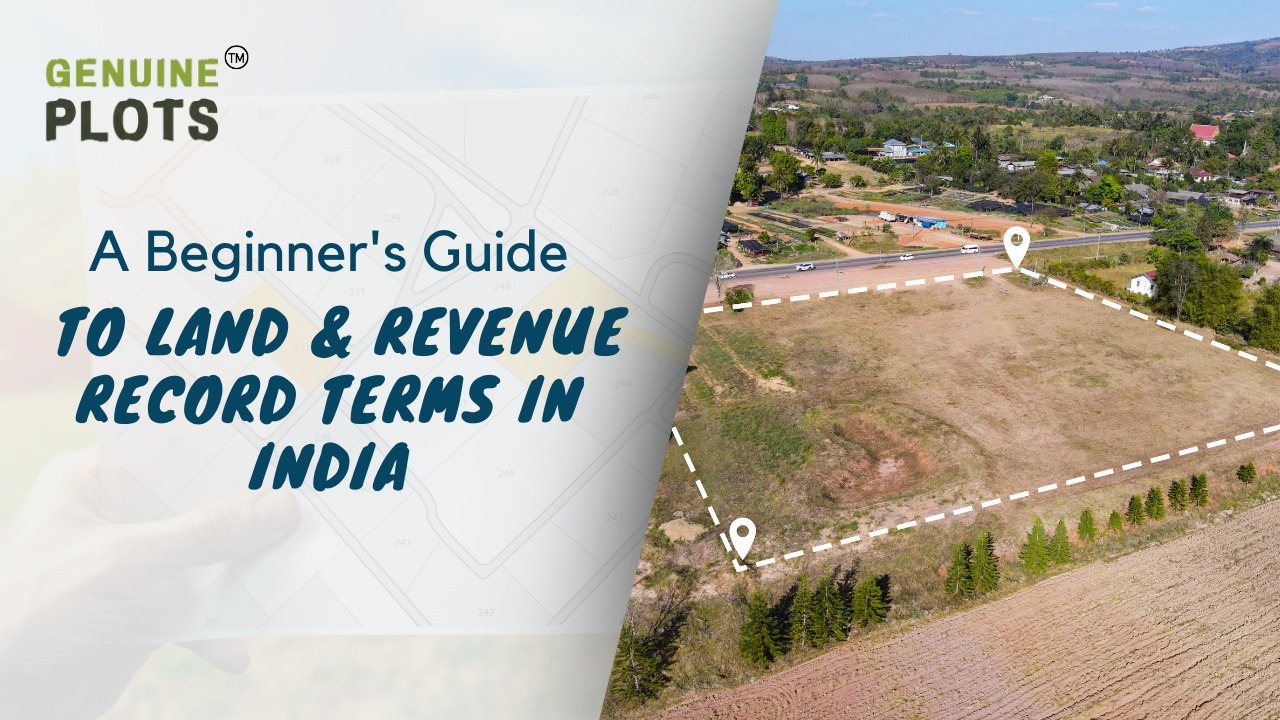
Land transactions can be a labyrinth of confusing terms, especially when checking records online. In this simplified guide, Genuine Plots unravels key terms, empowering you to make informed decisions and ensuring smooth navigation through the world of land transactions. Let's embark on this journey together, where understanding land records becomes as easy as a walk in the park.
Jamabandi
Nakal
Khata
Khasra or DAG Number
Khewat
Mauza
Bainama
Khatauni
Patta
Khudkasht
Embarking on a land transaction journey can be daunting, but armed with these simplified explanations, you'll be better equipped to decode the complexities of land records.
Prev Post
No previous post available
Selling a plot of land can be highly profitable—if done right. Whether you're an investor or an individual owner, these tips will help you get the best value from your land sale:
Understand who your ideal buyer is—developers, end users, or investors. Tailoring your marketing strategy to match their expectations which will make a huge difference in closing the deal.
A clean, well-maintained plot creates a positive first impression. Clear debris, trim overgrowth, and, if possible, landscape the area. Even minor improvements can boost perceived value.
Buyers prefer land with proper road access and available utilities. If your plot lacks these, mention possibilities for easy connections or adjust pricing accordingly.
Mention if the plot is zoned for residential, commercial, or industrial use—or if rezoning is possible. Development potential adds investment appeal.
Compare recent sales in your locality to price your land competitively. Avoid overpricing or undervaluing—both can push away serious buyers.
Use high-quality photos, drone shots if possible, and clear descriptions across real estate platforms and social media. Visibility and clarity attract more genuine interest.
A real estate agent with land sale experience will advise you on pricing, negotiating, and documents. Their network will introduce you to the best buyers in record time.
Conclusion
Getting maximum value for your land is a matter of getting it in position, showing it off, and pricing it tactically. The effort you make will pay great dividends in acquiring the best value.

Buying a plot of land is a big decision—whether it’s for building your dream home or making a smart investment. But for many, the process can seem confusing. That’s why we’ve created this simple guide to take you through every step—from your first site visit to the final registration of your sale deed.
Step 1: Do Your Research
Start with choosing the right place in Pune. Look for Bhor, Kamshet, or Mulshi, which have good roads, schools, hospitals, and a scope for development. Also, decide on your budget, including hidden costs like stamp duty and registration charges.
Step 2: Site Visit
After shortlisting a couple of choices, visit the plot in person. Observe the area around the road connectivity and ensure that the actual boundaries are the same as on paper. Take photographs or videos so that you can decide later.
Step 3: Legal Checks
This is a very important step. Make sure the seller actually owns the land and that there are no legal problems, like loans or disputes. You should:
Ask for the Encumbrance Certificate (shows if the land has loans or claims)
Check the title documents to confirm legal ownership
Make sure the land use is approved (residential, commercial, etc.)
Step 4: Sign the Agreement to Sell
Once you’re sure everything is clear, the seller will prepare a document called the Agreement to Sell. This paper includes the price, payment schedule, and other terms. You usually pay a token amount (advance) at this stage.
Step 5: Register the Sale Deed
The Sale Deed, the final document that transfers ownership to you. It must be registered at the sub-registrar’s office. To do this, you’ll need:
The signed sale deed
Identity proof (Aadhaar, PAN)
Passport-size photos
Property tax receipts
Encumbrance certificate
You also need to pay stamp duty and registration fees, which vary by state.
Step 6: After Registration
Once registered, update land records (mutation) with your name. After that, you officially own the plot and can begin construction or development.
Your trusted partner in plot investments across Pune. From circle rate analysis to ROI calculation, buying, selling, loan guidance, and agri-certificate application, Genuine Plots supports you at every step.

If you're planning to invest in land, it's important to know how much profit you can earn in the future. ROI helps you understand that. ROI means Return on Investment – how much money you make from your investment.
Let’s learn how to calculate ROI in an easy way.
What is ROI?
ROI (Return on Investment) tells you how much profit you can earn from the plot you buy. It helps you decide if the plot is a good investment or not.
Easy ROI Formula:
ROI (%) = (Profit / Total Investment Cost) × 100
Profit = Final value (selling price) – Total cost (all money spent to buy and register the plot)
Steps to Calculate ROI
Add the plot price + registration + stamp duty + legal or development costs.
Check what similar plots in the area are selling for and guess the value after a few years.
Put the numbers in the formula to find your ROI percentage.
Example:
You buy a plot in Pune for ₹20,00,000.
You also spend ₹2,00,000 on registration and other charges.
Total Investment = ₹22,00,000
Estimated Selling Price in 5 years = ₹30,00,000
Profit = ₹30,00,000 - ₹22,00,000 = ₹8,00,000
Now use the formula:
ROI = (₹8,00,000 / ₹22,00,000) × 100 = 36.36%
So, your return will be about 36% in 5 years.
Tips to Remember
Always check the circle rate (government rate of land) before buying.
Look for areas with upcoming roads, schools, or metro—these increase plot value.
Think about how long you will keep the land. Longer time usually means more profit.
Add all costs while calculating, even legal or loan charges.
Land purchase is a valuable investment, and making sure it is legally approved and development-ready is important. In Pune, PMRDA (Pune Metropolitan Region Development Authority) has an important role to play in controlling land development and urban planning. PMRDA-approved plots give buyers peace of mind, knowing that the land meets legal and development standards.
PMRDA is responsible for the planned development of the Pune Metropolitan Region. When a plot is sanctioned by PMRDA, it means the land has been officially approved for development. PMRDA-sanctioned land to ensure that they meet government regulations.
These plots give a clear idea of the potential of the land for building, as indicated in the authority's site inspection certificates. These certificates are required for acquiring development permissions, thus making the approval process quicker and smoother for the buyers.
PMRDA is responsible for maintaining planned growth and organized infrastructure development. Sanctioned plots ensure that uncontrolled construction is prevented, and the region develops in a structured and sustainable way.
Your trusted partner in plot investments across Pune. From circle rate analysis to ROI calculation, buying, selling, loan guidance, and agri-certificate application, Genuine Plots supports you at every step.

Building your own home or bungalow is a dream for many—and what if that dream could also be sustainable?
You’ve probably heard the term “sustainable living” quite a lot lately. But when it comes to homes, it’s more than just a buzzword. A sustainable home doesn’t just help the environment—it also helps you. From electricity bills to indoor air quality, a sustainable home offers long-term comfort.
Before you start building, think about how your home will sit on the land.
Your bungalow should face east or south so that you get maximum natural light and ventilation throughout the day.
Place large windows on south-facing walls to let in sunlight, and use shades or overhangs to block extra heat.
Use of brick or concrete help in keeping indoor temperatures stable.
Employ local material such as bamboo, reclaimed wood, or stabilized compressed earth blocks.
For walls, use Insulated Concrete Forms (ICFs). They are long-lasting, resistant to damage, and cool your home in the summer and warm it up during winter.
Choose low volatile organic compounds (VOC) paints, glues, and adhesives to improve indoor air quality.
Install solar panels to reduce your electricity bills and carbon footprint.
Use energy-efficient appliances and smart systems like programmable thermostats and automatic lighting to reduce energy wastage.
Establish a rainwater harvesting system.
Treat and reuse shower and sink water (called greywater) for your garden.
Fit low-flow appliances in bathrooms and kitchens to cut water consumption.
Use native plants which require less water and are pest-resistant naturally.
Employ green roofs and vertical gardens to enhance insulation as well as add greenery.
For driveways and sidewalks, have gravel or permeable pavers that allow water to percolate through and minimize runoff.
Plan your home to accommodate expansion in the future to avoid breaking walls at a later stage.
Organize a waste management system—separate wastes and recycle whenever possible.
To contribute value to your property, aim to achieve green certifications like LEED or IGBC. Also, talk to your Pune local authority for building codes and environmental legislations.
Conclusion
With proper planning and materials, your green house will be environmentally friendly, energy-efficient, and healthy—and yet give your family a superior way of living.



