Prev Post
How to Choose the Right Agricultural Land for Farming — A Deep Guide
Land is one of the few assets that appreciates consistently when supported by the right set of external factors. Its value seems static but through time, it gets shaped by infrastructure, location, policy changes, and socio-economic demand. Here are the seven major factors that influence long-term appreciation.
1. Location & Connectivity
The most important factor influencing land value is still location. Plots near developing cities, planned highways, transportation hubs, or industrial corridors appreciate considerably more quickly. Increased demand and consequently higher prices are the results of improved connectivity, such as new expressways, metro links, widened roads, or airport improvements.
Improved logistics, shorter travel times, and increased residential and commercial interest are all benefits of improved access. This frequently results in a discernible rise in real estate prices even before infrastructure projects are finished.
2. Infrastructure & Basic Utilities
Availability of water supply, electricity, road access, drainage, and telecom connectivity adds immediate usability and desirability to land. Even raw plots with easy access to utilities enjoy a higher valuation.
The areas in which local authorities invest, such as streetlights, sewage systems, waste management, or road widening, become naturally more attractive for both developers and end-users. Infrastructure development often initiates multi-year appreciation cycles in surrounding land.
3. Zoning Ordinance & Land-Use Approval
Government zoning policies directly impact the value of land. Land zoned residential, commercial, or industrial sells at a higher price than strictly agricultural areas because of the higher development potential.
Prices for land that can be lawfully rezoned or converted—for instance, from agricultural to residential or commercial—usually rise quickly. In a similar vein, clear title deeds, uncontested ownership, and the absence of litigation boost marketability and buyer confidence, which drives up prices.
4. Supply-Demand Disequilibrium
Land is intrinsically scarce. As populations grow, cities expand, and industries migrate to newer areas, the demand for usable land goes up, but its supply remains fixed.
High-growth areas, especially tier-I and tier-II cities, tend to enjoy sustained demand from both buyers and developers. When demand surpasses supply, appreciation becomes inevitable. This holds true to a large extent in suburban corridors where urban sprawl transforms the countryside into residential and commercial hotspots.
5. Future Development Potential
Land appreciation is highly dependent upon the expectations of future development. Announcements related to:
- new highways
- metro or rail corridors
- industrial parks
- IT hubs
- logistics zones
- residential townships
…tend to drive early investor interest and cause value increases even before construction starts.
Speculation is seldom all wrong-it simply mirrors genuine future potential. As a rule, the investors who identify early signs of urban growth usually benefit the most.
6. Natural Features & Environmental Conditions
Topography, soil quality, access to water, and lack of environmental hazards are highly influential in determining value, particularly for agricultural, resort, or residential land.
The lands that have beautiful scenery, a body of water around it, or even slight slopes command better prices. In contrast, land requiring heavy levelling, environmental clearance, or flood mitigation appreciates more slowly because of the high cost of development involved.
7. Social Amenities & Neighbourhood Growth
Land demand is boosted by the presence of schools, hospitals, markets, shopping centres, parks, and public services in the area. When an area becomes socially well-developed, it attracts families, businesses, and builders, thereby establishing a long-term upward trend of land price improvements.
Even agricultural land near expanding residential belts can appreciate dramatically once neighbouring regions begin to urbanise.
Conclusion
Accessibility, infrastructure, legal clarity, development potential, environmental quality, and social growth all contribute to an increase in land value. Even though land is a reliable long-term investment, investors can find plots with the highest potential for appreciation by understanding these seven factors. Land can provide substantial returns for decades if strategic research and due diligence are done.

In the last few years, more and more Non-Resident Indians (NRIs) have started investing in plots and residential land in India. This trend has grown stronger in 2025–2026 because NRIs now see land as a safe, flexible, and high-return investment that also keeps them connected to their roots.
- Land Gives High Returns With Almost No Maintenance
Land grows in value
Plots in developing suburbs and fast-growing towns appreciate much faster than many other types of real estate. Land is often called “smarter gold” because it generally increases in value over time.
No maintenance worries
Unlike apartments that require repairs, painting, and association fees, plots do not need maintenance. This makes them perfect for NRIs who live abroad and cannot inspect properties often.
Freedom and flexibility
With a plot, NRIs can:
Build a home later
Hold it as a long-term investment
Sell it when prices rise
This flexibility is one of the biggest reasons for choosing land over apartments.
- Better Safety & Transparency With RERA
RERA has made buying property in India much safer.
NRIs prefer plots because:
RERA ensures clear titles
Developers must follow strict guidelines
There is more transparency in pricing and documents
Many developers now offer gated plotted communities with:
Roads
Water and electricity connections
Security
Parks and clubhouses
This reduces the risk of buying disputed or unsafe land.
- Strong Financial Advantages for NRIs
More purchasing power
Because the Indian Rupee (INR) is often weaker than currencies like USD, GBP, and AED, NRIs get more value for their money. A plot that seems expensive in India becomes affordable when converted from foreign income.
Easy NRI home loans
Banks offer loans for plot purchases, and NRIs can repay them from NRE/NRO accounts.
Tax benefits
NRIs investing in plots with construction plans can claim tax deductions:
Section 80C (principal repayment)
Section 24 (interest deduction)
This makes it financially smart to buy land in India.
- Emotional Connection & Future Planning
Many NRIs invest in land because India is still home at heart.
Reasons include:
Staying connected to their birthplace
Planning to build a home for retirement
Owning a vacation home for family visits
Leaving behind an asset for children
A plot feels like a long-term, secure legacy.
- Massive Infrastructure Growth in India
Cities in India are expanding fast because of:
New highways
Metro routes
Ring roads
IT parks
Industrial zones
This makes peripheral plots very valuable.
Popular NRI hotspots include:
Bengaluru (Devanahalli, Hoskote)
Chennai (Thirumazhisai, Guduvancheri)
Pune (Hinjewadi, Wagholi, Talegaon)
Hyderabad (Shankarpalli, Pharmacity belt)
As these areas develop, land prices rise quickly — attracting more NRI investors.
- Hassle-Free Buying With Digital Tools
Buying property from abroad has become easy.
NRIs can now:
Take virtual site tours
Sign documents digitally
Transfer money through online banking
Get verified layouts and documents via email
Also, NRIs can appoint a Power of Attorney (PoA) to complete registration without being present in India.
Important Note for NRIs
NRIs cannot buy:
Agricultural land
Plantation land
Farmhouses
unless they have special approval from the Reserve Bank of India (RBI).
NRIs can freely buy:
Residential plots
Non-agricultural land
Plotted developments
Conclusion
NRIs are investing in plots in India because land offers:
Higher appreciation
Low maintenance
Better transparency
Strong financial benefits
Emotional security
Great future potential
With improved regulations and digital processes, buying land in India has become safer, easier, and more rewarding than ever.
DLF Sells Kolkata Tech Park and Land Parcel to Srijan Group for ₹670 Crore
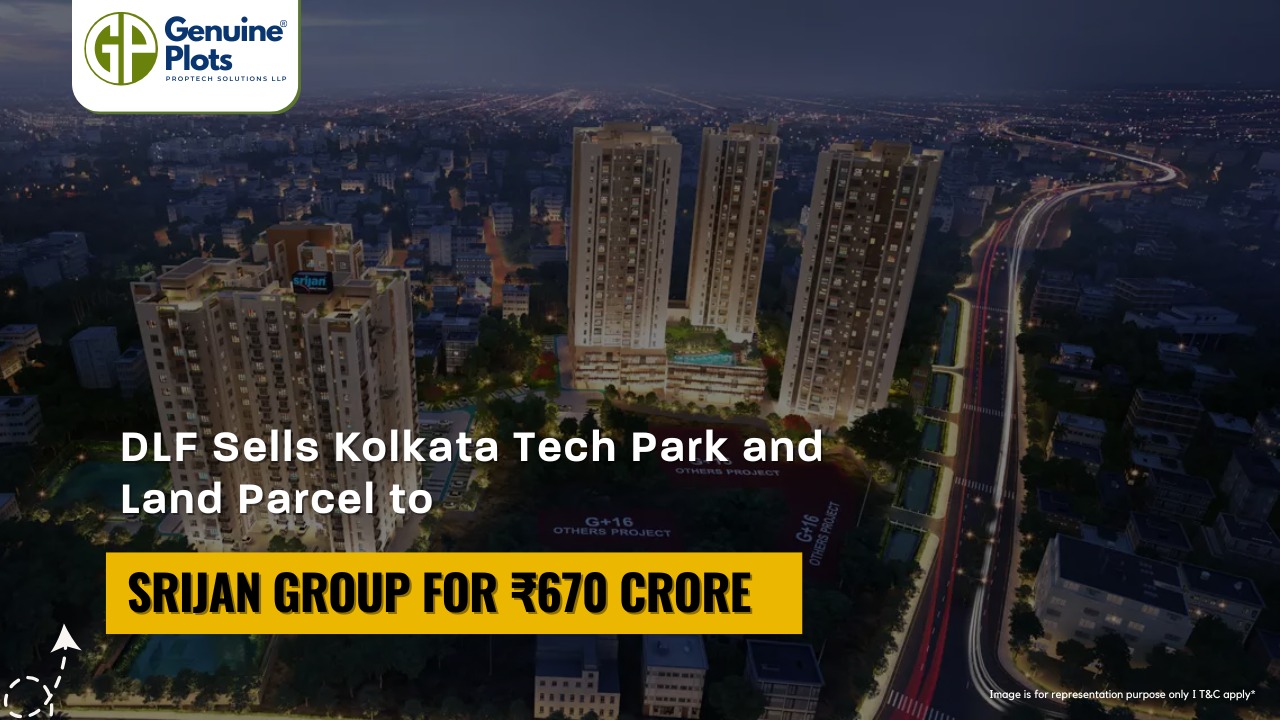
Real estate major DLF Ltd. has sold its technology park along with a sizeable land parcel in Kolkata to the Srijan Group in a transaction valued at ₹670 crore. The sale marks a significant strategic divestment by DLF as it continues to streamline its non-core assets and focus on strengthening its core rental and development portfolio.
Deal Overview
The transaction includes the transfer of an operational IT/ITeS SEZ technology park as well as approximately 25.9 acres of land. The deal was executed through a Business Transfer Agreement and accompanying land agreements with entities of the Srijan Group.
DLF’s move to monetise the asset is part of a broader capital-recycling strategy aimed at redeploying resources into higher-yielding projects across its primary markets.
Breakdown of the Transaction
The operational tech park, including built-up commercial space and SEZ facilities, constitutes a significant portion of the deal value.
A substantial part of the agreement also covers the sale of 17.75 acres of freehold land, enabling Srijan Group to pursue future commercial or mixed-use developments.
This combined transaction reflects growing investor appetite for institutional-grade commercial real estate in Kolkata’s evolving business corridor.
Strategic Intent
DLF has been trying to refine its portfolio by cutting down on its dependence on assets that are not located in its primary business centers. The sale of the Kolkata tech park is also a part of this overall strategy of concentrating on high-growth and high-return projects in large cities.
Through this sale, DLF is expected to generate funds that can be used for its ongoing high-end residential projects, its commercial business expansion, and its annuity-based business.
Impact and Market Outlook
For Srijan Group, this acquisition marks a major foray into the commercial real estate sector in Kolkata. With this acquisition, Srijan Group not only buys an income-yielding property but also a large piece of land, which will be used for future developments. This makes Srijan a more formidable player in the commercial real estate sector in eastern India.
This acquisition also marks the increasing trend in the commercial sector of Kolkata, which is fueled by the increasing demand from the IT/ITES sector and the desire for organized, modern office parks.
Looking Ahead
With the commercial real estate market in India continuing to attract institutional and developer-driven investments, the DLF-Srijan transaction is a sign that the portfolio consolidation trend among the larger developers is set to continue. The capital rotation strategy of DLF and the growth plans of Srijan Group indicate the changing landscape of the eastern region.
Lodha Developers Acquires Five Land Parcels in Q3, Plans Projects Worth ₹34,000 Crore
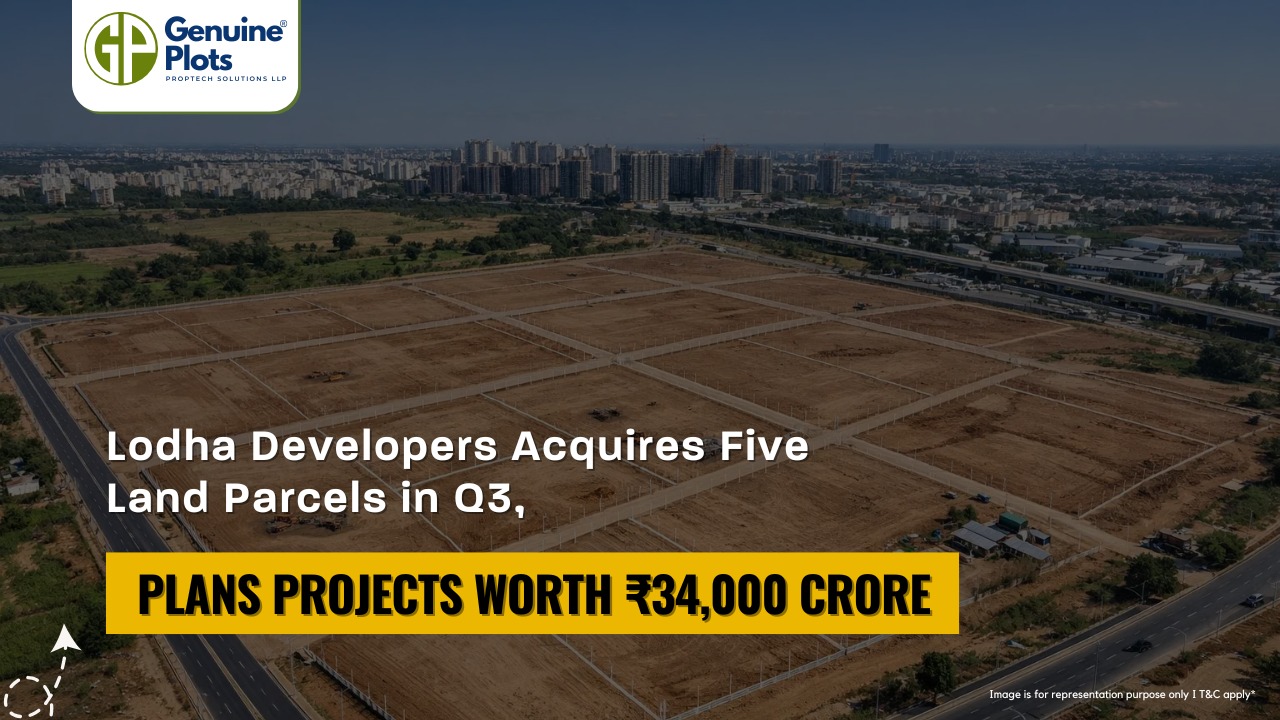
Lodha Developers has further enhanced its development pipeline by acquiring five new land parcels in the third quarter of the year, which will soon see the company launching projects with a total gross development value of around ₹34,000 crore. This is a clear indication of the company’s aggressive expansion plans in the most profitable real estate markets of India.
Expanding Presence Across Key Cities
The newly acquired land parcels are spread across the Mumbai Metropolitan Region (MMR), Delhi–NCR, and Bengaluru. These markets continue to witness strong demand for both residential and mixed-use developments, prompting Lodha to accelerate its land-banking efforts.
The company is expected to launch a mix of premium, mid-segment, and integrated living projects on these sites over the next few quarters, strengthening its position among the country’s top real estate developers.
Boost to Future Growth Pipeline
With a development potential of around ₹34,000 crore, these new acquisitions will greatly help increase the future projects in the pipeline of Lodha. The company aims to capitalise on the strong demand for housing, thanks to the presence of stable interest rates, positive consumer sentiment, and the increasing trend of urbanisation.
According to experts, this new land bank will help Lodha maintain its strong sales performance in the coming years, especially in areas such as MMR and NCR, where demand still exceeds the supply of quality housing.
Financial Impact and Strategic Rationale
The land acquisitions have led to a moderate rise in net debt, which has increased in the quarter as the company has invested in land with high potential. However, the company asserts that its leverage is comfortably within the long-term guidelines due to strong cash flows and sales bookings in the quarter.
The company has a very ambitious sales bookings target for the year, and the newly acquired land parcels will be very important in helping the company achieve this target.
Strengthening Presence in NCR
Notably, Lodha’s deeper push into the Delhi–NCR region signals a strategic diversification beyond its traditional strongholds. Its entry into this highly competitive market is seen as a long-term play to capture demand in north India’s high-growth residential segment.
Outlook
With a robust pipeline, strategic land acquisitions, and strong demand across its core markets, Lodha Developers enters 2026 on a solid footing. The company is expected to accelerate project launches in the coming quarters, leveraging its strengthened land position to drive sustained revenue growth.
Godrej Properties Achieves Record ₹1,000+ Crore Sales at Evora Estate Launch in Panipat

Godrej Properties has set a remarkable benchmark in North India’s real estate market with the launch of Evora Estate, its first plotted development in Panipat, Haryana. The project has achieved record-breaking sales exceeding ₹1,000 crore, making it one of the most successful plotted development launches in the company’s history.
This milestone signals a strong demand surge for premium plotted communities in emerging real estate corridors and highlights Godrej Properties’ growing influence in North India.
Historic Launch for Godrej Properties
Launched in December 2025, Evora Estate has received an overwhelming response from buyers, with more than 600 plots already sold. The project covers an area of about 43 acres and has almost 8 lakh sq. ft. of saleable area in well-designed residential plots.
This performance is a testament to the growing demand for luxury plotted living, where buyers have the flexibility to design their living spaces as per the planned layout.
Why Evora Estate Received Massive Demand
Several outstanding factors have contributed to the project’s remarkable sales performance:
- Location Advantage
Evora Estate is situated in Sector 40, Panipat, with easy connectivity to NH-44A. The location provides outstanding connectivity to prominent urban and industrial centers, making it a sought-after destination for both homebuyers and investors.
- Luxury Plotted Community
The project is spread over lush and well-designed landscapes, combining modern infrastructure with a Mediterranean design theme. It is conceptualized as a luxury plotted township with:
Internal roads of wide dimensions
Green open spaces
Lifestyle amenities
Gated community security
Vastu-friendly plot orientation
This amalgamation satisfies the demand for luxury, self-designed living spaces.
- Strong Brand Trust
Panipat: A Rising Real Estate Hotspot
Panipat’s rapid development in infrastructure, industrial expansion, and increasing urbanisation has positioned it as a fast-emerging real estate hub.
Key growth drivers include:
Strategic location between Delhi and Chandigarh
Boost in industrial and logistics activity
Improved regional connectivity
Rising demand for organized residential developments
This environment has created a favourable setting for large-scale plotted developments like Evora Estate.
Company’s Growing Focus on Plotted Developments
Evora Estate marks Godrej Properties’ first project in Panipat and adds to its portfolio of successful plotted communities across North India. Plotted townships have become a key growth segment, driven by:
Rising interest in land ownership
Flexibility in home design and construction
Higher appreciation potential
The record-breaking performance in Panipat reinforces the company’s strategy to expand in high-demand markets.
What This Means for Investors
With Panipat transforming into a future-ready residential and industrial hub, the success of Evora Estate signals strong investor confidence. Plotted developments in well-connected locations offer:
Strong long-term capital appreciation
High rental and commercial potential in the future
Better liquidity due to branded development
Given the response, similar upcoming projects in the region are likely to witness strong traction.
Conclusion
The achievement of Evora Estate is more than a sales milestone – it is a testament to the ever-unfolding change in the real estate demands of North India. Godrej Properties’ foray into Panipat not only marks a significant shift in the residential sector of Panipat but also marks the beginning of a new era of large-scale plotted developments in emerging markets.
With the demand for premium, flexible, and modern living spaces on the rise, Evora Estate and other such developments are set to play a pivotal role in defining the next era of urbanization in North India.
Godrej Properties Achieves Record ₹1,000+ Crore Sales at Evora Estate Launch in Panipat
Godrej Properties has set a remarkable benchmark in North India’s real estate market with the launch of Evora Estate, its first plotted development in Panipat, Haryana. The project has achieved record-breaking sales exceeding ₹1,000 crore, making it one of the most successful plotted development launches in the company’s history.
This milestone signals a strong demand surge for premium plotted communities in emerging real estate corridors and highlights Godrej Properties’ growing influence in North India.
Historic Launch for Godrej Properties
Launched in December 2025, Evora Estate has received an overwhelming response from buyers, with more than 600 plots already sold. The project covers an area of about 43 acres and has almost 8 lakh sq. ft. of saleable area in well-designed residential plots.
This performance is a testament to the growing demand for luxury plotted living, where buyers have the flexibility to design their living spaces as per the planned layout.
Why Evora Estate Received Massive Demand
Several outstanding factors have contributed to the project’s remarkable sales performance:
- Location Advantage
Evora Estate is situated in Sector 40, Panipat, with easy connectivity to NH-44A. The location provides outstanding connectivity to prominent urban and industrial centers, making it a sought-after destination for both homebuyers and investors.
- Luxury Plotted Community
The project is spread over lush and well-designed landscapes, combining modern infrastructure with a Mediterranean design theme. It is conceptualized as a luxury plotted township with:
Internal roads of wide dimensions
Green open spaces
Lifestyle amenities
Gated community security
Vastu-friendly plot orientation
This amalgamation satisfies the demand for luxury, self-designed living spaces.
- Strong Brand Trust
Panipat: A Rising Real Estate Hotspot
Panipat’s rapid development in infrastructure, industrial expansion, and increasing urbanisation has positioned it as a fast-emerging real estate hub.
Key growth drivers include:
Strategic location between Delhi and Chandigarh
Boost in industrial and logistics activity
Improved regional connectivity
Rising demand for organized residential developments
This environment has created a favourable setting for large-scale plotted developments like Evora Estate.
Company’s Growing Focus on Plotted Developments
Evora Estate marks Godrej Properties’ first project in Panipat and adds to its portfolio of successful plotted communities across North India. Plotted townships have become a key growth segment, driven by:
Rising interest in land ownership
Flexibility in home design and construction
Higher appreciation potential
The record-breaking performance in Panipat reinforces the company’s strategy to expand in high-demand markets.
What This Means for Investors
With Panipat transforming into a future-ready residential and industrial hub, the success of Evora Estate signals strong investor confidence. Plotted developments in well-connected locations offer:
Strong long-term capital appreciation
High rental and commercial potential in the future
Better liquidity due to branded development
Given the response, similar upcoming projects in the region are likely to witness strong traction.
Conclusion
The achievement of Evora Estate is more than a sales milestone – it is a testament to the ever-unfolding change in the real estate demands of North India. Godrej Properties’ foray into Panipat not only marks a significant shift in the residential sector of Panipat but also marks the beginning of a new era of large-scale plotted developments in emerging markets.
With the demand for premium, flexible, and modern living spaces on the rise, Evora Estate and other such developments are set to play a pivotal role in defining the next era of urbanization in North India.
Recent Posts
Tags
Bhunaksha,
genuine plots,
Land For Sale,
Maharashtra Bhunaksha,
plots for sale,
Gunthewari,
Gunthewari Land,
Gunthewari Rules,
Extract Documents,
Plots and Lands,
Saat Baara,
Extract Saat,
Baara Utara,
Jamabandi,
property tax payments,
Gram Panchayat,
lower prices,
non-agricultural land,
Lower Investment Cost,
Gram Panchayat lands,
Fresh Land Settlements,
Growing demand,
affordable homes,
genuine p,
legal Land,
bungalow plots,
Konkan,
Maharashtra,
Purandar,
Pune,
Karnataka,
Bangalore,
Farm Land,
Kolkata,
Rajarhat,
Indore,
Chhatrapati Sambhajinagar,
Aurangabad,
Mundhwa,
Agricultural Land,
Farmhouse Plot,
Rules And Penalties,
Residential Plots,
NA PLots,
Residential NA Plots,
Commercial NA Plots,
Animal Husbandry Land,
Tathawade,
Vahivat Land Maps,
Vahivat,
Indian Land Records,
Ownership Rights,
Red zone,
PCMC,
Dehu Road,
Land Registration Rules,
Land Investing,
Infrastructure Growth,
Land Ownership,
Land Encroachment,
Panshet Dam,
Varasgaon Dam,
Verified Land,
Plot For Sale,
Land Investment,
Verified Plots,
Land Acquisiton,
Hydrological Survey,
Invest In Land,
Verified Land Plots,
Panshet,
Khadakwasla,
Land Rules,
Dakhil Kharij,
Land Registry,
Property Onwership,
Clean Title Check List,
Property Verification,
Digital Registry,
Farm Plots,
Agro Property,
Land Value Growth,
Urban Expansion,
Senapati Bapat Road,
Registered Land,
Agricultral Plot,
Purandar Airport,
Safe Investment,
Secure Property,
Plot Buyers,
Approved Plots,
Land ROI,
NA Approved Plots,
NA Land,
Welspun One,
Logistic Park,
Talegaon,
PMC Bharat Mandapam,
Urban Development,
Lohgaon,
Close To Nature,
Gated Community Plots,
Buy Land VS Gold Investment,
NRI Investment,
Future Ready Living,
Trusted Plots,
Plot Investment,
Authentic Land,
Safe Land Buying,
Mumbai,
Premium Plots,
MMR Land Investment,
MMR Infrastructure,
Metro Connectivity,
Plots in Mahabaleshwar hill station investment,
Mahabaleshwar land prices and future growth,
Scenic residential plots in Mahabaleshwar,
Mumbai 3.0,
Mumbai 3.0 vs Mumbai 2.0,
Mumbai property investment,
Real estate investment in Mumbai,
Upcoming residential projects in Mumbai,
CIDCO plot auctions,
CIDCO auction Navi Mumbai,
Upcoming CIDCO plot auctions 2026,
CIDCO land auction dates,
Navi Mumbai plot auctions,
CIDCO plots in Navi Mumbai,
CIDCO plots in Kharghar,
CIDCO plots in Ulwe,
NMIA investment opportunities,
Mumbai 3.0 plotted development,
Mumbai 3.0 real estate,
Plots in Mumbai 3.0,
Land investment in Maharashtra,
Residential plots near Mumbai,
Land appreciation in Mumbai 3.0,
Residential land for sale in Mumbai 3.0,
Altamura NA Plots,
Altamura Nadar City,
NA Plots in Nadar City,
Nadar City Plots,
Plots in Nadar City,
YEIDA plots,
YEIDA plots near Noida Airport,
Noida Airport plots,
Jewar Airport investment,
Yamuna Expressway plots,
YEIDA plot scheme 2026,
Noida Airport real estate,
Zepto,
Zepto effect,
D2C brands India,
Urban consumer trends,
Marketplace evolution,
Urban infrastructure growth,
YEIDA Residential Plot Scheme,
Yamuna Expressway Plot Scheme,
YEIDA Residential Plots,
Yamuna Expressway Authority,
Noida Investment,
Residential Plots in Lucknow,
LDA Plots in Lucknow,
Lucknow Real Estate,
LDA Approved Plots,
Plots for Sale in Lucknow,
Lucknow Property Investment,
Land Investment in Lucknow,
Residential Land in Lucknow,
Buy Plot in Lucknow,
Lucknow Development Authority,
Maharashtra Fragmentation Law 2025,
Fragmentation Act Maharashtra,
Maharashtra land law update 2025,
Maharashtra land reforms 2025,
Land subdivision rules Maharashtra,
Maharashtra agriculture land purchase rules,
Agricultural land purchase restrictions Maharashtra,
Can non-farmers buy agricultural land in Maharashtra,
NA conversion process Maharashtra,
Collector permission for land purchase,
farmland prices in Nagpur,
agricultural land price in Nagpur per acre,
farmland cost in Nagpur Maharashtra,
Nagpur agricultural land investment,
per acre agricultural land rate in Nagpur,
Tukdebandi Law Maharashtra,
Maharashtra Fragmentation Act update,
Land subdivision law Maharashtra,
Agricultural land division Maharashtra,
Maharashtra land reform ordinance,
Plot registration Maharashtra,
Farmland prices Nagpur,
Nagpur agricultural land rates,
Farmland per acre Maharashtra,
Agricultural land price Nagpur,
Farm land cost Nagpur,
Nagpur real estate trends,
Land investment Nagpur,
Avani Farms,
Avani Farms Pune,
Farmland near Pune,
Farm plots for sale,
Agricultural land investment,
Gated farmland near Pune,
NRI agricultural land rules India,
Can NRI buy agricultural land in India,
FEMA rules for NRI property purchase,
RBI guidelines for NRI land investment,
NRI farmland investment India,
Agricultural land purchase by NRI,
Maharashtra Fragmentation Act,
Minimum plot size in Maharashtra,
Guntha rules Maharashtra,
Agricultural land division rules,
Minimum land area for sale in Maharashtra,
Legal plot size in guntha,
Guntha conversion rules,
NRI land purchase in India,
Can NRIs buy agricultural land in India,
NRI property investment India,
NRI buying residential land,
NRI real estate guidelines India,
Investment tips for NRIs in India,
Mutation Entry Process,
Land Mutation in India,
Property Mutation Process,
Land Ownership Transfer,
1 guntha na plot prices in pune 2026,
1 guntha plot price in pune,
na plots in pune,
residential na plots pune,
guntha plot rate in pune,
na plot investment in pune,
plots near purandar airport,
1 Acre Land Price in Pune,
Pune Land Rates 2025,
Pune Land Price 2026,
Pune Acre Land Cost,
Land Value Pune,
Agricultural Land Price Pune,
gated community plots in Hinjewadi,
Hinjewadi plots for sale,
residential plots in Hinjewadi Pune,
premium plots in Hinjewadi,
plots near Rajiv Gandhi Infotech Park,
land for sale in Hinjewadi Pune,
Pune property investment,
plots for sale in Pune below 5 lakhs,
Pune rural land investment,
gated plotting projects Pune,
MIDC growth corridor plots,
Residential plots for sale in Hinjewadi,
Plots in Hinjewadi Pune,
Land for sale in Hinjewadi,
Residential NA plots Hinjewadi,
Hinjewadi real estate trends 2026,
Nashik land investment,
Trimbakeshwar land for sale,
Simhastha Kumbh 2026,
Simhastha Kumbh 2027 real estate impact,
Trimbakeshwar property investment,
Land appreciation in Nashik,
plots for sale in pune,
types of plots in pune,
residential plots in pune,
agricultural land in pune,
villa plots in pune,
NRI agricultural land purchase India,
NRI property investment in India,
Agricultural land rules for NRIs,
NRI real estate investment India,
NA plot meaning,
what is NA land,
NA land in Maharashtra,
land investment guide,
NRI agricultural land in Telangana,
Telangana land laws for NRI,
Telangana real estate laws,
NRI investment guide Telangana,
Legal compliance for NRI property,
NRI farmhouse purchase India,
RBI guidelines for NRI property,
NRI land buying rules,
Godham Eco Village,
Godham Eco Village for NRIs,
NRI land investment in India,
Investment plots for NRIs,
Secure land investment India,
NRI property buying guide,
plots in Pune,
NRI buying property in India,
NRI guide to buying land in Pune,
NRI land investment in Pune,
NRI property documents checklist,
Maharashtra land reform 2025,
Maharashtra land laws update,
Agricultural land rules in Maharashtra,
Buying agricultural land in Maharashtra,
Non-agricultural land conversion Maharashtra,
Maharashtra agricultural land rules 2024,
agricultural land purchase in Maharashtra,
non agriculturist land purchase rules,
who can buy agricultural land in Maharashtra,
Maharashtra land laws for non farmers,
Guntha based land rules,
Minimum guntha rule Maharashtra,
Maharashtra land laws,
Maharashtra agricultural land laws,
farmland investment Maharashtra,
buying farmland legally in Maharashtra,
NA conversion rules Maharashtra,
agricultural land eligibility criteria,
Property Mutation in India,
Land Record Update,
Revenue Records,
Property Ownership Transfer,
Mutation of Property,
Farmhouse Plots Near Pune,
NRI Investment in Pune,
Pune Real Estate,
Plots for Sale Near Pune,
Luxury Farmhouse Plots,
Pune plot scams,
Plot buying checklist,
Legal verification for plots,
NA plot verification,
Plot buying tips Pune,
Godrej Properties,
Evora Estate Panipat,
Luxury plots in Panipat,
Premium land investment,
Residential plots in Panipat,
Lodha Developers,
Lodha Developers Q3 acquisition,
Lodha land parcels Q3,
Indian real estate news,
New residential projects India,
Real estate investment news,
Premium housing projects,
Srijan Group,
Kolkata Tech Park,
Commercial Real Estate,
Real Estate Investment,
Real Estate Deal News,
NRI investment in India,
NRI land investment,
Plots for sale in India,
NRI property investment,
Can NRI buy residential plot in India,
NRI land purchase rules,
Residential plots for NRIs,
NRI real estate investment,
NRIs buying property in India,
Can NRIs buy plots in India 2026,
RBI rules for NRI property purchase,
NRI land investment rules,
MMR 3.0,
MMR real estate 2026,
Mumbai real estate market,
Navi Mumbai investment,
Thane property market,
Mumbai property trends 2026,
Land investment in MMR,
Mumbai smart city project,
Korea Mumbai partnership,
MMRDA infrastructure projects,
Korean investment in India,
MMR GDP growth,
MMR economic roadmap 2030,
Mumbai real estate,
Public private partnership projects Mumbai,
Investment opportunities in MMR,
Mumbai Metropolitan Region,
Mumbai urban development,
MMR 2047 vision,
Mumbai infrastructure projects,
Navi Mumbai development,
Goa property investment,
Invest in Goa 2026,
Goa real estate market 2026,
Best places to invest in Goa,
North Goa property,
Property appreciation in Goa,
Goa plots for sale,
Commercial property in Goa,
Buy property in Goa,
YEIDA plots 2026,
Residential plots in YEIDA,
YEIDA new scheme update,
Plots near Noida International Airport,
Yamuna Expressway Authority plots,
YEIDA housing scheme details,
Lucknow land investment,
Property in Lucknow,
Buy plots in Lucknow,
Nashik plots for sale,
Kumbh Mela 2026 Nashik,
Land investment in Nashik,
Nashik property market 2026,
Plots near Kumbh Mela Nashik,
Residential plots in Nashik,
Upcoming projects in Nashik,
Property appreciation in Nashik,
Maharashtra land investment,
Nashik Kumbh Mela 2026,
Kumbh Mela investment opportunities,
Infrastructure development in Nashik,
Plots near Nashik Kumbh Mela,
High ROI land investment,
MIHAN,
MIHAN Nagpur,
Nagpur Real Estate,
Agricultural Land Nagpur,
Nagpur Property,
Plots Near In MIHAN,
Pune residential plots,
best areas to buy plots in Pune,
Pune land investment,
investment plots in Pune,
buy land in Pune,
real estate investment in Pune,
Godrej Plots Doddaballapur,
Doddaballapur plots for sale,
Plots in North Bangalore,
Godrej Properties plots,
Residential plots in Doddaballapur,
Investment plots near Bangalore,
Gated community plots Bangalore,
Premium plots in Doddaballapur,
plots in Mahabaleshwar,
Mahabaleshwar villa plots,
farmhouse plots in Mahabaleshwar,
land for sale in Mahabaleshwar,
bungalow plots in Mahabaleshwar,
hill station property investment,
agricultural land in Mahabaleshwar,
premium land in Mahabaleshwar,
Plots in Pune under 3 lakhs for sale,
Budget residential plots near Pune,
Low cost plots near Pune highway connectivity,
plots in Pune under 3 lakhs,
farmland plots near Pune city,
Investment plots near Pune under budget,
Residential land near Pune,
Godrej plots in Pune,
Premium plotted development by Godrej in Pune,
Residential land for sale by Godrej,
Premium plot by Godrej,
Plots for sale in Hadapsar Pune,
Residential plots in Hadapsar,
Investment plots in Hadapsar,
Gated community plots in Hadapsar,
Ready to build plots in Hadapsar,
1 Guntha plot in Pune,
1 Guntha plot in Pune for sale,
1 Guntha plots near Pune city,
Residential 1 Guntha land in Pune,
Clear title 1 Guntha plot in Pune,
1 guntha plot price in village,
village plot rate per guntha,
affordable 1 guntha land in rural area,
residential plot in village Pune,
farmland plot price per guntha,
Residential 1 Guntha plot near Pune city,
Investment plots in Pune 1 Guntha,
Clear title 1 Guntha land in Pune,
Agricultural 1 Guntha plot near Pune,
1 Guntha plot in Pune Katraj for sale,
Residential plot in Katraj Pune 1 Guntha,
Katraj Pune land for home construction,
1 Guntha NA plot in Katraj Pune,
Pune Katraj plot near highway connectivity,
Gated plot project in Katraj Pune,
NA plots in Pune under 10 lakhs,
Affordable NA plots near Pune city,
NA residential plots in Pune,
NA approved plots in Pune under 10 lakhs,
Investment plots in Pune under 10 lakhs,
Residential NA plots near Pune highway,
Best plots in Pune below 10 lakhs,
Premium villa plots in Pune,
Residential villa plots in Pune near city outskirts,
Luxury villa plots in Pune,
Gated villa plot project in Pune,
Villa plot site visit in Pune,
NA plots in Pimpri Chinchwad for sale,
Residential NA plots in PCMC area,
NA approved plots in Pimpri Chinchwad,
NA land with clear title in PCMC,
NA plots near Pune Mumbai Highway PCMC,
Godrej Villa Plots Doddaballapur,
Godrej plotted development Bangalore,
villa plots in North Bangalore,
premium villa plots Bangalore,
Godrej Properties plots Bangalore,
Brigade Plots Malur,
Brigade Malur plots,
plots in Malur East Bangalore,
investment plots in East Bangalore,
residential plots in Malur Bangalore,
Brigade Group plots Bangalore,
land investment in East Bangalore,
gated community plots in Malur,
prestige plots devanahalli,
prestige plots in devanahalli bangalore,
plots for sale in devanahalli,
prestige plots investment,
premium plots in devanahalli,
residential plots near kempegowda airport,
What is NA plot in real estate,
NA land meaning in property,
NA approved plotsDifference between NA and agricultural land,
Buying NA plots in Maharashtra,
NA plot vs agricultural land,
Plot prices in Mysore,
Mysore infrastructure projects,
Mysore property investment,
Land investment in Mysore,
Plot investment opportunities,
land buying guide in goa,
buy land in goa,
plots for sale in goa,
legal process to buy land in goa,
property in goa,
residential plots in goa,
Nashik Simhastha Kumbh Mela 2026,
Sadhugram expansion Nashik,
Maharashtra Kumbh Mela planning,
Nashik Kumbh Mela preparations,
tourism development in Nashik,
plots in Nagpur,
Nagpur plot investment,
land for sale in Nagpur,
residential plots in Nagpur,
golden rules before buying plots in Nagpur,
Nagpur land investment,
plot investment in Nagpur,
land investment in Nagpur,
plots for sale in Nagpur,
best areas to buy plots in Nagpur,
buying plots in Nagpur,
plot purchase checklist,
legal checklist for buying land,
documents required for plot purchase,
NA plots in Nagpur,
Tattvana,
Tattvana in Kamshet,
Moregaon Farmland Estates,
farmland investment Pune,
agricultural land investment,,
farmland for sale near Pune,
farm plots in Pune,
gated farmland projects,
agricultural plots Maharashtra,
open plot vs NA plot,
difference between open plot and NA plot,
what is NA plot in India,
open plot meaning in real estate,
NA land vs agricultural land,
residential NA plots benefits,
land investment in India,
buying NA plot vs open land,
capital gains on agricultural land,
rural vs urban agricultural land tax,
agricultural land tax rules India,
capital gains tax India property,
is agricultural land taxable,
rural agricultural land exemption,
urban agricultural land tax India,
Runwal Enterprises Alibaug township,
Alibaug real estate,
coastal real estate India,
township projects in Alibaug,
luxury properties in Alibaug,
Mumbai weekend homes investment,
Alibaug property investment,
isprava south goa,
ultra luxury villas in goa,
south goa real estate,
luxury homes in goa,
isprava projects goa,
premium villas in south goa,
land investment advisory services,
secure land investment,
real estate advisory services,
verified land deals,
investment plots near Pune,
land buying guide India,,
#KanpurRealEstate,
#KDAPlots,
#KanpurProperty,
#RealEstateKanpur,
#PropertyTrends,
Gokul Plots investment,,
real estate investment Gokul,,
plots with high appreciation potential,
smart land investment strategies,
plots for sale in North Bangalore,
land investment Bangalore,,
emerging areas in North Bangalore,
residential plots Bangalore,,
Bangalore real estate investment,,
North Bangalore property trends,,
plots near airport Bangalore,,
HUDA plots in Gurgaon,
HUDA plots in Faridabad,
residential plots Haryana,
HUDA approved plots,
plots for sale in Gurgaon,
plots in Faridabad investment,
Prestige Marigold plots,,
Bangalore plotted developments,
land investment Bangalore,
best plots in North Bangalore,
#PlotsForSaleInNellore,
#NelloreRealEstate,
#NellorePlots,
#RealEstate2026,
#PropertyInvestment,
#NelloreProperty,
#AndhraPradeshRealEstate,
GMADA E Auction 2026,
GMADA plots Mohali,
plots in Mohali for sale,
GMADA Mohali auction process,
buy plots in Mohali,
Punjab property investment,
GMADA scheme 2026,
Mohali real estate,
HSVP plots 2026,
HSVP plot investment,
HSVP plots Haryana,
land investment benefits,
residential plots investment,
government approved plots,
buy plot in New Chandigarh,
flats in New Chandigarh,
New Chandigarh real estate,
property investment in New Chandigarh,
residential plots in New Chandigarh,
apartments in New Chandigarh,
#WaveCityGhaziabad,
#GhaziabadPlots,
#PlotsInGhaziabad,
#NCRRealEstate,
#RealEstateInvestment,
#ResidentialPlots,
APIIC vacant plots,
APIIC plots for sale,
industrial plots in Andhra Pradesh,
commercial land for MSMEs,
startup investment plots,
APIIC industrial land,
HUDA plots,
HUDA plots investment,
property appreciation,
plot investment benefits,
high return property investment,
land appreciation,
#GDAPlotsInGhaziabad,
#PlotsForSaleInGhaziabad,
#ResidentialPlotsGhaziabad,
#InvestmentPlots,
#RealEstateGhaziabad,
#GDAApprovedPlots,
#BaliProperty,
#PropertyInBali,
#IndiansInBali,
#BaliRealEstate,
#InternationalPropertyInvestment,
buy plots in Sarjapur Road Bangalore,
plots in Sarjapur Road,
residential plots in Sarjapur Road,
land for sale in Sarjapur Road Bangalore,
investment plots in Bangalore,
plots near IT corridor Bangalore,
how Indians can buy property in Bali,
buy property in Bali for Indians,
Bali property investment,
property in Bali for Indian buyers,
Bali real estate guide,
foreign property investment Bali,
legal checks before buying property in Bali,
Indians invest in Bali property,
due diligence for Bali property,
Bali real estate for Indians,
Bali property legal verification,
verified farmland plots,
100% verified farmland plots,
farmland investment India,
legal farmland plots,
farmland plots for sale,
Konkan land investment,,
high-growth corridors Maharashtra,
land investment 2026,
plots for sale in Maharashtra,



