Prev Post
No previous post available
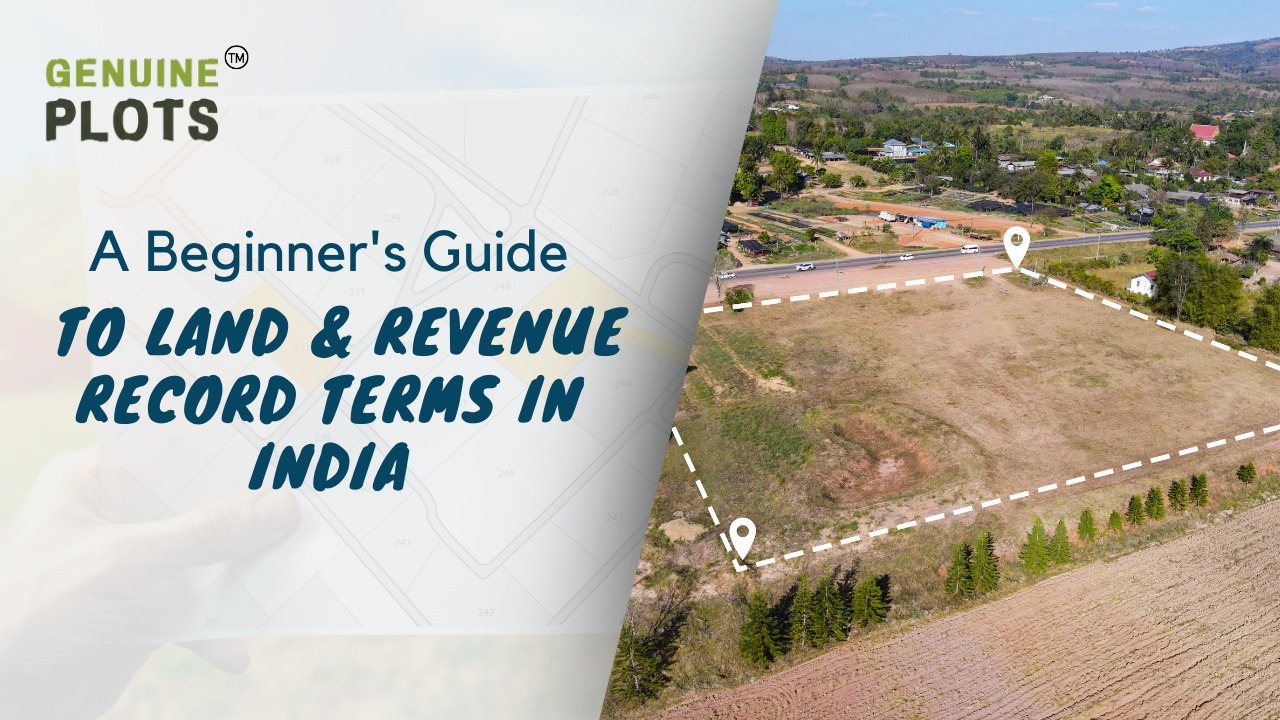
Land transactions can be a labyrinth of confusing terms, especially when checking records online. In this simplified guide, Genuine Plots unravels key terms, empowering you to make informed decisions and ensuring smooth navigation through the world of land transactions. Let's embark on this journey together, where understanding land records becomes as easy as a walk in the park.
Jamabandi
Nakal
Khata
Khasra or DAG Number
Khewat
Mauza
Bainama
Khatauni
Patta
Khudkasht
Embarking on a land transaction journey can be daunting, but armed with these simplified explanations, you'll be better equipped to decode the complexities of land records.
Prev Post
No previous post available

In Pune, a city known for its bustling energy and rapid development, a unique solution has emerged to address the challenges of land acquisition. With 20 acres of prime land set to be leased out, local authorities are pioneering a new approach to meet the city's growing needs while navigating the complexities of land procurement.
In recent years, Pune has faced significant hurdles in acquiring land for various developmental projects. From bureaucratic red tape to legal disputes and community resistance, the process of acquiring land has often been prolonged and contentious. These challenges have hampered the city's ability to expand infrastructure, housing, and other essential amenities to support its burgeoning population.
However, the decision to lease out 20 acres of prime land represents a departure from traditional methods of land acquisition. Instead of engaging in lengthy negotiations and legal battles, the local government is opting to lease the land to developers and investors for a specified period. This innovative approach not only bypasses the hurdles associated with acquisition but also provides a sustainable solution to meet the city's immediate needs.
The leased land, located in strategic areas of Pune, holds immense potential for development. From commercial complexes and residential projects to green spaces and recreational facilities, the possibilities are endless. By inviting private investment through leasing, the city aims to expedite the development process while ensuring that projects are executed efficiently and sustainably.
Moreover, the lease agreements are designed to prioritize the interests of the community and the environment. Developers and investors will be required to adhere to strict guidelines regarding land use, environmental conservation, and community engagement. This ensures that development projects contribute positively to Pune's social fabric and ecological balance.
Additionally, the lease model offers financial benefits for both the city and investors. While developers gain access to prime land at competitive rates, the city generates revenue through lease payments, which can be reinvested in further development initiatives. This mutually beneficial arrangement fosters collaboration between the public and private sectors, driving inclusive growth and prosperity.
In essence, Pune's decision to lease out prime land reflects a progressive approach to urban development. By embracing innovative solutions and forging partnerships with the private sector, the city is overcoming the challenges of land acquisition while laying the groundwork for a more sustainable and vibrant future. As other cities grapple with similar issues, Pune's example serves as a beacon of inspiration for fostering growth and prosperity through collaboration and innovation.

One significant change is the requirement for property owners to submit payment receipts of vacant land tax or property tax for asset registration. This step aims to ensure that property owners fulfill their tax obligations promptly.Moreover, the government has made it mandatory to include the title owner's details in the adangal copy for agricultural land.
The decision to introduce these rules stemmed from observations that many vacant land owners were not paying taxes on time.Furthermore, urban and rural local authorities encountered difficulties in gathering vacant land taxes because they lacked a comprehensive database of property owners.
Local civic bodies and rural authorities have been urging the state government to provide details of land sellers and purchasers immediately after registration. This would facilitate tracking and collection of vacant land tax. However, technical constraints have hindered the government's ability to share this data.
The Maharashtra Government also revamped the property tax system in urban areas by transitioning from the annual rental value (ARV) tax calculation method to the capital value (CV) tax system. This change ensures uniformity in tax imposition on properties based on market value determined by the registration department. The reform aims to prevent irregularities in tax collection by revenue officials in urban civic bodies.
Previously, vacant land tax (VLT) was not mandatory for selling or purchasing property. To address this gap, the government now requires the submission of VLT receipts for the registration of open plots.
These measures underscore the government's commitment to promoting transparency, accountability, and fair taxation in property transactions. By implementing these rules, the Maharashtra Government aims to streamline property registration processes and enhance revenue collection for the welfare of the state.

When you're buying property, whether it's a house or just land, it might seem like they're the same thing, but there are some important differences to know about, especially when it comes to getting a loan. Let's break it down in easy terms.
Similarities:
Differences:
Knowing these distinctions can simplify your decision-making process when deciding whether to secure a loan to purchase a home or acquire land.

Plot loans, also known as land loans, are an essential financial tool for individuals aspiring to own a piece of land. Unlike home loans, which are tailored for purchasing constructed properties, plot loans cater specifically to acquiring land for future construction purposes. Understanding the features, benefits, and eligibility criteria associated with plot loans can empower potential buyers to make informed decisions about their investments.
Features of Plot Loans:
Benefits of Taking Plot Loans:
Eligibility Criteria for Plot Loans:
Age Criteria: Applicants should fall within the age bracket of 18 to 65 years to be considered for loan approval.

The Tukde Bandi Kayda, or Land Holding Act of 2015, prevents the division of land into small pieces in Maharashtra and requires land to be consolidated. This law was enforced by the Maharashtra State Revenue and Stamping Department in July 2021. Earlier, the law did not allow the purchase of land in pieces smaller than 20 guntha. This caused problems for many people, such as difficulties in building homes, accessing roads for farming, and digging wells. However, on March 14, 2024, the government changed the law. Now, it allows the purchase of land in pieces as small as 1 to 5 guntha.
Key Points:
These changes aim to resolve issues caused by small land parcels left after government projects and make land transactions smoother.



