Prev Post
Farmhouse plots 1 guntha near Pune
1. Why are villa plots in Karjat becoming popular?
Villa plots in Karjat are highly sought after because of their greenery, peaceful environment, and excellent connectivity to Mumbai and Navi Mumbai. Buyers prefer Karjat for weekend homes, retirement villas, nature retreats, and long-term land investments.
2. What is the price range for villa plots in Karjat?
The pricing for villa plots in Karjat generally ranges from around ₹600 to ₹8,500 per sq. ft., depending on the location, project amenities, scenic views, and infrastructure within the development.
3. Are villa plots in Karjat legally approved?
Yes, many premium villa plots in Karjat are NA (Non-Agricultural) freehold plots with individual clear titles. Buyers should still verify legal approvals, ownership documents, and project permissions before investing.
4. What are the benefits of investing in gated villa plot communities in Karjat?
Gated communities offering villa plots in Karjat often provide:
- 24/7 security
- Internal roads
- Clubhouse facilities
- Landscaped surroundings
- Resort-style amenities
- Scenic hill, river, or lake views
These features improve both lifestyle quality and investment value.
5. What is special about Kalpataru Aria in Karjat?
Kalpataru Aria is a large wellness-focused development spread across 80+ acres offering premium serviced villa plots with luxury amenities, open green spaces, and lifestyle-focused infrastructure.
6. Why are Holistic Group villa projects popular in Karjat?
Holistic Group developments offer resort-themed NA villa plots and luxury villas integrated with premium lifestyle amenities such as the TruLife Club, making them attractive for second-home buyers and investors.
7. Are lake-facing and river-facing plots available in Karjat?
Yes, several villa plots in Karjat offer lake-facing, river-facing, and waterfall-view surroundings. These scenic locations are highly preferred for luxury villas, holiday homes, and wellness retreats.
- Why is Karjat considered a good second-home destination?
Karjat’s natural beauty, lower pollution levels, greenery, and proximity to Mumbai make it ideal for weekend homes and second-home investments. Buyers looking for peaceful living often choose Karjat over crowded urban locations.
9. What should buyers verify before purchasing villa plots in Karjat?
Before investing in villa plots in Karjat, buyers should check:
- NA approval status
- Clear land title
- Road connectivity
- Water and electricity availability
- Development permissions
- Infrastructure within the gated community
Proper verification ensures safer investment.
10. Are villa plots in Karjat good for long-term investment?
Yes, Karjat continues to attract interest because of increasing second-home demand, infrastructure improvements, and growing tourism activity. Premium villa plots in well-connected gated communities often offer strong long-term appreciation potential.
Contact Genuine Plots for verified land purchase, sale opportunities, and trusted guidance in land investment.
Next Post
No previous post available
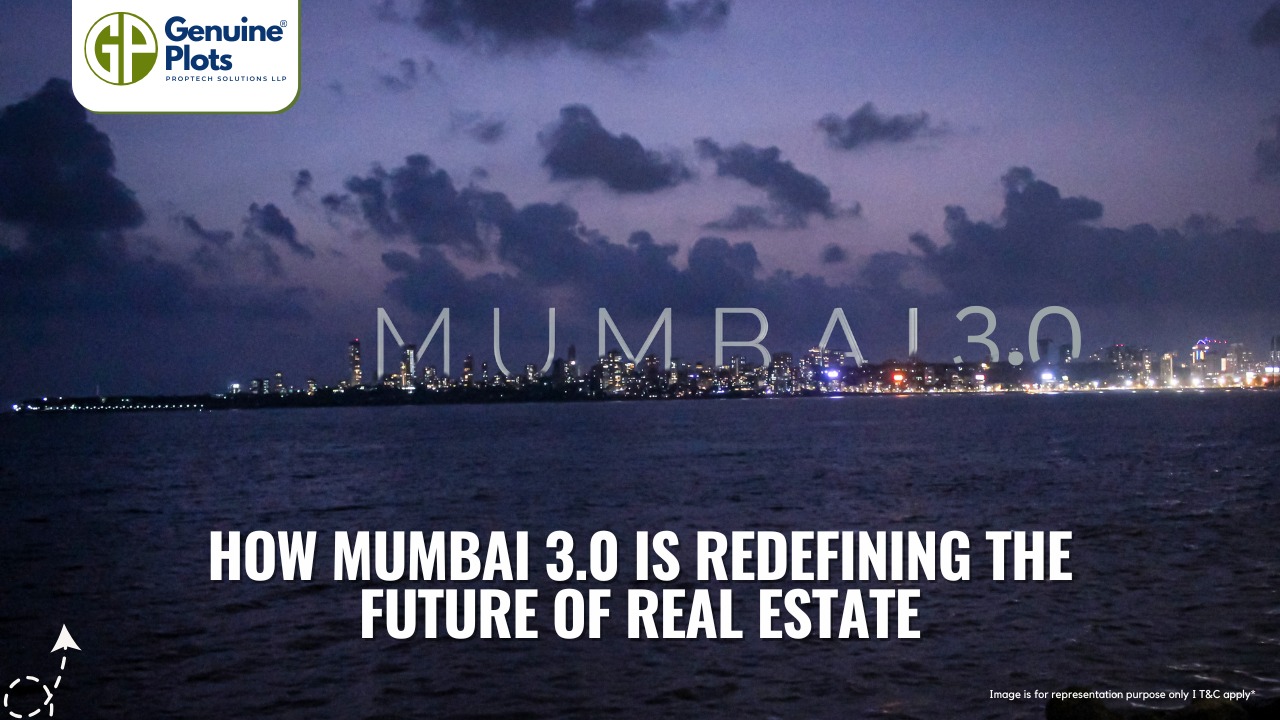
Mumbai 3.0—often called Third Mumbai—is one of the most ambitious urban transformation plans in India’s modern development history. It aims to expand and modernize the Mumbai Metropolitan Region (MMR) by creating new, well-planned urban clusters around Navi Mumbai, Panvel, Raigad, and surrounding growth corridors.
While Mumbai 1.0 represents the historic south Mumbai business district and Mumbai 2.0 includes the suburbs and their expansion, Mumbai 3.0 is the next-generation vision—built around advanced infrastructure, smart urban planning, and sustainable development.
Key Drivers Behind Mumbai 3.0
1. Navi Mumbai International Airport (NMIA)
The proposed airport will act as a significant catalyst, drawing businesses, tourism, employment, and large-scale real estate development within its influence area. The proposed airport is expected to turn Navi Mumbai and Panvel into significant commercial centres.
2. Mumbai Trans Harbour Link (MTHL)
The proposed 22 km sea-link connecting Mumbai to Navi Mumbai will greatly reduce travel times, opening up new development opportunities in regions that were previously deemed too far or inaccessible. This alone will redefine the structures of demand and pricing.
3. Metro & Rail Network Expansion
New metro lines, enhanced suburban rail connectivity, and extended routes to Thane, Navi Mumbai, and Panvel are making travelling easier and more efficient. This is increasing the appeal of the area as a residential and commercial hub.
4. Planned Urban Clusters & Smart Cities
Mumbai 3.0 aims to create a balanced and well-planned hub with equal proportions of residential, commercial, industrial, and green zones. These regions are being developed in a sustainable manner.
5. Economic & Employment Zones
New industrial estates, IT corridors, SEZs, logistics, and business districts are being developed in Raigad, Panvel, Ulwe, and surrounding areas, making these areas excellent job hubs and thus driving the demand for housing.
How Mumbai 3.0 Is Transforming the Real Estate Industry
1. Greater Affordable Options
The Mumbai market is already saturated, and the prices are so high that they are no longer affordable. The Mumbai 3.0 corridors offer much more affordable options.
2. High Appreciation Potential
With large-scale infrastructure development almost complete, the property prices in Navi Mumbai, Panvel, Ulwe, Taloja, Dronagiri, and surrounding areas are expected to appreciate considerably. These areas are soon going to be the next big real estate destinations.
3. Integrated Living Spaces
Developers are now concentrating on creating integrated townships with residential spaces, business hubs, shopping districts, educational institutions, healthcare facilities, and entertainment spaces all under one self-contained community.
4. Rising Interest From Investors & NRIs
Better connectivity, upcoming infrastructure, and large-scale commercial growth have made Mumbai 3.0 a preferred destination for long-term investors, NRIs, and high-value capital investment.
5. New Growth Corridors
Areas that were previously classified as remote, like Raigad and Karjat belts, are now developing as new growth corridors.
Challenges to Consider
Though an exciting opportunity, Mumbai 3.0 also presents some challenges:
- Land acquisition and rehabilitation problems in some areas
- Need for ecological balance
- Reliance on the successful completion of major infrastructure projects
- Slow evolution of civic infrastructure in new areas
These, however, are being addressed.
What Mumbai 3.0 Means for Buyers & Investors
Mumbai 3.0 offers a huge opportunity for:
- End users looking for affordable and spacious housing
- Investors seeking appreciation through mega-infrastructure
- Developers developing large integrated townships
- Businesses seeking well-connected commercial nodes
Conclusion
Mumbai 3.0 is more than just an extension; it is a change that is set to shape the future of the real estate sector in the region. With the help of infrastructure, planning, and economic development, Mumbai 3.0 is ready to change the face of the region and shape the future of real estate. The region is on the cusp of becoming one of the most exciting real estate destinations in the country.
How Mumbai 3.0 Is Redefining the Future of Real Estate (FAQs)
FAQs
1. What is Mumbai 3.0?
Mumbai 3.0 refers to the next phase of the Mumbai Metropolitan Region’s development, focusing on new planned urban clusters around Navi Mumbai, Panvel, Raigad, and nearby areas. It aims to modernise infrastructure, improve connectivity, and create sustainable, future-ready growth corridors.
2. How is Mumbai 3.0 different from Mumbai 1.0 and 2.0?
Mumbai 1.0 represents the original southern city area, while Mumbai 2.0 covers the suburban expansion. Mumbai 3.0 goes beyond both by creating newly planned regions with advanced infrastructure, smart city elements, and balanced zoning for residential, commercial, industrial, and green spaces.
3. Why is the Navi Mumbai International Airport important for Mumbai 3.0?
The upcoming airport is expected to boost connectivity, attract global businesses, create employment, and increase demand for housing and commercial spaces across Navi Mumbai and Panvel—making it a major catalyst for real estate growth.
4. How will the Mumbai Trans Harbour Link (MTHL) impact the region?
The MTHL sea link will significantly reduce travel time between Mumbai and Navi Mumbai, opening up once-remote regions for development. It is expected to drive property appreciation and expand residential and commercial opportunities.
5. Which areas will benefit the most from Mumbai 3.0?
Regions such as Panvel, Ulwe, Taloja, Dronagiri, Uran, Raigad, and surrounding belts—including Karjat—are expected to see substantial growth in property value, infrastructure, and overall development.
6. Is real estate more affordable in the Mumbai 3.0 regions?
Yes. Compared to saturated and high-priced Mumbai suburbs, Mumbai 3.0 offers more affordable options for buyers and investors while still providing strong appreciation potential due to ongoing infrastructure projects.
7. Will property prices increase in Mumbai 3.0?
With mega-infrastructure nearing completion and improving connectivity, property prices in Mumbai 3.0 corridors are expected to rise significantly over the coming years, making it an attractive investment zone.
8. What types of real estate developments are coming up in Mumbai 3.0?
The region is seeing integrated townships, residential projects, commercial hubs, logistic zones, IT parks, SEZs, educational institutions, healthcare facilities, and entertainment zones within self-sustaining communities.
9. Are NRIs and investors showing interest in Mumbai 3.0?
Absolutely. The combination of connectivity improvements, economic expansion, and high growth potential has made Mumbai 3.0 a preferred destination for NRIs, long-term investors, and institutional capital.
10. What challenges does Mumbai 3.0 face?
Some challenges include land acquisition issues, ecological preservation needs, infrastructure completion timelines, and slower development of civic amenities in newly planned zones. However, most of these are being addressed through phased planning.
11. Is Mumbai 3.0 suitable for end users or only investors?
Mumbai 3.0 is suitable for both. End users benefit from affordable housing and modern living environments, while investors gain from appreciation, rental demand, and long-term development prospects.
12. Is Mumbai 3.0 expected to become a major real estate hotspot?
Yes. With large-scale infrastructure, planned development, and strong economic growth, Mumbai 3.0 is poised to become one of India’s most promising real estate destinations in the near future.
MMR Tops India’s Land Transactions in 2025 with Over 500 Acres Acquired
The Mumbai Metropolitan Region (MMR) registered the most land transactions among the top seven cities in India in 2025, with more than 500 acres of land being acquired by developers in 32 major transactions. This means that the MMR was the largest contributor to land transactions in India.
At least 126 land transactions were completed in India in 2025, involving a total of approximately 3,772 acres of land. Although the number of transactions was lower compared to 2024, the total land area acquired was significantly higher.
Diverse Development Plans in MMR
The land bought in MMR catered to a wide range of asset classes. Developers and investors targeted parcels for:
- Residential townships and plotted developments
- Premium and luxury villa projects
- Commercial offices and mixed-use projects
- Industrial and logistics parks
Data centres and new-age infrastructure
This diversification indicates a shift in the market, with developers expanding beyond purely residential projects to meet rising demand across multiple sectors, especially commercial and industrial.
Comparison with Other Major Cities
Although MMR had the highest total land area transacted, other metros also had substantial activity:
- Bengaluru had the second-highest land acquisition, with over 450 acres in 27 transactions, mainly due to its robust technology and startup ecosystem.
- Pune had around 308 acres in 18 transactions, mainly due to its manufacturing sector and IT corridor.
- NCR had around 137 acres in 16 transactions, mainly due to plotted housing and redevelopment.
- Hyderabad and Chennai had moderate land sales, mainly due to residential, industrial, and data centre space demand.
- Kolkata had no substantial land sales during the year.
The data highlights the dominance of western and southern markets — particularly Mumbai, Bengaluru, and Pune — as India’s leading real estate growth hubs.
Residential Sector Remains the Main Driver
Of the 126 total deals nationwide, 96 were residential acquisitions, collectively spanning nearly 1,900 acres. These include a mix of:
- Large integrated townships
- Plotted developments
- Mid-segment residential projects
- High-end villa communities
Industrial and logistics land accounted for nearly 600 acres, while around 1,000 acres were allocated for mixed-use developments. Commercial and data centre-related transactions also contributed meaningfully as demand for office space and digital infrastructure continued to rise.
Developer Confidence Remains Strong
Even as the cost of land and supply in prime areas increased, the acquisition of land by developers remained aggressive in 2025, and this is a positive indicator of the long-term faith in the Indian real estate market.
The fact that MMR led in terms of total land area and the number of deals indicates that 2025 was a year that reaffirmed Mumbai’s status as the most dynamic real estate market in the country.
Recent Posts
Tags
Bhunaksha,
genuine plots,
Land For Sale,
Maharashtra Bhunaksha,
plots for sale,
Gunthewari,
Gunthewari Land,
Gunthewari Rules,
Extract Documents,
Plots and Lands,
Saat Baara,
Extract Saat,
Baara Utara,
Jamabandi,
property tax payments,
Gram Panchayat,
lower prices,
non-agricultural land,
Lower Investment Cost,
Gram Panchayat lands,
Fresh Land Settlements,
Growing demand,
affordable homes,
genuine p,
legal Land,
bungalow plots,
Konkan,
Maharashtra,
Purandar,
Pune,
Karnataka,
Bangalore,
Farm Land,
Kolkata,
Rajarhat,
Indore,
Chhatrapati Sambhajinagar,
Aurangabad,
Mundhwa,
Agricultural Land,
Farmhouse Plot,
Rules And Penalties,
Residential Plots,
NA PLots,
Residential NA Plots,
Commercial NA Plots,
Animal Husbandry Land,
Tathawade,
Vahivat Land Maps,
Vahivat,
Indian Land Records,
Ownership Rights,
Red zone,
PCMC,
Dehu Road,
Land Registration Rules,
Land Investing,
Infrastructure Growth,
Land Ownership,
Land Encroachment,
Panshet Dam,
Varasgaon Dam,
Verified Land,
Plot For Sale,
Land Investment,
Verified Plots,
Land Acquisiton,
Hydrological Survey,
Invest In Land,
Verified Land Plots,
Panshet,
Khadakwasla,
Land Rules,
Dakhil Kharij,
Land Registry,
Property Onwership,
Clean Title Check List,
Property Verification,
Digital Registry,
Farm Plots,
Agro Property,
Land Value Growth,
Urban Expansion,
Senapati Bapat Road,
Registered Land,
Agricultral Plot,
Purandar Airport,
Safe Investment,
Secure Property,
Plot Buyers,
Approved Plots,
Land ROI,
NA Approved Plots,
NA Land,
Welspun One,
Logistic Park,
Talegaon,
PMC Bharat Mandapam,
Urban Development,
Lohgaon,
Close To Nature,
Gated Community Plots,
Buy Land VS Gold Investment,
NRI Investment,
Future Ready Living,
Trusted Plots,
Plot Investment,
Authentic Land,
Safe Land Buying,
Mumbai,
Premium Plots,
MMR Land Investment,
MMR Infrastructure,
Metro Connectivity,
Plots in Mahabaleshwar hill station investment,
Mahabaleshwar land prices and future growth,
Scenic residential plots in Mahabaleshwar,
Mumbai 3.0,
Mumbai 3.0 vs Mumbai 2.0,
Mumbai property investment,
Real estate investment in Mumbai,
Upcoming residential projects in Mumbai,
CIDCO plot auctions,
CIDCO auction Navi Mumbai,
Upcoming CIDCO plot auctions 2026,
CIDCO land auction dates,
Navi Mumbai plot auctions,
CIDCO plots in Navi Mumbai,
CIDCO plots in Kharghar,
CIDCO plots in Ulwe,
NMIA investment opportunities,
Mumbai 3.0 plotted development,
Mumbai 3.0 real estate,
Plots in Mumbai 3.0,
Land investment in Maharashtra,
Residential plots near Mumbai,
Land appreciation in Mumbai 3.0,
Residential land for sale in Mumbai 3.0,
Altamura NA Plots,
Altamura Nadar City,
NA Plots in Nadar City,
Nadar City Plots,
Plots in Nadar City,
YEIDA plots,
YEIDA plots near Noida Airport,
Noida Airport plots,
Jewar Airport investment,
Yamuna Expressway plots,
YEIDA plot scheme 2026,
Noida Airport real estate,
Zepto,
Zepto effect,
D2C brands India,
Urban consumer trends,
Marketplace evolution,
Urban infrastructure growth,
YEIDA Residential Plot Scheme,
Yamuna Expressway Plot Scheme,
YEIDA Residential Plots,
Yamuna Expressway Authority,
Noida Investment,
Residential Plots in Lucknow,
LDA Plots in Lucknow,
Lucknow Real Estate,
LDA Approved Plots,
Plots for Sale in Lucknow,
Lucknow Property Investment,
Land Investment in Lucknow,
Residential Land in Lucknow,
Buy Plot in Lucknow,
Lucknow Development Authority,
Maharashtra Fragmentation Law 2025,
Fragmentation Act Maharashtra,
Maharashtra land law update 2025,
Maharashtra land reforms 2025,
Land subdivision rules Maharashtra,
Maharashtra agriculture land purchase rules,
Agricultural land purchase restrictions Maharashtra,
Can non-farmers buy agricultural land in Maharashtra,
NA conversion process Maharashtra,
Collector permission for land purchase,
farmland prices in Nagpur,
agricultural land price in Nagpur per acre,
farmland cost in Nagpur Maharashtra,
Nagpur agricultural land investment,
per acre agricultural land rate in Nagpur,
Tukdebandi Law Maharashtra,
Maharashtra Fragmentation Act update,
Land subdivision law Maharashtra,
Agricultural land division Maharashtra,
Maharashtra land reform ordinance,
Plot registration Maharashtra,
Farmland prices Nagpur,
Nagpur agricultural land rates,
Farmland per acre Maharashtra,
Agricultural land price Nagpur,
Farm land cost Nagpur,
Nagpur real estate trends,
Land investment Nagpur,
Avani Farms,
Avani Farms Pune,
Farmland near Pune,
Farm plots for sale,
Agricultural land investment,
Gated farmland near Pune,
NRI agricultural land rules India,
Can NRI buy agricultural land in India,
FEMA rules for NRI property purchase,
RBI guidelines for NRI land investment,
NRI farmland investment India,
Agricultural land purchase by NRI,
Maharashtra Fragmentation Act,
Minimum plot size in Maharashtra,
Guntha rules Maharashtra,
Agricultural land division rules,
Minimum land area for sale in Maharashtra,
Legal plot size in guntha,
Guntha conversion rules,
NRI land purchase in India,
Can NRIs buy agricultural land in India,
NRI property investment India,
NRI buying residential land,
NRI real estate guidelines India,
Investment tips for NRIs in India,
Mutation Entry Process,
Land Mutation in India,
Property Mutation Process,
Land Ownership Transfer,
1 guntha na plot prices in pune 2026,
1 guntha plot price in pune,
na plots in pune,
residential na plots pune,
guntha plot rate in pune,
na plot investment in pune,
plots near purandar airport,
1 Acre Land Price in Pune,
Pune Land Rates 2025,
Pune Land Price 2026,
Pune Acre Land Cost,
Land Value Pune,
Agricultural Land Price Pune,
gated community plots in Hinjewadi,
Hinjewadi plots for sale,
residential plots in Hinjewadi Pune,
premium plots in Hinjewadi,
plots near Rajiv Gandhi Infotech Park,
land for sale in Hinjewadi Pune,
Pune property investment,
plots for sale in Pune below 5 lakhs,
Pune rural land investment,
gated plotting projects Pune,
MIDC growth corridor plots,
Residential plots for sale in Hinjewadi,
Plots in Hinjewadi Pune,
Land for sale in Hinjewadi,
Residential NA plots Hinjewadi,
Hinjewadi real estate trends 2026,
Nashik land investment,
Trimbakeshwar land for sale,
Simhastha Kumbh 2026,
Simhastha Kumbh 2027 real estate impact,
Trimbakeshwar property investment,
Land appreciation in Nashik,
plots for sale in pune,
types of plots in pune,
residential plots in pune,
agricultural land in pune,
villa plots in pune,
NRI agricultural land purchase India,
NRI property investment in India,
Agricultural land rules for NRIs,
NRI real estate investment India,
NA plot meaning,
what is NA land,
NA land in Maharashtra,
land investment guide,
NRI agricultural land in Telangana,
Telangana land laws for NRI,
Telangana real estate laws,
NRI investment guide Telangana,
Legal compliance for NRI property,
NRI farmhouse purchase India,
RBI guidelines for NRI property,
NRI land buying rules,
Godham Eco Village,
Godham Eco Village for NRIs,
NRI land investment in India,
Investment plots for NRIs,
Secure land investment India,
NRI property buying guide,
plots in Pune,
NRI buying property in India,
NRI guide to buying land in Pune,
NRI land investment in Pune,
NRI property documents checklist,
Maharashtra land reform 2025,
Maharashtra land laws update,
Agricultural land rules in Maharashtra,
Buying agricultural land in Maharashtra,
Non-agricultural land conversion Maharashtra,
Maharashtra agricultural land rules 2024,
agricultural land purchase in Maharashtra,
non agriculturist land purchase rules,
who can buy agricultural land in Maharashtra,
Maharashtra land laws for non farmers,
Guntha based land rules,
Minimum guntha rule Maharashtra,
Maharashtra land laws,
Maharashtra agricultural land laws,
farmland investment Maharashtra,
buying farmland legally in Maharashtra,
NA conversion rules Maharashtra,
agricultural land eligibility criteria,
Property Mutation in India,
Land Record Update,
Revenue Records,
Property Ownership Transfer,
Mutation of Property,
Farmhouse Plots Near Pune,
NRI Investment in Pune,
Pune Real Estate,
Plots for Sale Near Pune,
Luxury Farmhouse Plots,
Pune plot scams,
Plot buying checklist,
Legal verification for plots,
NA plot verification,
Plot buying tips Pune,
Godrej Properties,
Evora Estate Panipat,
Luxury plots in Panipat,
Premium land investment,
Residential plots in Panipat,
Lodha Developers,
Lodha Developers Q3 acquisition,
Lodha land parcels Q3,
Indian real estate news,
New residential projects India,
Real estate investment news,
Premium housing projects,
Srijan Group,
Kolkata Tech Park,
Commercial Real Estate,
Real Estate Investment,
Real Estate Deal News,
NRI investment in India,
NRI land investment,
Plots for sale in India,
NRI property investment,
Can NRI buy residential plot in India,
NRI land purchase rules,
Residential plots for NRIs,
NRI real estate investment,
NRIs buying property in India,
Can NRIs buy plots in India 2026,
RBI rules for NRI property purchase,
NRI land investment rules,
MMR 3.0,
MMR real estate 2026,
Mumbai real estate market,
Navi Mumbai investment,
Thane property market,
Mumbai property trends 2026,
Land investment in MMR,
Mumbai smart city project,
Korea Mumbai partnership,
MMRDA infrastructure projects,
Korean investment in India,
MMR GDP growth,
MMR economic roadmap 2030,
Mumbai real estate,
Public private partnership projects Mumbai,
Investment opportunities in MMR,
Mumbai Metropolitan Region,
Mumbai urban development,
MMR 2047 vision,
Mumbai infrastructure projects,
Navi Mumbai development,
Goa property investment,
Invest in Goa 2026,
Goa real estate market 2026,
Best places to invest in Goa,
North Goa property,
Property appreciation in Goa,
Goa plots for sale,
Commercial property in Goa,
Buy property in Goa,
YEIDA plots 2026,
Residential plots in YEIDA,
YEIDA new scheme update,
Plots near Noida International Airport,
Yamuna Expressway Authority plots,
YEIDA housing scheme details,
Lucknow land investment,
Property in Lucknow,
Buy plots in Lucknow,
Nashik plots for sale,
Kumbh Mela 2026 Nashik,
Land investment in Nashik,
Nashik property market 2026,
Plots near Kumbh Mela Nashik,
Residential plots in Nashik,
Upcoming projects in Nashik,
Property appreciation in Nashik,
Maharashtra land investment,
Nashik Kumbh Mela 2026,
Kumbh Mela investment opportunities,
Infrastructure development in Nashik,
Plots near Nashik Kumbh Mela,
High ROI land investment,
MIHAN,
MIHAN Nagpur,
Nagpur Real Estate,
Agricultural Land Nagpur,
Nagpur Property,
Plots Near In MIHAN,
Pune residential plots,
best areas to buy plots in Pune,
Pune land investment,
investment plots in Pune,
buy land in Pune,
real estate investment in Pune,
Godrej Plots Doddaballapur,
Doddaballapur plots for sale,
Plots in North Bangalore,
Godrej Properties plots,
Residential plots in Doddaballapur,
Investment plots near Bangalore,
Gated community plots Bangalore,
Premium plots in Doddaballapur,
plots in Mahabaleshwar,
Mahabaleshwar villa plots,
farmhouse plots in Mahabaleshwar,
land for sale in Mahabaleshwar,
bungalow plots in Mahabaleshwar,
hill station property investment,
agricultural land in Mahabaleshwar,
premium land in Mahabaleshwar,
Plots in Pune under 3 lakhs for sale,
Budget residential plots near Pune,
Low cost plots near Pune highway connectivity,
plots in Pune under 3 lakhs,
farmland plots near Pune city,
Investment plots near Pune under budget,
Residential land near Pune,
Godrej plots in Pune,
Premium plotted development by Godrej in Pune,
Residential land for sale by Godrej,
Premium plot by Godrej,
Plots for sale in Hadapsar Pune,
Residential plots in Hadapsar,
Investment plots in Hadapsar,
Gated community plots in Hadapsar,
Ready to build plots in Hadapsar,
1 Guntha plot in Pune,
1 Guntha plot in Pune for sale,
1 Guntha plots near Pune city,
Residential 1 Guntha land in Pune,
Clear title 1 Guntha plot in Pune,
1 guntha plot price in village,
village plot rate per guntha,
affordable 1 guntha land in rural area,
residential plot in village Pune,
farmland plot price per guntha,
Residential 1 Guntha plot near Pune city,
Investment plots in Pune 1 Guntha,
Clear title 1 Guntha land in Pune,
Agricultural 1 Guntha plot near Pune,
1 Guntha plot in Pune Katraj for sale,
Residential plot in Katraj Pune 1 Guntha,
Katraj Pune land for home construction,
1 Guntha NA plot in Katraj Pune,
Pune Katraj plot near highway connectivity,
Gated plot project in Katraj Pune,
NA plots in Pune under 10 lakhs,
Affordable NA plots near Pune city,
NA residential plots in Pune,
NA approved plots in Pune under 10 lakhs,
Investment plots in Pune under 10 lakhs,
Residential NA plots near Pune highway,
Best plots in Pune below 10 lakhs,
Premium villa plots in Pune,
Residential villa plots in Pune near city outskirts,
Luxury villa plots in Pune,
Gated villa plot project in Pune,
Villa plot site visit in Pune,
NA plots in Pimpri Chinchwad for sale,
Residential NA plots in PCMC area,
NA approved plots in Pimpri Chinchwad,
NA land with clear title in PCMC,
NA plots near Pune Mumbai Highway PCMC,
Godrej Villa Plots Doddaballapur,
Godrej plotted development Bangalore,
villa plots in North Bangalore,
premium villa plots Bangalore,
Godrej Properties plots Bangalore,
Brigade Plots Malur,
Brigade Malur plots,
plots in Malur East Bangalore,
investment plots in East Bangalore,
residential plots in Malur Bangalore,
Brigade Group plots Bangalore,
land investment in East Bangalore,
gated community plots in Malur,
prestige plots devanahalli,
prestige plots in devanahalli bangalore,
plots for sale in devanahalli,
prestige plots investment,
premium plots in devanahalli,
residential plots near kempegowda airport,
What is NA plot in real estate,
NA land meaning in property,
NA approved plotsDifference between NA and agricultural land,
Buying NA plots in Maharashtra,
NA plot vs agricultural land,
Plot prices in Mysore,
Mysore infrastructure projects,
Mysore property investment,
Land investment in Mysore,
Plot investment opportunities,
land buying guide in goa,
buy land in goa,
plots for sale in goa,
legal process to buy land in goa,
property in goa,
residential plots in goa,
Nashik Simhastha Kumbh Mela 2026,
Sadhugram expansion Nashik,
Maharashtra Kumbh Mela planning,
Nashik Kumbh Mela preparations,
tourism development in Nashik,
plots in Nagpur,
Nagpur plot investment,
land for sale in Nagpur,
residential plots in Nagpur,
golden rules before buying plots in Nagpur,
Nagpur land investment,
plot investment in Nagpur,
land investment in Nagpur,
plots for sale in Nagpur,
best areas to buy plots in Nagpur,
buying plots in Nagpur,
plot purchase checklist,
legal checklist for buying land,
documents required for plot purchase,
NA plots in Nagpur,
Tattvana,
Tattvana in Kamshet,
Moregaon Farmland Estates,
farmland investment Pune,
agricultural land investment,,
farmland for sale near Pune,
farm plots in Pune,
gated farmland projects,
agricultural plots Maharashtra,
open plot vs NA plot,
difference between open plot and NA plot,
what is NA plot in India,
open plot meaning in real estate,
NA land vs agricultural land,
residential NA plots benefits,
land investment in India,
buying NA plot vs open land,
capital gains on agricultural land,
rural vs urban agricultural land tax,
agricultural land tax rules India,
capital gains tax India property,
is agricultural land taxable,
rural agricultural land exemption,
urban agricultural land tax India,
Runwal Enterprises Alibaug township,
Alibaug real estate,
coastal real estate India,
township projects in Alibaug,
luxury properties in Alibaug,
Mumbai weekend homes investment,
Alibaug property investment,
isprava south goa,
ultra luxury villas in goa,
south goa real estate,
luxury homes in goa,
isprava projects goa,
premium villas in south goa,
land investment advisory services,
secure land investment,
real estate advisory services,
verified land deals,
investment plots near Pune,
land buying guide India,,
#KanpurRealEstate,
#KDAPlots,
#KanpurProperty,
#RealEstateKanpur,
#PropertyTrends,
Gokul Plots investment,,
real estate investment Gokul,,
plots with high appreciation potential,
smart land investment strategies,
plots for sale in North Bangalore,
land investment Bangalore,,
emerging areas in North Bangalore,
residential plots Bangalore,,
Bangalore real estate investment,,
North Bangalore property trends,,
plots near airport Bangalore,,
HUDA plots in Gurgaon,
HUDA plots in Faridabad,
residential plots Haryana,
HUDA approved plots,
plots for sale in Gurgaon,
plots in Faridabad investment,
Prestige Marigold plots,,
Bangalore plotted developments,
land investment Bangalore,
best plots in North Bangalore,
#PlotsForSaleInNellore,
#NelloreRealEstate,
#NellorePlots,
#RealEstate2026,
#PropertyInvestment,
#NelloreProperty,
#AndhraPradeshRealEstate,
GMADA E Auction 2026,
GMADA plots Mohali,
plots in Mohali for sale,
GMADA Mohali auction process,
buy plots in Mohali,
Punjab property investment,
GMADA scheme 2026,
Mohali real estate,
HSVP plots 2026,
HSVP plot investment,
HSVP plots Haryana,
land investment benefits,
residential plots investment,
government approved plots,
buy plot in New Chandigarh,
flats in New Chandigarh,
New Chandigarh real estate,
property investment in New Chandigarh,
residential plots in New Chandigarh,
apartments in New Chandigarh,
#WaveCityGhaziabad,
#GhaziabadPlots,
#PlotsInGhaziabad,
#NCRRealEstate,
#RealEstateInvestment,
#ResidentialPlots,
APIIC vacant plots,
APIIC plots for sale,
industrial plots in Andhra Pradesh,
commercial land for MSMEs,
startup investment plots,
APIIC industrial land,
HUDA plots,
HUDA plots investment,
property appreciation,
plot investment benefits,
high return property investment,
land appreciation,
#GDAPlotsInGhaziabad,
#PlotsForSaleInGhaziabad,
#ResidentialPlotsGhaziabad,
#InvestmentPlots,
#RealEstateGhaziabad,
#GDAApprovedPlots,
#BaliProperty,
#PropertyInBali,
#IndiansInBali,
#BaliRealEstate,
#InternationalPropertyInvestment,
buy plots in Sarjapur Road Bangalore,
plots in Sarjapur Road,
residential plots in Sarjapur Road,
land for sale in Sarjapur Road Bangalore,
investment plots in Bangalore,
plots near IT corridor Bangalore,
how Indians can buy property in Bali,
buy property in Bali for Indians,
Bali property investment,
property in Bali for Indian buyers,
Bali real estate guide,
foreign property investment Bali,
legal checks before buying property in Bali,
Indians invest in Bali property,
due diligence for Bali property,
Bali real estate for Indians,
Bali property legal verification,
verified farmland plots,
100% verified farmland plots,
farmland investment India,
legal farmland plots,
farmland plots for sale,
Konkan land investment,,
high-growth corridors Maharashtra,
land investment 2026,
plots for sale in Maharashtra,



