Prev Post
How 100% Verified Farmland Plots Are Changing the Way India InvestsTop High-Growth Corridors in Maharashtra & Konkan for Land Investment in 2026

Investment in land in Maharashtra is shifting to a new phase of momentum with the transformation of infrastructure, industrialisation, and tourism-driven growth. As we look forward to 2026, we are seeing investors increasingly looking at key corridors driven by enhanced connectivity upgrades and growth initiatives taken by the government. The Konkan region, which is next to Maharashtra, is also showing signs of becoming another key location with tourism and large-scale growth drivers.
Raigad–Pen Growth Centre: A Rising Power Zone
Raigad Pen has witnessed growing interest in land investment due to its close proximity to the upcoming Navi Mumbai International Airport. New initiatives taken by FDI are making this region one of the most promising sectors for investments in residential layouts as well as for acquiring industrial plots of land.
Nashik’s Trimbak Road & Pathardi Phatha: A 2027-Ready Growth Corridor
The city of Nashik is witnessing unprecedented growth and development in the run-up to the 2027 Kumbh Mela. The city's major roads, such as the Trimbak Road and the Pathardi Phatha, are witnessing road widening and smart city developments, as well as the establishment of many new commercial establishments. The area of Pathardi Phatha is witnessing the development of a hybrid industrial and residential area.
The Mumbai–Nagpur Expressway: Unlocking Tier-2 Investment Potential
The Mumbai–Nagpur Expressway has become a catalyst for opening up central Maharashtra. Enhanced logistics efficiency is turning several Tier-2 and Tier-3 towns into industrial magnets. The expressway is reshaping movement between metros and facilitating rapid urbanisation in intermediate regions, making land along the corridor highly sought after.
Pune Peripheral Growth Belt: Kondhwa & Emerging East Pune Zones
The city of Pune has remained an unstoppable real estate hotspot in the country. The peripheral areas, such as Kondhwa, have now been recommended as promising zones due to the infrastructure development and rising residential demands in the region. Established locations such as Kharadi and Balewadi have remained successful due to the economic growth generated by the IT industry; however, the outskirts have now begun to emerge as promising locations.
Konkan’s Coastal Belt: A New Hub for Tourism-Driven Appreciation
The Konkan belt is fast becoming the most promising zone in the country due to its rising popularity as a hub for tourism-driven investments. The development of the coastal highways, as well as the rise of eco-tourism and hospitality projects, has begun to generate increased demand for the purchase of picturesque tracts of land in the region.
Key Drivers Powering 2026 Land Investment
- Infrastructural Development
Development of new expressways, airport facilities, and coastal routes, particularly the Mumbai-Nagpur Expressway, is opening new towns to investment opportunities while shortening travel times in the state of Maharashtra.
- Industrialisation
Development of new industrial hubs along routes such as Pune, Raigad, and Nashik is creating new opportunities for new industries, logistics, and warehousing facilities, thereby creating demand for both industrial and residential land.
- Expansion of Tourism Infrastructure
Increased tourist activity in the Konkan belt, coupled with the upcoming Kumbh Mela in Nashik in 2027, provides a promising opportunity for land investment in the state of Maharashtra.
Conclusion
Land investment opportunities in Maharashtra, as well as the Konkan belt, are likely to be driven by infrastructural alignment, industrialisation, and tourism activities in the state of Maharashtra until the year 2026. Raigad-Pen, Nashik, Pune, as well as the Mumbai-Nagpur Expressway, are some of the best opportunities for land appreciation in Western India, and investors are likely to reap huge benefits as the regions develop into hubs of economic activity in the coming years.
MMR 3.0: Korea Joins Hands with Mumbai to Build the Next-Generation Smart City

A major step toward building a futuristic Mumbai was taken as MMRDA strengthened its partnership with South Korea to accelerate smart-city development across the Mumbai Metropolitan Region. Dr. Sanjay Mukherjee, IAS, Metropolitan Commissioner of MMRDA, highlighted that this collaboration will help shape “Mumbai 3.0”—a vision of a modern, innovative, and globally competitive metropolis.
During the India Global Forum 2025, senior Korean government officials, urban planners, and industry leaders met with MMRDA to explore opportunities for technology-driven urban development. The focus was clear: combine Korean smart-city expertise with Mumbai’s large-scale infrastructure push.
Key Focus Areas of the Partnership
Learning from world-class Korean smart cities such as Incheon and Songdo
Developing smarter, greener mobility solutions in the Mumbai region
Introducing AI-based city management systems for safety, traffic, and public services
Creating innovation zones, logistics hubs, and fintech clusters
Bringing more global investments into large infrastructure and urban projects
Launching joint pilot projects under the Global Twin Cities Platform
Mumbai recently joined this international platform through an MoU with the World Smart Cities Forum, giving the city access to global best practices and advanced technology frameworks.
A Strategic Step Toward a Future-Ready Mumbai
During the India Global Forum 2025, top Korean officials, smart-city experts, and industry leaders met with MMRDA to strengthen cooperation in the areas of urban planning, digital innovation, mobility, and city management.
Critical Facets of the India–Korea Partnership: MMR 3.0
Strategic Collaboration:
On this basis of the partnership, the MoU with WSCF brought Mumbai into the Global Twin Cities Platform, exchanging advanced global best practices and jointly undertaking smart city initiatives.
Core Objective :
Upgrade the Mumbai Metropolitan Region to a globally benchmarked smart city with high-quality urban planning, digital public infrastructure, and efficient future-ready mobility systems.
Adoption of Korean Expertise:
These include studies on the introduction of Intelligent Transport Systems, smart mobility solutions, and modern city management technologies that are inspired by the successful Korean Smart Cities: Incheon and Songdo.
MMR 3.0 Vision:
The initiative intends to go beyond basic smart-city features, building a deeply integrated, sustainable, innovative, and citizen-centric urban ecosystem. The aim is that this ecosystem will enhance the quality of life, enable better public services, and contribute to economic growth.
The India–Korea smart-city alliance marks a new chapter in Mumbai’s development story. By combining Korea’s proven technological expertise with Mumbai’s expansive infrastructure push, MMR 3.0 promises a cleaner, smarter, greener, and better-connected future for millions of residents.
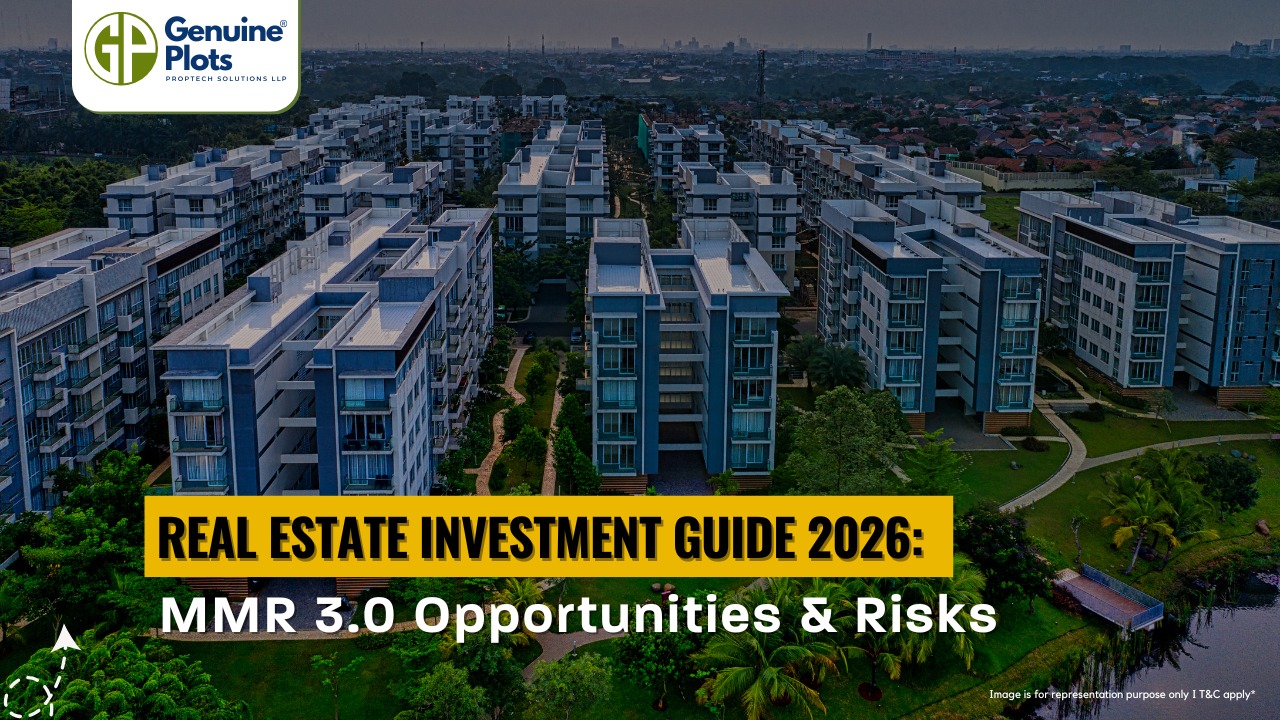
The Mumbai Metropolitan Region is no longer expanding outward—it’s re-engineering itself.
With MMR 3.0, the region is entering a decisive phase where infrastructure, decentralisation, and long-term economic planning converge. For investors looking at 2026 and beyond, this isn’t just another real estate cycle—it’s a structural shift.
This guide breaks down where the opportunities lie, what’s driving them, and the risks you must factor in before investing.
What Exactly Is MMR 3.0—and Why It Matters to Investors
MMR 3.0 is a long-term regional transformation vision focused on:
Decongesting Mumbai city
The creation of diversified economic and residential hubs
Building transit-led development corridors
For real estate:
Growth is no longer South Mumbai-centric.
Peripheral locations increase in value with the back of infrastructure
Early movers tend to benefit more.
Key Investment Opportunities Under MMR 3.0
- Emerging Growth Corridors
MMR 3.0 is driving the development of a better-connected, though underpriced, region aggressively.
Zones: Investor-watch
Panvel-Ulwe-Dronagiri
Kalyan – Dombivli – Shilphata belt (Metro + Suburban rail improvement)
Virar – Vasai – Palghar (Affordable Housing + Rail expansion)
Karjat – Khopoli – Neral (Second home and Plotted Development Demand)
Why they matter:
Such locations are shifting from "future potential" to functional zones of live infrastructure, and as per historical reports, it is expected that price appreciation will take place in phases.
- Infrastructure Led Appreciation (The Real Game Changer)
Unlike speculative boom phases, MMR 3.0 has a foundation in execution-based infrastructure:
Metro lines extending deep into the suburbs
Multimodal transport hubs
Road corridors such as Virar-Alibaug and Panvel
Navi Mumbai International Airport ecosystem
Investor Insight:
Property prices go up before project completion; they do not go up after completion. 2025-26 represents a sweet spot for entry into locations where connectivity is perceivable but not yet fully priced in.
- Plotted Developments & Land Parcels
One of the strongest undercurrents of MMR 3.0 is the revived interest in:
NA bungalow plots
Gated plotted communities
Invest in mixed-use land
Why plots are gaining traction:
Lower cost of entry compared to apartments within the city.
Flexible construction schedules
Higher long-term appreciation in Infrastructure-driven belts
Increasing demand for second homes and low-density living
The trend is particularly true in Navi Mumbai outskirts, Karjat, Khalapur, and Vasai-Palghar regions
- Rental Yield & End-User Demand in Decentralised Business Hubs
While MMR 3.0 facilitates the proliferation of distributed job centres, not everybody is employed in either BKC or Nariman Point.
Hot Rental Demand Zones:
In proximity to Information Technology Parks, Logistics Parks, and Industrial Clusters
Locations with metro or expressway connectivity
Townships that offer work-life ecosystems
For investors, it means stable rental income and capital growth, particularly in mid-segment housing.
Risks Factor you must know
- Infrastructure Timeline Risk
Not all projects were at the same stage of development.
Smart investor move:
Plan your investment in areas where construction activity is already in progress, as opposed to merely proposed.
- Oversupply in Certain Micro-Market
Some pockets may see:
Too many similar apartment configurations
short-term price stagnation
Competitive Rental Market
Mitigation
Rather than focusing on the costs of launch alone, focus on connectivity, quality of layout, and liveability:
- Regulatory & Land Title Complexity
Especially relevant for:
Plots
Agricultural to NA Converses
Peripheral developments
Rule of thumb:
Title clarity, RERA registration, and zoning clearances are non-negotiable.
- Speculative Hype over “Third Mumbai”
Although the vision is massive, not all parcels around it could be equally impacted.
Reality check:
The areas of value will be concentrated around transport nodes, clusters of economic activity, and utility-ready zones.
2026 Investor Strategy: The Way to Play MMR 3.0 Wisely
Think 5–10 years, not quick flips
Prioritise infrastructure visibility over launch hype
Diversify between apartments, plots, and emerging nodes
Balance affordability with future connectivity
Work with local experts who are familiar with the area and the processes involved in obtaining necessary approvals and zoning
Final Take: Is MMR 3.0 Worth Investing In?
For informed investors, it may provide:
Entry into future growth hubs
Infrastructure-secured appreciation
Opportunities Beyond Saturated City Limits
However, it depends on the timing, the precision of the location, and due diligence.
Can NRIs Buy Plots in India? 2026 Rules, Restrictions & New Tax Ease Explained
For many NRIs, owning a piece of land back home is more than an investment—it’s an emotional anchor. A future home, a retirement plan, or simply a long-term asset that grows in value over time. But before taking that step, it’s essential to understand what the law actually allows.
Surprisingly, the rules for NRIs are more straightforward than most people think—especially after the latest Budget 2026 announcement that has simplified one of the most troublesome tax requirements.
Let’s break everything down in simple terms.
So, Can NRIs Buy Plots in India?
Yes, absolutely.
NRIs are free to buy:
Residential plots
Commercial plots
Apartments and other built homes
There’s no need to approach the RBI for approval, and there’s no cap on the number of properties you can own.
Where the law draws a hard line is with:
Agricultural land
Plantation estates
Farmhouses
These cannot be bought directly, no matter where the NRI is living. They can only be inherited or received as a gift.
A Big Change in 2026: No More TAN Requirement
If an NRI sells property in India, the resident buyer is required to deduct TDS.
Until now, this process involved the buyer getting a Tax Deduction Account Number (TAN)—a step that confused most people and often delayed the deal.
Starting October 1, 2026, this requirement disappears.
Buyers can simply use their PAN to deposit the TDS.
No extra numbers, no extra paperwork.
This small change will make NRI transactions much smoother and quicker.
How NRIs Are Expected to Pay
All payments for property—whether a plot or a ready home—must come in Indian Rupees.
NRIs generally use these accounts:
NRE
NRO
FCNR
Funds can also be transferred from abroad directly through banking channels.
Cash is not allowed, and foreign currency must not be handed over physically.
Loans from Indian banks are permitted too, as long as the funds flow through regulated accounts.
Using a Power of Attorney (POA)
Most NRIs can’t fly back to India for every signature or document.
The law understands this.
A Power of Attorney can handle:
Registration
Agreement signing
Possession formalities
Signing the POA at an Indian Consulate or before a recognized notary abroad is enough. The document just needs to be stamped or adjudicated once it reaches India.
What Happens When an NRI Sells a Plot?
Repatriation is allowed, but with limits.
You can send up to USD 1 million per financial year out of India, provided:
Taxes are cleared
The original purchase payment can be proven
Documents like the sale deed are in order
A chartered accountant will typically handle the compliance for repatriation.
Things NRIs Should Watch Out for Before Buying
- Check if the plot is truly “residential”
Some plots are marketed as residential but may still be listed as agricultural on government records.
Always verify land conversion documents.
- Check RERA registration
Most plotted developments are legally required to get RERA approval.
This will also protect you against delayed handovers or disputed layouts.
- Verify the seller's title
Land ownership is a sensitive issue in India. One has to check:
Title chains
Certificates of Encumbrance
Demarcation and layout approvals
- Citizenship restrictions
If the NRI is a citizen of Pakistan, Bangladesh, China, Afghanistan, Sri Lanka, Iran, Nepal, or Bhutan, they must obtain prior RBI approval before buying anything.
Why Many NRIs Prefer Plots Over Built Property
Compared to apartments, plot investments offer:
More freedom to build later
Higher appreciation in fast-growing cities
Lower maintenance costs
Better long-term resale value
For NRIs planning eventual relocation or retirement in India, a plot can be a sensible first step.
Final Thoughts
Buying a residential plot in India as an NRI is not complicated. The legal framework is friendly, and with the 2026 tax update eliminating the TAN requirement, selling to or buying from an NRI will become even simpler.

Non-Resident Indians (NRIs) have always been major investors in Indian real estate. One of the most common questions they ask is whether they can legally buy residential plots in India.
The answer is yes—but with a few important conditions.
Can NRIs Buy Residential Plots?
Yes, NRIs Can Buy Residential Plots
NRIs are allowed to purchase:
Residential plots
Residential apartments, villas, and houses
Commercial property
They do not need prior permission from the Reserve Bank of India (RBI) for these purchases.
What NRIs Cannot Buy
NRIs are not permitted to buy:
Agricultural land
Plantation land
Farmhouses
However, they may inherit or receive these as gifts, but cannot directly buy them.
Payment Rules for NRI Plot Purchase
When buying a residential plot in India, NRIs must follow these payment guidelines:
Payments must be done in Indian Rupees (INR)
Funds must come through:
NRE account
NRO account
FCNR account
Or inward remittance from abroad
Payments cannot be made in cash
Home loans from Indian banks are also allowed for NRI buyers.
Documents Required
To complete the purchase, NRIs typically need:
Valid passport
PAN Card
Proof of overseas address
Recent photographs
Power of Attorney (if someone else handles registration)
Sale agreement and title papers (from the seller or developer)
Why Residential Plots Are Popular Among NRIs
NRIs prefer residential plots because:
They provide good long-term capital appreciation
Buyers can build a house any time they want
Plots allow for flexibility in their design and construction
Gated layouts and plotted developments provide secure options to invest
Checklist for NRIs Buying a Residential Plot
Before Buying
Confirm land classification – It must be non-agricultural and approved for residential use.
Verify title documents – Ensure the land is free from legal disputes.
Check developer approvals – Layout approval, land conversion, etc.
Review RERA registration (if applicable).
Plan your payment method through NRE/NRO accounts.
During Purchase
Sign the sale agreement.
Complete stamp duty and registration at the Sub-Registrar office.
Ensure property tax records are updated in your name.
After Purchase
Maintain property tax payments.
Keep copies of all agreements and receipts.
If selling later, follow NRI capital gains tax rules.
Repatriation of Funds (Selling Later)
If an NRI sells the residential plot in the future, the sale proceeds can be sent (repatriated) abroad, subject to:
Tax compliance
Limits on repatriation from NRO accounts
Proper documentation of original investment
Summary
NRIs can purchase residential plots in India, provided the land is not agricultural and the payments go through approved banking channels. Buying a residential plot can be safe and profitable, with assured returns for long-term investment or a future home in India, with proper legal check of documents.

In the last few years, more and more Non-Resident Indians (NRIs) have started investing in plots and residential land in India. This trend has grown stronger in 2025–2026 because NRIs now see land as a safe, flexible, and high-return investment that also keeps them connected to their roots.
- Land Gives High Returns With Almost No Maintenance
Land grows in value
Plots in developing suburbs and fast-growing towns appreciate much faster than many other types of real estate. Land is often called “smarter gold” because it generally increases in value over time.
No maintenance worries
Unlike apartments that require repairs, painting, and association fees, plots do not need maintenance. This makes them perfect for NRIs who live abroad and cannot inspect properties often.
Freedom and flexibility
With a plot, NRIs can:
Build a home later
Hold it as a long-term investment
Sell it when prices rise
This flexibility is one of the biggest reasons for choosing land over apartments.
- Better Safety & Transparency With RERA
RERA has made buying property in India much safer.
NRIs prefer plots because:
RERA ensures clear titles
Developers must follow strict guidelines
There is more transparency in pricing and documents
Many developers now offer gated plotted communities with:
Roads
Water and electricity connections
Security
Parks and clubhouses
This reduces the risk of buying disputed or unsafe land.
- Strong Financial Advantages for NRIs
More purchasing power
Because the Indian Rupee (INR) is often weaker than currencies like USD, GBP, and AED, NRIs get more value for their money. A plot that seems expensive in India becomes affordable when converted from foreign income.
Easy NRI home loans
Banks offer loans for plot purchases, and NRIs can repay them from NRE/NRO accounts.
Tax benefits
NRIs investing in plots with construction plans can claim tax deductions:
Section 80C (principal repayment)
Section 24 (interest deduction)
This makes it financially smart to buy land in India.
- Emotional Connection & Future Planning
Many NRIs invest in land because India is still home at heart.
Reasons include:
Staying connected to their birthplace
Planning to build a home for retirement
Owning a vacation home for family visits
Leaving behind an asset for children
A plot feels like a long-term, secure legacy.
- Massive Infrastructure Growth in India
Cities in India are expanding fast because of:
New highways
Metro routes
Ring roads
IT parks
Industrial zones
This makes peripheral plots very valuable.
Popular NRI hotspots include:
Bengaluru (Devanahalli, Hoskote)
Chennai (Thirumazhisai, Guduvancheri)
Pune (Hinjewadi, Wagholi, Talegaon)
Hyderabad (Shankarpalli, Pharmacity belt)
As these areas develop, land prices rise quickly — attracting more NRI investors.
- Hassle-Free Buying With Digital Tools
Buying property from abroad has become easy.
NRIs can now:
Take virtual site tours
Sign documents digitally
Transfer money through online banking
Get verified layouts and documents via email
Also, NRIs can appoint a Power of Attorney (PoA) to complete registration without being present in India.
Important Note for NRIs
NRIs cannot buy:
Agricultural land
Plantation land
Farmhouses
unless they have special approval from the Reserve Bank of India (RBI).
NRIs can freely buy:
Residential plots
Non-agricultural land
Plotted developments
Conclusion
NRIs are investing in plots in India because land offers:
Higher appreciation
Low maintenance
Better transparency
Strong financial benefits
Emotional security
Great future potential
With improved regulations and digital processes, buying land in India has become safer, easier, and more rewarding than ever.
Recent Posts
Tags
Bhunaksha,
genuine plots,
Land For Sale,
Maharashtra Bhunaksha,
plots for sale,
Gunthewari,
Gunthewari Land,
Gunthewari Rules,
Extract Documents,
Plots and Lands,
Saat Baara,
Extract Saat,
Baara Utara,
Jamabandi,
property tax payments,
Gram Panchayat,
lower prices,
non-agricultural land,
Lower Investment Cost,
Gram Panchayat lands,
Fresh Land Settlements,
Growing demand,
affordable homes,
genuine p,
legal Land,
bungalow plots,
Konkan,
Maharashtra,
Purandar,
Pune,
Karnataka,
Bangalore,
Farm Land,
Kolkata,
Rajarhat,
Indore,
Chhatrapati Sambhajinagar,
Aurangabad,
Mundhwa,
Agricultural Land,
Farmhouse Plot,
Rules And Penalties,
Residential Plots,
NA PLots,
Residential NA Plots,
Commercial NA Plots,
Animal Husbandry Land,
Tathawade,
Vahivat Land Maps,
Vahivat,
Indian Land Records,
Ownership Rights,
Red zone,
PCMC,
Dehu Road,
Land Registration Rules,
Land Investing,
Infrastructure Growth,
Land Ownership,
Land Encroachment,
Panshet Dam,
Varasgaon Dam,
Verified Land,
Plot For Sale,
Land Investment,
Verified Plots,
Land Acquisiton,
Hydrological Survey,
Invest In Land,
Verified Land Plots,
Panshet,
Khadakwasla,
Land Rules,
Dakhil Kharij,
Land Registry,
Property Onwership,
Clean Title Check List,
Property Verification,
Digital Registry,
Farm Plots,
Agro Property,
Land Value Growth,
Urban Expansion,
Senapati Bapat Road,
Registered Land,
Agricultral Plot,
Purandar Airport,
Safe Investment,
Secure Property,
Plot Buyers,
Approved Plots,
Land ROI,
NA Approved Plots,
NA Land,
Welspun One,
Logistic Park,
Talegaon,
PMC Bharat Mandapam,
Urban Development,
Lohgaon,
Close To Nature,
Gated Community Plots,
Buy Land VS Gold Investment,
NRI Investment,
Future Ready Living,
Trusted Plots,
Plot Investment,
Authentic Land,
Safe Land Buying,
Mumbai,
Premium Plots,
MMR Land Investment,
MMR Infrastructure,
Metro Connectivity,
Plots in Mahabaleshwar hill station investment,
Mahabaleshwar land prices and future growth,
Scenic residential plots in Mahabaleshwar,
Mumbai 3.0,
Mumbai 3.0 vs Mumbai 2.0,
Mumbai property investment,
Real estate investment in Mumbai,
Upcoming residential projects in Mumbai,
CIDCO plot auctions,
CIDCO auction Navi Mumbai,
Upcoming CIDCO plot auctions 2026,
CIDCO land auction dates,
Navi Mumbai plot auctions,
CIDCO plots in Navi Mumbai,
CIDCO plots in Kharghar,
CIDCO plots in Ulwe,
NMIA investment opportunities,
Mumbai 3.0 plotted development,
Mumbai 3.0 real estate,
Plots in Mumbai 3.0,
Land investment in Maharashtra,
Residential plots near Mumbai,
Land appreciation in Mumbai 3.0,
Residential land for sale in Mumbai 3.0,
Altamura NA Plots,
Altamura Nadar City,
NA Plots in Nadar City,
Nadar City Plots,
Plots in Nadar City,
YEIDA plots,
YEIDA plots near Noida Airport,
Noida Airport plots,
Jewar Airport investment,
Yamuna Expressway plots,
YEIDA plot scheme 2026,
Noida Airport real estate,
Zepto,
Zepto effect,
D2C brands India,
Urban consumer trends,
Marketplace evolution,
Urban infrastructure growth,
YEIDA Residential Plot Scheme,
Yamuna Expressway Plot Scheme,
YEIDA Residential Plots,
Yamuna Expressway Authority,
Noida Investment,
Residential Plots in Lucknow,
LDA Plots in Lucknow,
Lucknow Real Estate,
LDA Approved Plots,
Plots for Sale in Lucknow,
Lucknow Property Investment,
Land Investment in Lucknow,
Residential Land in Lucknow,
Buy Plot in Lucknow,
Lucknow Development Authority,
Maharashtra Fragmentation Law 2025,
Fragmentation Act Maharashtra,
Maharashtra land law update 2025,
Maharashtra land reforms 2025,
Land subdivision rules Maharashtra,
Maharashtra agriculture land purchase rules,
Agricultural land purchase restrictions Maharashtra,
Can non-farmers buy agricultural land in Maharashtra,
NA conversion process Maharashtra,
Collector permission for land purchase,
farmland prices in Nagpur,
agricultural land price in Nagpur per acre,
farmland cost in Nagpur Maharashtra,
Nagpur agricultural land investment,
per acre agricultural land rate in Nagpur,
Tukdebandi Law Maharashtra,
Maharashtra Fragmentation Act update,
Land subdivision law Maharashtra,
Agricultural land division Maharashtra,
Maharashtra land reform ordinance,
Plot registration Maharashtra,
Farmland prices Nagpur,
Nagpur agricultural land rates,
Farmland per acre Maharashtra,
Agricultural land price Nagpur,
Farm land cost Nagpur,
Nagpur real estate trends,
Land investment Nagpur,
Avani Farms,
Avani Farms Pune,
Farmland near Pune,
Farm plots for sale,
Agricultural land investment,
Gated farmland near Pune,
NRI agricultural land rules India,
Can NRI buy agricultural land in India,
FEMA rules for NRI property purchase,
RBI guidelines for NRI land investment,
NRI farmland investment India,
Agricultural land purchase by NRI,
Maharashtra Fragmentation Act,
Minimum plot size in Maharashtra,
Guntha rules Maharashtra,
Agricultural land division rules,
Minimum land area for sale in Maharashtra,
Legal plot size in guntha,
Guntha conversion rules,
NRI land purchase in India,
Can NRIs buy agricultural land in India,
NRI property investment India,
NRI buying residential land,
NRI real estate guidelines India,
Investment tips for NRIs in India,
Mutation Entry Process,
Land Mutation in India,
Property Mutation Process,
Land Ownership Transfer,
1 guntha na plot prices in pune 2026,
1 guntha plot price in pune,
na plots in pune,
residential na plots pune,
guntha plot rate in pune,
na plot investment in pune,
plots near purandar airport,
1 Acre Land Price in Pune,
Pune Land Rates 2025,
Pune Land Price 2026,
Pune Acre Land Cost,
Land Value Pune,
Agricultural Land Price Pune,
gated community plots in Hinjewadi,
Hinjewadi plots for sale,
residential plots in Hinjewadi Pune,
premium plots in Hinjewadi,
plots near Rajiv Gandhi Infotech Park,
land for sale in Hinjewadi Pune,
Pune property investment,
plots for sale in Pune below 5 lakhs,
Pune rural land investment,
gated plotting projects Pune,
MIDC growth corridor plots,
Residential plots for sale in Hinjewadi,
Plots in Hinjewadi Pune,
Land for sale in Hinjewadi,
Residential NA plots Hinjewadi,
Hinjewadi real estate trends 2026,
Nashik land investment,
Trimbakeshwar land for sale,
Simhastha Kumbh 2026,
Simhastha Kumbh 2027 real estate impact,
Trimbakeshwar property investment,
Land appreciation in Nashik,
plots for sale in pune,
types of plots in pune,
residential plots in pune,
agricultural land in pune,
villa plots in pune,
NRI agricultural land purchase India,
NRI property investment in India,
Agricultural land rules for NRIs,
NRI real estate investment India,
NA plot meaning,
what is NA land,
NA land in Maharashtra,
land investment guide,
NRI agricultural land in Telangana,
Telangana land laws for NRI,
Telangana real estate laws,
NRI investment guide Telangana,
Legal compliance for NRI property,
NRI farmhouse purchase India,
RBI guidelines for NRI property,
NRI land buying rules,
Godham Eco Village,
Godham Eco Village for NRIs,
NRI land investment in India,
Investment plots for NRIs,
Secure land investment India,
NRI property buying guide,
plots in Pune,
NRI buying property in India,
NRI guide to buying land in Pune,
NRI land investment in Pune,
NRI property documents checklist,
Maharashtra land reform 2025,
Maharashtra land laws update,
Agricultural land rules in Maharashtra,
Buying agricultural land in Maharashtra,
Non-agricultural land conversion Maharashtra,
Maharashtra agricultural land rules 2024,
agricultural land purchase in Maharashtra,
non agriculturist land purchase rules,
who can buy agricultural land in Maharashtra,
Maharashtra land laws for non farmers,
Guntha based land rules,
Minimum guntha rule Maharashtra,
Maharashtra land laws,
Maharashtra agricultural land laws,
farmland investment Maharashtra,
buying farmland legally in Maharashtra,
NA conversion rules Maharashtra,
agricultural land eligibility criteria,
Property Mutation in India,
Land Record Update,
Revenue Records,
Property Ownership Transfer,
Mutation of Property,
Farmhouse Plots Near Pune,
NRI Investment in Pune,
Pune Real Estate,
Plots for Sale Near Pune,
Luxury Farmhouse Plots,
Pune plot scams,
Plot buying checklist,
Legal verification for plots,
NA plot verification,
Plot buying tips Pune,
Godrej Properties,
Evora Estate Panipat,
Luxury plots in Panipat,
Premium land investment,
Residential plots in Panipat,
Lodha Developers,
Lodha Developers Q3 acquisition,
Lodha land parcels Q3,
Indian real estate news,
New residential projects India,
Real estate investment news,
Premium housing projects,
Srijan Group,
Kolkata Tech Park,
Commercial Real Estate,
Real Estate Investment,
Real Estate Deal News,
NRI investment in India,
NRI land investment,
Plots for sale in India,
NRI property investment,
Can NRI buy residential plot in India,
NRI land purchase rules,
Residential plots for NRIs,
NRI real estate investment,
NRIs buying property in India,
Can NRIs buy plots in India 2026,
RBI rules for NRI property purchase,
NRI land investment rules,
MMR 3.0,
MMR real estate 2026,
Mumbai real estate market,
Navi Mumbai investment,
Thane property market,
Mumbai property trends 2026,
Land investment in MMR,
Mumbai smart city project,
Korea Mumbai partnership,
MMRDA infrastructure projects,
Korean investment in India,
MMR GDP growth,
MMR economic roadmap 2030,
Mumbai real estate,
Public private partnership projects Mumbai,
Investment opportunities in MMR,
Mumbai Metropolitan Region,
Mumbai urban development,
MMR 2047 vision,
Mumbai infrastructure projects,
Navi Mumbai development,
Goa property investment,
Invest in Goa 2026,
Goa real estate market 2026,
Best places to invest in Goa,
North Goa property,
Property appreciation in Goa,
Goa plots for sale,
Commercial property in Goa,
Buy property in Goa,
YEIDA plots 2026,
Residential plots in YEIDA,
YEIDA new scheme update,
Plots near Noida International Airport,
Yamuna Expressway Authority plots,
YEIDA housing scheme details,
Lucknow land investment,
Property in Lucknow,
Buy plots in Lucknow,
Nashik plots for sale,
Kumbh Mela 2026 Nashik,
Land investment in Nashik,
Nashik property market 2026,
Plots near Kumbh Mela Nashik,
Residential plots in Nashik,
Upcoming projects in Nashik,
Property appreciation in Nashik,
Maharashtra land investment,
Nashik Kumbh Mela 2026,
Kumbh Mela investment opportunities,
Infrastructure development in Nashik,
Plots near Nashik Kumbh Mela,
High ROI land investment,
MIHAN,
MIHAN Nagpur,
Nagpur Real Estate,
Agricultural Land Nagpur,
Nagpur Property,
Plots Near In MIHAN,
Pune residential plots,
best areas to buy plots in Pune,
Pune land investment,
investment plots in Pune,
buy land in Pune,
real estate investment in Pune,
Godrej Plots Doddaballapur,
Doddaballapur plots for sale,
Plots in North Bangalore,
Godrej Properties plots,
Residential plots in Doddaballapur,
Investment plots near Bangalore,
Gated community plots Bangalore,
Premium plots in Doddaballapur,
plots in Mahabaleshwar,
Mahabaleshwar villa plots,
farmhouse plots in Mahabaleshwar,
land for sale in Mahabaleshwar,
bungalow plots in Mahabaleshwar,
hill station property investment,
agricultural land in Mahabaleshwar,
premium land in Mahabaleshwar,
Plots in Pune under 3 lakhs for sale,
Budget residential plots near Pune,
Low cost plots near Pune highway connectivity,
plots in Pune under 3 lakhs,
farmland plots near Pune city,
Investment plots near Pune under budget,
Residential land near Pune,
Godrej plots in Pune,
Premium plotted development by Godrej in Pune,
Residential land for sale by Godrej,
Premium plot by Godrej,
Plots for sale in Hadapsar Pune,
Residential plots in Hadapsar,
Investment plots in Hadapsar,
Gated community plots in Hadapsar,
Ready to build plots in Hadapsar,
1 Guntha plot in Pune,
1 Guntha plot in Pune for sale,
1 Guntha plots near Pune city,
Residential 1 Guntha land in Pune,
Clear title 1 Guntha plot in Pune,
1 guntha plot price in village,
village plot rate per guntha,
affordable 1 guntha land in rural area,
residential plot in village Pune,
farmland plot price per guntha,
Residential 1 Guntha plot near Pune city,
Investment plots in Pune 1 Guntha,
Clear title 1 Guntha land in Pune,
Agricultural 1 Guntha plot near Pune,
1 Guntha plot in Pune Katraj for sale,
Residential plot in Katraj Pune 1 Guntha,
Katraj Pune land for home construction,
1 Guntha NA plot in Katraj Pune,
Pune Katraj plot near highway connectivity,
Gated plot project in Katraj Pune,
NA plots in Pune under 10 lakhs,
Affordable NA plots near Pune city,
NA residential plots in Pune,
NA approved plots in Pune under 10 lakhs,
Investment plots in Pune under 10 lakhs,
Residential NA plots near Pune highway,
Best plots in Pune below 10 lakhs,
Premium villa plots in Pune,
Residential villa plots in Pune near city outskirts,
Luxury villa plots in Pune,
Gated villa plot project in Pune,
Villa plot site visit in Pune,
NA plots in Pimpri Chinchwad for sale,
Residential NA plots in PCMC area,
NA approved plots in Pimpri Chinchwad,
NA land with clear title in PCMC,
NA plots near Pune Mumbai Highway PCMC,
Godrej Villa Plots Doddaballapur,
Godrej plotted development Bangalore,
villa plots in North Bangalore,
premium villa plots Bangalore,
Godrej Properties plots Bangalore,
Brigade Plots Malur,
Brigade Malur plots,
plots in Malur East Bangalore,
investment plots in East Bangalore,
residential plots in Malur Bangalore,
Brigade Group plots Bangalore,
land investment in East Bangalore,
gated community plots in Malur,
prestige plots devanahalli,
prestige plots in devanahalli bangalore,
plots for sale in devanahalli,
prestige plots investment,
premium plots in devanahalli,
residential plots near kempegowda airport,
What is NA plot in real estate,
NA land meaning in property,
NA approved plotsDifference between NA and agricultural land,
Buying NA plots in Maharashtra,
NA plot vs agricultural land,
Plot prices in Mysore,
Mysore infrastructure projects,
Mysore property investment,
Land investment in Mysore,
Plot investment opportunities,
land buying guide in goa,
buy land in goa,
plots for sale in goa,
legal process to buy land in goa,
property in goa,
residential plots in goa,
Nashik Simhastha Kumbh Mela 2026,
Sadhugram expansion Nashik,
Maharashtra Kumbh Mela planning,
Nashik Kumbh Mela preparations,
tourism development in Nashik,
plots in Nagpur,
Nagpur plot investment,
land for sale in Nagpur,
residential plots in Nagpur,
golden rules before buying plots in Nagpur,
Nagpur land investment,
plot investment in Nagpur,
land investment in Nagpur,
plots for sale in Nagpur,
best areas to buy plots in Nagpur,
buying plots in Nagpur,
plot purchase checklist,
legal checklist for buying land,
documents required for plot purchase,
NA plots in Nagpur,
Tattvana,
Tattvana in Kamshet,
Moregaon Farmland Estates,
farmland investment Pune,
agricultural land investment,,
farmland for sale near Pune,
farm plots in Pune,
gated farmland projects,
agricultural plots Maharashtra,
open plot vs NA plot,
difference between open plot and NA plot,
what is NA plot in India,
open plot meaning in real estate,
NA land vs agricultural land,
residential NA plots benefits,
land investment in India,
buying NA plot vs open land,
capital gains on agricultural land,
rural vs urban agricultural land tax,
agricultural land tax rules India,
capital gains tax India property,
is agricultural land taxable,
rural agricultural land exemption,
urban agricultural land tax India,
Runwal Enterprises Alibaug township,
Alibaug real estate,
coastal real estate India,
township projects in Alibaug,
luxury properties in Alibaug,
Mumbai weekend homes investment,
Alibaug property investment,
isprava south goa,
ultra luxury villas in goa,
south goa real estate,
luxury homes in goa,
isprava projects goa,
premium villas in south goa,
land investment advisory services,
secure land investment,
real estate advisory services,
verified land deals,
investment plots near Pune,
land buying guide India,,
#KanpurRealEstate,
#KDAPlots,
#KanpurProperty,
#RealEstateKanpur,
#PropertyTrends,
Gokul Plots investment,,
real estate investment Gokul,,
plots with high appreciation potential,
smart land investment strategies,
plots for sale in North Bangalore,
land investment Bangalore,,
emerging areas in North Bangalore,
residential plots Bangalore,,
Bangalore real estate investment,,
North Bangalore property trends,,
plots near airport Bangalore,,
HUDA plots in Gurgaon,
HUDA plots in Faridabad,
residential plots Haryana,
HUDA approved plots,
plots for sale in Gurgaon,
plots in Faridabad investment,
Prestige Marigold plots,,
Bangalore plotted developments,
land investment Bangalore,
best plots in North Bangalore,
#PlotsForSaleInNellore,
#NelloreRealEstate,
#NellorePlots,
#RealEstate2026,
#PropertyInvestment,
#NelloreProperty,
#AndhraPradeshRealEstate,
GMADA E Auction 2026,
GMADA plots Mohali,
plots in Mohali for sale,
GMADA Mohali auction process,
buy plots in Mohali,
Punjab property investment,
GMADA scheme 2026,
Mohali real estate,
HSVP plots 2026,
HSVP plot investment,
HSVP plots Haryana,
land investment benefits,
residential plots investment,
government approved plots,
buy plot in New Chandigarh,
flats in New Chandigarh,
New Chandigarh real estate,
property investment in New Chandigarh,
residential plots in New Chandigarh,
apartments in New Chandigarh,
#WaveCityGhaziabad,
#GhaziabadPlots,
#PlotsInGhaziabad,
#NCRRealEstate,
#RealEstateInvestment,
#ResidentialPlots,
APIIC vacant plots,
APIIC plots for sale,
industrial plots in Andhra Pradesh,
commercial land for MSMEs,
startup investment plots,
APIIC industrial land,
HUDA plots,
HUDA plots investment,
property appreciation,
plot investment benefits,
high return property investment,
land appreciation,
#GDAPlotsInGhaziabad,
#PlotsForSaleInGhaziabad,
#ResidentialPlotsGhaziabad,
#InvestmentPlots,
#RealEstateGhaziabad,
#GDAApprovedPlots,
#BaliProperty,
#PropertyInBali,
#IndiansInBali,
#BaliRealEstate,
#InternationalPropertyInvestment,
buy plots in Sarjapur Road Bangalore,
plots in Sarjapur Road,
residential plots in Sarjapur Road,
land for sale in Sarjapur Road Bangalore,
investment plots in Bangalore,
plots near IT corridor Bangalore,
how Indians can buy property in Bali,
buy property in Bali for Indians,
Bali property investment,
property in Bali for Indian buyers,
Bali real estate guide,
foreign property investment Bali,
legal checks before buying property in Bali,
Indians invest in Bali property,
due diligence for Bali property,
Bali real estate for Indians,
Bali property legal verification,
verified farmland plots,
100% verified farmland plots,
farmland investment India,
legal farmland plots,
farmland plots for sale,
Konkan land investment,,
high-growth corridors Maharashtra,
land investment 2026,
plots for sale in Maharashtra,



