Prev Post
MMR 3.0: The Infrastructure Boom Reshaping the Future of Mumbai Metropolitan Region
1. What is the current price range for plots in Mahabaleshwar?
As of 2026, plots in Mahabaleshwar typically range from ₹4,479 per sqft to ₹9,946 per sqft on average. Prices vary by location, plot size, and views. Premium areas like Panchgani–Mahabaleshwar Road and SH-58 command significantly higher rates due to tourism, accessibility, and valley views.
2. Are affordable plots available in Mahabaleshwar?
Yes, buyers looking for affordable plots in Mahabaleshwar can find options under ₹40 Lakhs in areas like Tapola Road, Dhardev, and Wai. For example, 6,533 sqft plots for ₹21 Lakhs and 3,000 sqft plots for ₹25 Lakhs are common in this segment.
3. What are the typical prices for mid-range or luxury plots in Mahabaleshwar?
Mid-range to luxury plots for sale in Mahabaleshwar usually fall between ₹50 Lakhs and ₹2 Crore. Localities like Kuroshi, Metgutad, and Tapola-Nivali offer larger plots suitable for bungalows, farmhouses, or eco-stay investments.
4. Are high-end or large parcels of land available in Mahabaleshwar?
Yes. Investors seeking premium Mahabaleshwar plots for sale can explore large parcels above ₹2 Crore, including 2.5-acre plots priced between ₹3.7 Cr to ₹14 Cr. These are commonly located near prime stretches such as Panchgani–Mahabaleshwar Road.
5. Which localities are best for buying a plot in Mahabaleshwar?
Popular locations for plots in Mahabaleshwar include Tapola Road, SH-58, Panchgani–Mahabaleshwar Road, Wai, and Satara Medha Road. These areas are known for good accessibility, scenic views, and rising investment potential.
6. What is driving the price appreciation of plots in Mahabaleshwar?
Price appreciation for plots for sale in Mahabaleshwar is driven by:
- The New Mahabaleshwar Project covering 235 villages
- Rising tourism and demand for vacation homes
- Infrastructure upgrades like new roads, electricity, and water supply
- Demand for eco-stays, farmhouses, and hospitality ventures
Nearby areas like Wai (up 14.24%) and Godoli (up 27.8%) also show an upward trend.
7. How will the New Mahabaleshwar Development Project impact land value?
The New Mahabaleshwar project—spanning Satara, Jaoli, Patan, and Mahabaleshwar—is expected to significantly boost the value of plots in Mahabaleshwar. With government-backed improvements in connectivity, infrastructure, and tourism facilities, long-term appreciation potential is very strong.
8. Are Mahabaleshwar plots suitable for second homes or investment?
Absolutely. Many buyers prefer plots in Mahabaleshwar for holiday homes, farmhouses, boutique resorts, and eco-stay projects. The blend of natural beauty, tourist footfall, and improving infrastructure makes it an ideal long-term investment.
9. What documentation should I check before buying a plot in Mahabaleshwar?
Before buying plots for sale in Mahabaleshwar, ensure:
- Clear Title
- 7/12 extract
- Verification of NA (Non-Agricultural) status if you plan to build
- Access to water, electricity, and road connectivity
Plots with valley views and main-road access usually have a higher value.
10. Are agricultural and NA plots both available in Mahabaleshwar?
Yes, both agricultural and NA plot options in Mahabaleshwar exist. Agricultural land is usually cheaper, but if you plan to construct, ensure the plot has NA status or can legally be converted.
11Is now a good time to buy a plot in Mahabaleshwar?
With rising tourism demand, the New Mahabaleshwar project, and steady price appreciation, Mahabaleshwar plots for sale offer strong investment potential in 2026. Early buyers stand to benefit the most as development accelerates.
5 Key Things NRIs Should Know Before Investing in Indian Real Estate

1. Foreign Exchange Rules
- NRIs must follow the FEMA (Foreign Exchange Management Act when investing.
- They can generally buy residential or commercial property, but not agricultural land.
- Inheritance or gifts of property are allowed, even for NRIs.
- Court permission may be needed in very specific cases for farm or agricultural land.
2. Tax Implications
- When selling the property within 2 years, any profit is treated as short-term capital gains — taxed at 30%.
- If the property is sold after 2 years, it falls under long-term capital gains, and the tax rate is 20% (after adjusting for inflation).
- The tax for long-term gains needs to be paid on the full sale value first; later, you can claim a rebate based on the indexed cost.
3. Picking the Right Type of Property
- NRIs should decide whether they want residential or commercial property, depending on their goal (rent-earning, capital growth, personal use).
- Residential properties are currently more popular and in demand, but commercial real estate in good locations can yield strong rental returns.
- It's safer to invest with reputed and trusted builders — check for certifications, government approvals, and track records.
4. Using Power of Attorney (POA)
- Since NRIs may not always be physically present in India, they can appoint a Power of Attorney (POA) to manage the property.
- Choose a trusted person (family or professional) as POA to oversee payments, maintenance, or legal matters.
- Ensure the POA document is legally sound and follows all government compliance to avoid future disputes.
5. Home Loan Options
- NRIs can take home loans in India — typically up to 80% of the property value.
- It’s recommended to use an NRE account when applying for the loan.
- After selling, loan repayment or proceeds can often be managed through NRE / NRO accounts, making it simpler to move money.
Why It’s a Good Time to Invest
- Real estate offers diversification compared to stocks or crypto.
- With research and compliance, NRIs can tap into India’s real estate market and gain from capital growth or rental income.

1. Meaning of Benami Property
- Any asset held in someone else's name, while the actual payment was made by another person, constitutes a benami property.
- The person in whose name the property is registered is called the benamidar.
- Beneficial owner means the real payer or the person who receives the benefit of the property.
- The term applies to: Land, plots, buildings, Farmhouses, vehicles, jewellery, cash, shares, financial assets
2. Why Benami Transactions Are Prohibited
These Benami properties are used to:
- Conceal illegal revenues
- Hide assets
- Evade taxes
- Invest black money in real estate.
3. Types of Benami Transactions
A transaction may be benami if:
- Property is in some other person's name, yet money is provided by some other person.
- The owner denies knowledge of the property.
- The actual source of the funds remains hidden.
- A fictitious name or identity is used in the transaction.
4. What is not Benami
Certain genuine situations are exempt, such as:
- Property held in the name of a spouse or child
- Property held for the benefit of a Hindu Undivided Family.
- Assets held by a trustee, company director, or partner on behalf of the organization.
- Property acquired through known and legal sources of income with proper documentation.
5. Important Provisions of the Benami Property Act
All benami transactions are strictly prohibited.
Authorities are empowered to:
- Investigate
- Attach property
- Freeze transfers
- Confiscate assets
- The law applies to both:
- The nameholder (benamidar)
- The beneficial owner -actual payer-
6. Penalties for Benami Transactions
Penalties under the law are stringent:
- Rigorous imprisonment from 1 to 7 years.
- A monetary penalty of up to 25% of the fair market value of the property.
- For furnishing false information or misguiding the investigations, end
- Imprisonment of between 6 months and 5 years.
- A fine of up to 10 per cent of the property's fair market value.
7. Consequences for Individuals
If involved in a benami deal:
- You lose legal ownership of the property.
- Confiscated property is taken by the government without compensation.
- Both parties can face jail and fines: the real owner and the nameholder.
- Even unknowing participation may lead to investigations and legal problems.
8. Why Understanding Benami Laws Matters
- Prevents buying property that might thereafter be seized.
- Helps in ensuring that real estate transactions are clean, transparent, and compliant.
- Safeguards residents and NRIs from fraudulent or illegal dealings.
- Essential for safe investing in land, plots, and property in India.
Conclusion
Laws on benami property in India are designed to ensure transparency and prevent real estate from being misused for illicit financial dealings. Any property bought in someone else's name, when not clearly, legally, and documentedly justified, can be classified as benami. The penalties are strict, and the government has strong powers to investigate and confiscate such assets. It is very important for every buyer, investor, and especially NRIs who wish to invest in Indian property to understand these rules.
Mere Ownership of Agricultural Land Not Enough to Claim Agricultural Income, Rules ITAT

(ITAT) The Income Tax Appellate Tribunal , Chennai Bench, has held that simply owning agricultural land is not sufficient to justify claims of agricultural income. In a significant ruling, the Tribunal upheld the addition of 50% of the assessee’s declared agricultural income as unexplained under Section 68 of the Income Tax Act.
The assessee had filed his return declaring substantial agricultural income.
A search was conducted at his premises, after which assessment proceedings were reopened.
Assessment Officer’s Findings
The taxpayer claimed ownership of about 47 acres of wet and dry land.
However, he failed to provide supporting evidence of cultivation, such as:
- Land-revenue records (Chitta, Adangal)
- Details of agricultural expenditure
- Proof of sale of agricultural produce
Due to lack of documentation, the Assessing Officer treated the entire agricultural income as unexplained credit.
CIT(A) Observations
Only patta documents (land ownership) were submitted; no cultivation-related records were provided.
The assessee was unable to demonstrate actual agricultural operations.
Considering the circumstances, the CIT(A) accepted 50% of the declared agricultural income as reasonable and treated the remaining 50% as unexplained.
ITAT’s Decision
The Tribunal upheld the view of the CIT(A) and dismissed the assessee’s appeals for both assessment years.
Key observations:
Ownership of land does not automatically prove agricultural activity.
No evidence of expenditure, crop details, yield, or sales was produced.
Income claimed as agricultural income must be backed by verifiable records.
The ITAT concluded that treating half of the agricultural income as unexplained was justified.
Key Takeaways
Taxpayers claiming agricultural income must maintain:
- Cultivation records
- Expense details
- Sale receipts or proof of buyers
Mere possession of agricultural land is not enough to support agricultural income claims.
Inaccurate or unsubstantiated claims may lead to additions under Section 68 as unexplained credits.

1. What is Khudkasht?
The word Khudkasht comes from old land-revenue systems in India.
It means land that is personally cultivated by the owner.
Cultivation can be done by:
- the owner himself,
- the owner’s family members,
- or hired labour working under the owner’s supervision.
It also includes land earlier recorded as Sir, Havala, Niji-jot, etc., in old settlement records.
2. Legal Meaning of Khudkasht
Indian tenancy and land revenue laws clearly define what counts as “personal cultivation.”
Even if owners like widows, minors, or disabled persons cannot personally supervise cultivation, the land can still legally be considered Khudkasht.
Courts have explained that Khudkasht land must be under direct control and use of the landowner, not tenants.
3. Key Features of Khudkasht Land
- Land is directly cultivated by the landowner, not rented out.
- Land is recorded in revenue records specifically as Khudkasht.
- Rights are connected to personal use, not to tenancy.
- Transfer of Khudkasht land can have restrictions, depending on state laws.
- These rights can be passed on to legal heirs.
4. Why Khudkasht Matters in Real Estate
A. Ownership Rights
Khudkasht holders have strong rights because they cultivate the land themselves.
These rights often continue even after changes in land laws.
B. Transfer Restrictions
Khudkasht land usually cannot be sold or transferred freely like normal freehold land.
Some transfers may require government permission or may not be allowed at all.
C. Effect on Land Value
Because of limited transfer rights, Khudkasht land often has lower market value compared to freehold land.
D. Loan & Finance Impact
Banks may be hesitant to lend large amounts on Khudkasht land.
Restricted ownership lowers the land’s mortgage value.
Summary
- Khudkasht = land personally cultivated by the owner.
- Includes owner’s labour, family labour or supervised hired labour.
- Clearly defined in law and supported by court judgments.
- Transfer often restricted → lower market value.
- Important for inheritance, loans, and development.
- Always check revenue records before buying.
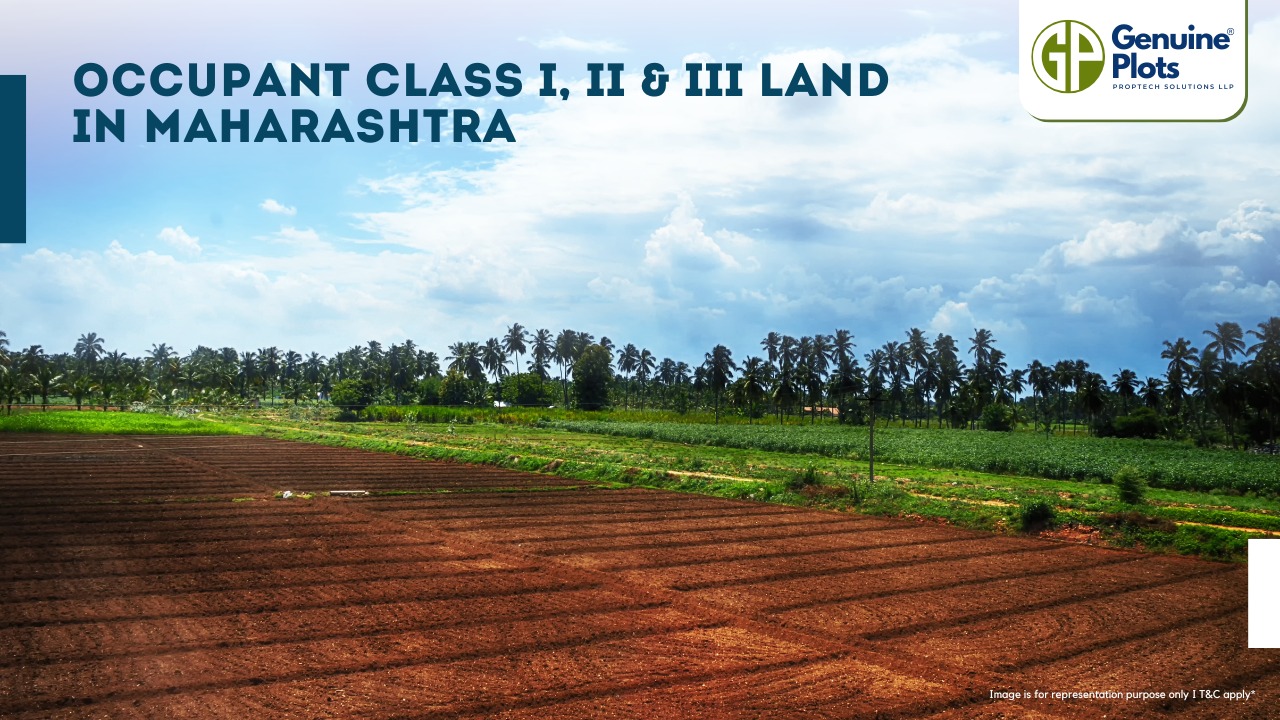
1. What is an Occupant?
- A person who legally holds and uses government land (unalienated land).
- Not a tenant, not a trespasser, not a temporary user.
- The Maharashtra Land Revenue Code (MLRC 1966) divides such landholders into classes.
Class I, Class II and Class III (Government Lessee)
2. Occupant – Class I
- Full rights over the land.
- Can sell, gift, transfer or mortgage the land without restrictions (in most cases).
- Land is almost like freehold land.
- Land is highly valuable and easy to transfer.
- People who had strong land rights before 1966 usually fall in this class.
3. Occupant – Class II
- Have land in perpetuity (permanent), but with restrictions.
- Cannot sell or transfer land freely.
- They need Collector / Government permission for any sale or transfer.
- If they transfer without permission, the land can go back to the government.
- Land value is lower due to restrictions.
- Some older leaseholders (long-term leases) also fall under this class.
4. Class II Land Conversion (Upgradation to Class I)
- Class II land can be changed to Class I by applying to the Collector.
- Requires paying a premium (a fee decided by the government).
- After conversion, the land becomes fully transferable and more valuable.
5. Occupant Class III (Government Lessee)
(Commonly known as Class III, although legally called Government Lessee)
- This land is leased by the government to a person or institution.
- You do not own the land — you only have the right to use it.
- Very strict rules and almost no right to sell or transfer.
- Mostly given for special purposes like:
- School, hospital, public use land
- Temple or religious land (Devsthan Inam)
- Old service-related grants (Saranjam)
- Banks usually do not give loans on such land.
- Market value is very low because it cannot be sold freely.
6. Why Understanding These Classes is Important
- Helps you know whether you can buy or sell the land.
- Helps you understand whether you can get a loan on the land.
- Helps avoid legal problems if land has restrictions.
- Helps you plan construction, development, or investment safely.
7. How to Check the Land Class
- Check the 7/12 extract or land documents.
- Ask at the Talathi office, Tehsildar office or Collector office.
- A property lawyer can confirm the land class easily.
8. Summary
- Class I = Full rights, free to sell, best for investment.
- Class II = Restricted rights, need government permission to sell.
- Class III (Government Lessee) = No ownership, cannot sell, very restricted.
Recent Posts
Tags
Bhunaksha,
genuine plots,
Land For Sale,
Maharashtra Bhunaksha,
plots for sale,
Gunthewari,
Gunthewari Land,
Gunthewari Rules,
Extract Documents,
Plots and Lands,
Saat Baara,
Extract Saat,
Baara Utara,
Jamabandi,
property tax payments,
Gram Panchayat,
lower prices,
non-agricultural land,
Lower Investment Cost,
Gram Panchayat lands,
Fresh Land Settlements,
Growing demand,
affordable homes,
genuine p,
legal Land,
bungalow plots,
Konkan,
Maharashtra,
Purandar,
Pune,
Karnataka,
Bangalore,
Farm Land,
Kolkata,
Rajarhat,
Indore,
Chhatrapati Sambhajinagar,
Aurangabad,
Mundhwa,
Agricultural Land,
Farmhouse Plot,
Rules And Penalties,
Residential Plots,
NA PLots,
Residential NA Plots,
Commercial NA Plots,
Animal Husbandry Land,
Tathawade,
Vahivat Land Maps,
Vahivat,
Indian Land Records,
Ownership Rights,
Red zone,
PCMC,
Dehu Road,
Land Registration Rules,
Land Investing,
Infrastructure Growth,
Land Ownership,
Land Encroachment,
Panshet Dam,
Varasgaon Dam,
Verified Land,
Plot For Sale,
Land Investment,
Verified Plots,
Land Acquisiton,
Hydrological Survey,
Invest In Land,
Verified Land Plots,
Panshet,
Khadakwasla,
Land Rules,
Dakhil Kharij,
Land Registry,
Property Onwership,
Clean Title Check List,
Property Verification,
Digital Registry,
Farm Plots,
Agro Property,
Land Value Growth,
Urban Expansion,
Senapati Bapat Road,
Registered Land,
Agricultral Plot,
Purandar Airport,
Safe Investment,
Secure Property,
Plot Buyers,
Approved Plots,
Land ROI,
NA Approved Plots,
NA Land,
Welspun One,
Logistic Park,
Talegaon,
PMC Bharat Mandapam,
Urban Development,
Lohgaon,
Close To Nature,
Gated Community Plots,
Buy Land VS Gold Investment,
NRI Investment,
Future Ready Living,
Trusted Plots,
Plot Investment,
Authentic Land,
Safe Land Buying,
Mumbai,
Premium Plots,
MMR Land Investment,
MMR Infrastructure,
Metro Connectivity,
Plots in Mahabaleshwar hill station investment,
Mahabaleshwar land prices and future growth,
Scenic residential plots in Mahabaleshwar,
Mumbai 3.0,
Mumbai 3.0 vs Mumbai 2.0,
Mumbai property investment,
Real estate investment in Mumbai,
Upcoming residential projects in Mumbai,
CIDCO plot auctions,
CIDCO auction Navi Mumbai,
Upcoming CIDCO plot auctions 2026,
CIDCO land auction dates,
Navi Mumbai plot auctions,
CIDCO plots in Navi Mumbai,
CIDCO plots in Kharghar,
CIDCO plots in Ulwe,
NMIA investment opportunities,
Mumbai 3.0 plotted development,
Mumbai 3.0 real estate,
Plots in Mumbai 3.0,
Land investment in Maharashtra,
Residential plots near Mumbai,
Land appreciation in Mumbai 3.0,
Residential land for sale in Mumbai 3.0,
Altamura NA Plots,
Altamura Nadar City,
NA Plots in Nadar City,
Nadar City Plots,
Plots in Nadar City,
YEIDA plots,
YEIDA plots near Noida Airport,
Noida Airport plots,
Jewar Airport investment,
Yamuna Expressway plots,
YEIDA plot scheme 2026,
Noida Airport real estate,
Zepto,
Zepto effect,
D2C brands India,
Urban consumer trends,
Marketplace evolution,
Urban infrastructure growth,
YEIDA Residential Plot Scheme,
Yamuna Expressway Plot Scheme,
YEIDA Residential Plots,
Yamuna Expressway Authority,
Noida Investment,
Residential Plots in Lucknow,
LDA Plots in Lucknow,
Lucknow Real Estate,
LDA Approved Plots,
Plots for Sale in Lucknow,
Lucknow Property Investment,
Land Investment in Lucknow,
Residential Land in Lucknow,
Buy Plot in Lucknow,
Lucknow Development Authority,
Maharashtra Fragmentation Law 2025,
Fragmentation Act Maharashtra,
Maharashtra land law update 2025,
Maharashtra land reforms 2025,
Land subdivision rules Maharashtra,
Maharashtra agriculture land purchase rules,
Agricultural land purchase restrictions Maharashtra,
Can non-farmers buy agricultural land in Maharashtra,
NA conversion process Maharashtra,
Collector permission for land purchase,
farmland prices in Nagpur,
agricultural land price in Nagpur per acre,
farmland cost in Nagpur Maharashtra,
Nagpur agricultural land investment,
per acre agricultural land rate in Nagpur,
Tukdebandi Law Maharashtra,
Maharashtra Fragmentation Act update,
Land subdivision law Maharashtra,
Agricultural land division Maharashtra,
Maharashtra land reform ordinance,
Plot registration Maharashtra,
Farmland prices Nagpur,
Nagpur agricultural land rates,
Farmland per acre Maharashtra,
Agricultural land price Nagpur,
Farm land cost Nagpur,
Nagpur real estate trends,
Land investment Nagpur,
Avani Farms,
Avani Farms Pune,
Farmland near Pune,
Farm plots for sale,
Agricultural land investment,
Gated farmland near Pune,
NRI agricultural land rules India,
Can NRI buy agricultural land in India,
FEMA rules for NRI property purchase,
RBI guidelines for NRI land investment,
NRI farmland investment India,
Agricultural land purchase by NRI,
Maharashtra Fragmentation Act,
Minimum plot size in Maharashtra,
Guntha rules Maharashtra,
Agricultural land division rules,
Minimum land area for sale in Maharashtra,
Legal plot size in guntha,
Guntha conversion rules,
NRI land purchase in India,
Can NRIs buy agricultural land in India,
NRI property investment India,
NRI buying residential land,
NRI real estate guidelines India,
Investment tips for NRIs in India,
Mutation Entry Process,
Land Mutation in India,
Property Mutation Process,
Land Ownership Transfer,
1 guntha na plot prices in pune 2026,
1 guntha plot price in pune,
na plots in pune,
residential na plots pune,
guntha plot rate in pune,
na plot investment in pune,
plots near purandar airport,
1 Acre Land Price in Pune,
Pune Land Rates 2025,
Pune Land Price 2026,
Pune Acre Land Cost,
Land Value Pune,
Agricultural Land Price Pune,
gated community plots in Hinjewadi,
Hinjewadi plots for sale,
residential plots in Hinjewadi Pune,
premium plots in Hinjewadi,
plots near Rajiv Gandhi Infotech Park,
land for sale in Hinjewadi Pune,
Pune property investment,
plots for sale in Pune below 5 lakhs,
Pune rural land investment,
gated plotting projects Pune,
MIDC growth corridor plots,
Residential plots for sale in Hinjewadi,
Plots in Hinjewadi Pune,
Land for sale in Hinjewadi,
Residential NA plots Hinjewadi,
Hinjewadi real estate trends 2026,
Nashik land investment,
Trimbakeshwar land for sale,
Simhastha Kumbh 2026,
Simhastha Kumbh 2027 real estate impact,
Trimbakeshwar property investment,
Land appreciation in Nashik,
plots for sale in pune,
types of plots in pune,
residential plots in pune,
agricultural land in pune,
villa plots in pune,
NRI agricultural land purchase India,
NRI property investment in India,
Agricultural land rules for NRIs,
NRI real estate investment India,
NA plot meaning,
what is NA land,
NA land in Maharashtra,
land investment guide,
NRI agricultural land in Telangana,
Telangana land laws for NRI,
Telangana real estate laws,
NRI investment guide Telangana,
Legal compliance for NRI property,
NRI farmhouse purchase India,
RBI guidelines for NRI property,
NRI land buying rules,
Godham Eco Village,
Godham Eco Village for NRIs,
NRI land investment in India,
Investment plots for NRIs,
Secure land investment India,
NRI property buying guide,
plots in Pune,
NRI buying property in India,
NRI guide to buying land in Pune,
NRI land investment in Pune,
NRI property documents checklist,
Maharashtra land reform 2025,
Maharashtra land laws update,
Agricultural land rules in Maharashtra,
Buying agricultural land in Maharashtra,
Non-agricultural land conversion Maharashtra,
Maharashtra agricultural land rules 2024,
agricultural land purchase in Maharashtra,
non agriculturist land purchase rules,
who can buy agricultural land in Maharashtra,
Maharashtra land laws for non farmers,
Guntha based land rules,
Minimum guntha rule Maharashtra,
Maharashtra land laws,
Maharashtra agricultural land laws,
farmland investment Maharashtra,
buying farmland legally in Maharashtra,
NA conversion rules Maharashtra,
agricultural land eligibility criteria,
Property Mutation in India,
Land Record Update,
Revenue Records,
Property Ownership Transfer,
Mutation of Property,
Farmhouse Plots Near Pune,
NRI Investment in Pune,
Pune Real Estate,
Plots for Sale Near Pune,
Luxury Farmhouse Plots,
Pune plot scams,
Plot buying checklist,
Legal verification for plots,
NA plot verification,
Plot buying tips Pune,
Godrej Properties,
Evora Estate Panipat,
Luxury plots in Panipat,
Premium land investment,
Residential plots in Panipat,
Lodha Developers,
Lodha Developers Q3 acquisition,
Lodha land parcels Q3,
Indian real estate news,
New residential projects India,
Real estate investment news,
Premium housing projects,
Srijan Group,
Kolkata Tech Park,
Commercial Real Estate,
Real Estate Investment,
Real Estate Deal News,
NRI investment in India,
NRI land investment,
Plots for sale in India,
NRI property investment,
Can NRI buy residential plot in India,
NRI land purchase rules,
Residential plots for NRIs,
NRI real estate investment,
NRIs buying property in India,
Can NRIs buy plots in India 2026,
RBI rules for NRI property purchase,
NRI land investment rules,
MMR 3.0,
MMR real estate 2026,
Mumbai real estate market,
Navi Mumbai investment,
Thane property market,
Mumbai property trends 2026,
Land investment in MMR,
Mumbai smart city project,
Korea Mumbai partnership,
MMRDA infrastructure projects,
Korean investment in India,
MMR GDP growth,
MMR economic roadmap 2030,
Mumbai real estate,
Public private partnership projects Mumbai,
Investment opportunities in MMR,
Mumbai Metropolitan Region,
Mumbai urban development,
MMR 2047 vision,
Mumbai infrastructure projects,
Navi Mumbai development,
Goa property investment,
Invest in Goa 2026,
Goa real estate market 2026,
Best places to invest in Goa,
North Goa property,
Property appreciation in Goa,
Goa plots for sale,
Commercial property in Goa,
Buy property in Goa,
YEIDA plots 2026,
Residential plots in YEIDA,
YEIDA new scheme update,
Plots near Noida International Airport,
Yamuna Expressway Authority plots,
YEIDA housing scheme details,
Lucknow land investment,
Property in Lucknow,
Buy plots in Lucknow,
Nashik plots for sale,
Kumbh Mela 2026 Nashik,
Land investment in Nashik,
Nashik property market 2026,
Plots near Kumbh Mela Nashik,
Residential plots in Nashik,
Upcoming projects in Nashik,
Property appreciation in Nashik,
Maharashtra land investment,
Nashik Kumbh Mela 2026,
Kumbh Mela investment opportunities,
Infrastructure development in Nashik,
Plots near Nashik Kumbh Mela,
High ROI land investment,
MIHAN,
MIHAN Nagpur,
Nagpur Real Estate,
Agricultural Land Nagpur,
Nagpur Property,
Plots Near In MIHAN,
Pune residential plots,
best areas to buy plots in Pune,
Pune land investment,
investment plots in Pune,
buy land in Pune,
real estate investment in Pune,
Godrej Plots Doddaballapur,
Doddaballapur plots for sale,
Plots in North Bangalore,
Godrej Properties plots,
Residential plots in Doddaballapur,
Investment plots near Bangalore,
Gated community plots Bangalore,
Premium plots in Doddaballapur,
plots in Mahabaleshwar,
Mahabaleshwar villa plots,
farmhouse plots in Mahabaleshwar,
land for sale in Mahabaleshwar,
bungalow plots in Mahabaleshwar,
hill station property investment,
agricultural land in Mahabaleshwar,
premium land in Mahabaleshwar,
Plots in Pune under 3 lakhs for sale,
Budget residential plots near Pune,
Low cost plots near Pune highway connectivity,
plots in Pune under 3 lakhs,
farmland plots near Pune city,
Investment plots near Pune under budget,
Residential land near Pune,
Godrej plots in Pune,
Premium plotted development by Godrej in Pune,
Residential land for sale by Godrej,
Premium plot by Godrej,
Plots for sale in Hadapsar Pune,
Residential plots in Hadapsar,
Investment plots in Hadapsar,
Gated community plots in Hadapsar,
Ready to build plots in Hadapsar,
1 Guntha plot in Pune,
1 Guntha plot in Pune for sale,
1 Guntha plots near Pune city,
Residential 1 Guntha land in Pune,
Clear title 1 Guntha plot in Pune,
1 guntha plot price in village,
village plot rate per guntha,
affordable 1 guntha land in rural area,
residential plot in village Pune,
farmland plot price per guntha,
Residential 1 Guntha plot near Pune city,
Investment plots in Pune 1 Guntha,
Clear title 1 Guntha land in Pune,
Agricultural 1 Guntha plot near Pune,
1 Guntha plot in Pune Katraj for sale,
Residential plot in Katraj Pune 1 Guntha,
Katraj Pune land for home construction,
1 Guntha NA plot in Katraj Pune,
Pune Katraj plot near highway connectivity,
Gated plot project in Katraj Pune,
NA plots in Pune under 10 lakhs,
Affordable NA plots near Pune city,
NA residential plots in Pune,
NA approved plots in Pune under 10 lakhs,
Investment plots in Pune under 10 lakhs,
Residential NA plots near Pune highway,
Best plots in Pune below 10 lakhs,
Premium villa plots in Pune,
Residential villa plots in Pune near city outskirts,
Luxury villa plots in Pune,
Gated villa plot project in Pune,
Villa plot site visit in Pune,
NA plots in Pimpri Chinchwad for sale,
Residential NA plots in PCMC area,
NA approved plots in Pimpri Chinchwad,
NA land with clear title in PCMC,
NA plots near Pune Mumbai Highway PCMC,
Godrej Villa Plots Doddaballapur,
Godrej plotted development Bangalore,
villa plots in North Bangalore,
premium villa plots Bangalore,
Godrej Properties plots Bangalore,
Brigade Plots Malur,
Brigade Malur plots,
plots in Malur East Bangalore,
investment plots in East Bangalore,
residential plots in Malur Bangalore,
Brigade Group plots Bangalore,
land investment in East Bangalore,
gated community plots in Malur,
prestige plots devanahalli,
prestige plots in devanahalli bangalore,
plots for sale in devanahalli,
prestige plots investment,
premium plots in devanahalli,
residential plots near kempegowda airport,
What is NA plot in real estate,
NA land meaning in property,
NA approved plotsDifference between NA and agricultural land,
Buying NA plots in Maharashtra,
NA plot vs agricultural land,
Plot prices in Mysore,
Mysore infrastructure projects,
Mysore property investment,
Land investment in Mysore,
Plot investment opportunities,
land buying guide in goa,
buy land in goa,
plots for sale in goa,
legal process to buy land in goa,
property in goa,
residential plots in goa,
Nashik Simhastha Kumbh Mela 2026,
Sadhugram expansion Nashik,
Maharashtra Kumbh Mela planning,
Nashik Kumbh Mela preparations,
tourism development in Nashik,
plots in Nagpur,
Nagpur plot investment,
land for sale in Nagpur,
residential plots in Nagpur,
golden rules before buying plots in Nagpur,
Nagpur land investment,
plot investment in Nagpur,
land investment in Nagpur,
plots for sale in Nagpur,
best areas to buy plots in Nagpur,
buying plots in Nagpur,
plot purchase checklist,
legal checklist for buying land,
documents required for plot purchase,
NA plots in Nagpur,
Tattvana,
Tattvana in Kamshet,
Moregaon Farmland Estates,
farmland investment Pune,
agricultural land investment,,
farmland for sale near Pune,
farm plots in Pune,
gated farmland projects,
agricultural plots Maharashtra,
open plot vs NA plot,
difference between open plot and NA plot,
what is NA plot in India,
open plot meaning in real estate,
NA land vs agricultural land,
residential NA plots benefits,
land investment in India,
buying NA plot vs open land,
capital gains on agricultural land,
rural vs urban agricultural land tax,
agricultural land tax rules India,
capital gains tax India property,
is agricultural land taxable,
rural agricultural land exemption,
urban agricultural land tax India,
Runwal Enterprises Alibaug township,
Alibaug real estate,
coastal real estate India,
township projects in Alibaug,
luxury properties in Alibaug,
Mumbai weekend homes investment,
Alibaug property investment,
isprava south goa,
ultra luxury villas in goa,
south goa real estate,
luxury homes in goa,
isprava projects goa,
premium villas in south goa,
land investment advisory services,
secure land investment,
real estate advisory services,
verified land deals,
investment plots near Pune,
land buying guide India,,
#KanpurRealEstate,
#KDAPlots,
#KanpurProperty,
#RealEstateKanpur,
#PropertyTrends,
Gokul Plots investment,,
real estate investment Gokul,,
plots with high appreciation potential,
smart land investment strategies,
plots for sale in North Bangalore,
land investment Bangalore,,
emerging areas in North Bangalore,
residential plots Bangalore,,
Bangalore real estate investment,,
North Bangalore property trends,,
plots near airport Bangalore,,
HUDA plots in Gurgaon,
HUDA plots in Faridabad,
residential plots Haryana,
HUDA approved plots,
plots for sale in Gurgaon,
plots in Faridabad investment,
Prestige Marigold plots,,
Bangalore plotted developments,
land investment Bangalore,
best plots in North Bangalore,
#PlotsForSaleInNellore,
#NelloreRealEstate,
#NellorePlots,
#RealEstate2026,
#PropertyInvestment,
#NelloreProperty,
#AndhraPradeshRealEstate,
GMADA E Auction 2026,
GMADA plots Mohali,
plots in Mohali for sale,
GMADA Mohali auction process,
buy plots in Mohali,
Punjab property investment,
GMADA scheme 2026,
Mohali real estate,
HSVP plots 2026,
HSVP plot investment,
HSVP plots Haryana,
land investment benefits,
residential plots investment,
government approved plots,
buy plot in New Chandigarh,
flats in New Chandigarh,
New Chandigarh real estate,
property investment in New Chandigarh,
residential plots in New Chandigarh,
apartments in New Chandigarh,
#WaveCityGhaziabad,
#GhaziabadPlots,
#PlotsInGhaziabad,
#NCRRealEstate,
#RealEstateInvestment,
#ResidentialPlots,
APIIC vacant plots,
APIIC plots for sale,
industrial plots in Andhra Pradesh,
commercial land for MSMEs,
startup investment plots,
APIIC industrial land,
HUDA plots,
HUDA plots investment,
property appreciation,
plot investment benefits,
high return property investment,
land appreciation,
#GDAPlotsInGhaziabad,
#PlotsForSaleInGhaziabad,
#ResidentialPlotsGhaziabad,
#InvestmentPlots,
#RealEstateGhaziabad,
#GDAApprovedPlots,
#BaliProperty,
#PropertyInBali,
#IndiansInBali,
#BaliRealEstate,
#InternationalPropertyInvestment,
buy plots in Sarjapur Road Bangalore,
plots in Sarjapur Road,
residential plots in Sarjapur Road,
land for sale in Sarjapur Road Bangalore,
investment plots in Bangalore,
plots near IT corridor Bangalore,
how Indians can buy property in Bali,
buy property in Bali for Indians,
Bali property investment,
property in Bali for Indian buyers,
Bali real estate guide,
foreign property investment Bali,
legal checks before buying property in Bali,
Indians invest in Bali property,
due diligence for Bali property,
Bali real estate for Indians,
Bali property legal verification,
verified farmland plots,
100% verified farmland plots,
farmland investment India,
legal farmland plots,
farmland plots for sale,
Konkan land investment,,
high-growth corridors Maharashtra,
land investment 2026,
plots for sale in Maharashtra,



