Prev Post
What is RERA & How It Protects Land Buyers?Maharashtra Tables Bill to Remove Non-Farm Use Certificate Requirement for Conversion of Agricultural Land
The Maharashtra government has made a substantial step toward streamlining land-use procedures. During the winter session, Revenue Minister Chandrashekhar Bawankule presented the long-standing requirement of a non-farm use certificate called Sanad to the Legislative Assembly.
What Is Being Changed?
Until now, landowners in the state seeking to convert agricultural land into non-agricultural use had to navigate a multi-layered approval process. Even after securing the necessary non-agricultural (NA) permission, they still needed to obtain a Sanad — a legal certificate issued by revenue authorities — before legally developing or selling the land. This added layer often resulted in delays, higher costs, and bureaucratic hassles for ordinary landowners.
Under the Maharashtra Land Revenue Code (Second Amendment) Bill, 2025, the requirement to obtain this Sanad will be completely eliminated. Instead, landowners will be required to pay a one-time nominal premium based on the Ready Reckoner rate to regularise the change in land use. The new structure is as follows:
- Up to 1,000 sq. metres: 0.1% of the Ready Reckoner value
- 1,001 to 4,000 sq. metres: 0.25% of the Ready Reckoner value
- Above 4,001 sq. metres: 0.5% of Ready Reckoner value
This premium replaces the need for the Sanad, making the process simpler and more predictable for landowners.
Why This Matters
For decades, the Sanad certificate was seen as a bureaucratic bottleneck that slowed down land conversion and deterred investment and development. Even after earlier reforms between 2014 and 2018 relaxed the NA permission requirement, the Sanad remained a hurdle. The new amendment aims to eliminate that final administrative barrier.
Benefits for Citizens and Landowners
The reform is expected to have several practical benefits:
- Faster Approvals: Land use change will be processed more quickly without the need for a separate Sanad certificate.
- Reduced Costs: With a predictable premium based on Ready Reckoner rates, landowners can better plan their finances without multiple fees.
- Encourages Development: Simplified rules are likely to encourage more residential and commercial development, particularly in peri-urban and rural areas.
- Ease of Doing Business: By cutting red tape, Maharashtra is aligning its land administration with broader national goals of improving the business environment.
Government Assurances
The state government has clarified that the removal of the Sanad requirement will not impact the revenue of local self-governing bodies — such as municipal corporations and panchayats — which will continue to receive their share of taxes and fees as before.
What Happens Next?
The bill has been tabled in the Assembly and must be passed by both houses of the state legislature and receive the Governor’s assent before becoming law. If enacted, it would mark one of the most significant simplifications of land conversion procedures in the state in recent years.
Purandar Airport: Farmers reject ₹ one crore per acre compensation, demand higher rate
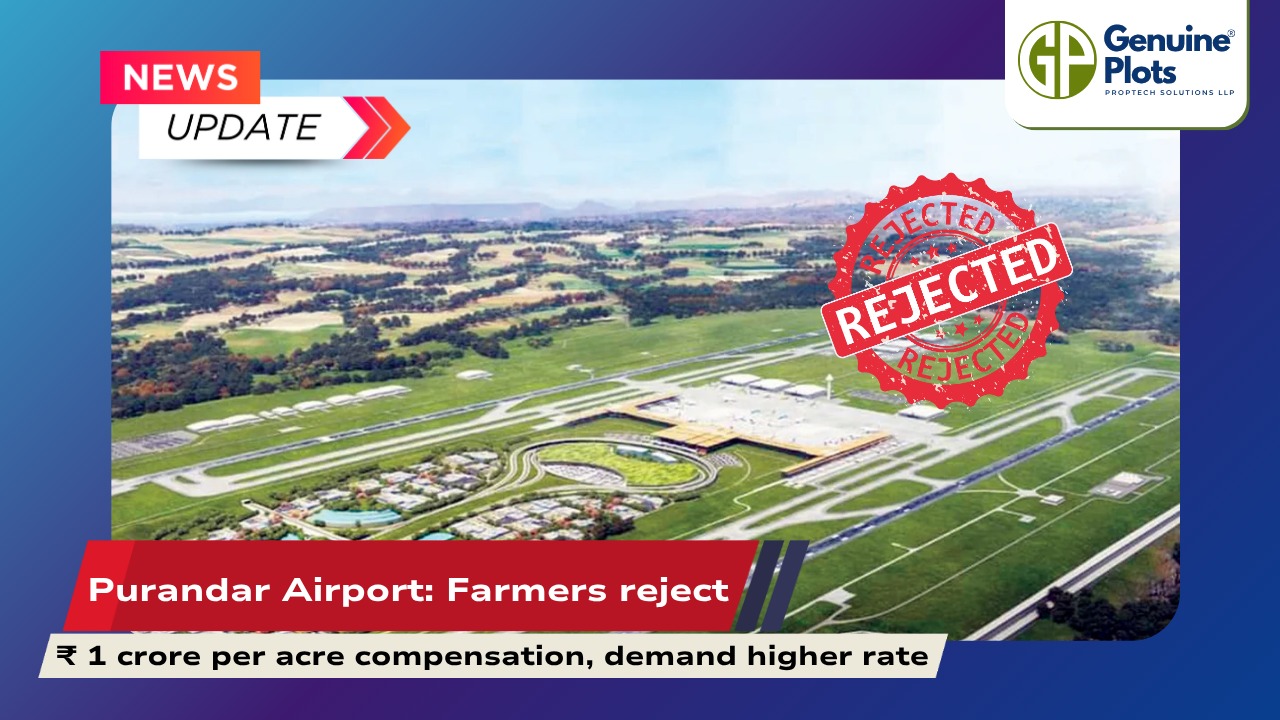
Farmers from seven villages in Pune district’s Purandar taluka have refused the Maharashtra government’s offer of ₹1 crore an acre for land acquisition related to the proposed Purandar International Airport project.
Villages Involved
The proposed airport site covers land from the following villages:
Ekhatpur, Khanwadi, Kumbharvalan, Munjawadi, Pargaon, Udachiwadi, and Vanpuri.
Compensation Offer
District administration officials said the state government has offered a compensation package that includes
₹1 crore an acre for the land acquired, which is roughly four times the ready reckoner rate.
Double compensation for on-site assets like houses, borewells, trees, and pipelines.
Developed plots equivalent to 10 per cent of the land acquired for every project-affected farmer.
Farmers’ Response
Farmer representatives have dismissed the proposal on the grounds that the compensation amount is not sufficient, considering the current land value in the area. They are asking for compensation at five times the ready reckoner rate.
They have also requested that further discussions at the village level be held before a final decision is taken.
Government’s Position
The Pune district administration has reiterated that compensation review processes are ongoing and that once an agreement is reached, distribution may commence by the end of November, officials said.
Background
The Purandar International Airport was initially proposed with the aim of decongesting Pune's existing Lohegaon airport and enhancing regional connectivity. The project site was re-identified several years ago, and land acquisition, which had been delayed due to opposition and reviews of the procedure, has been resumed. Status PRESENT Discussions between government representatives and farmers continue. After consultation with affected villages, the administration is likely to finalise the compensation structure and course of land acquisition.

In urban and regional planning areas, the Maharashtra government has revoked the Maharashtra Prevention of Fragmentation and Consolidation of Holdings Act. The decision aims to regularise small land parcels and simplify land transactions across cities and towns.
Details of the Decision
According to the new amendment, the provisions of the Fragmentation Act will no longer apply to non-agricultural (NA) lands located in urban areas, municipal corporations, municipal councils, and metropolitan development authority regions.
Land transactions carried out between November 15, 1965, and October 15, 2024, will be considered for regularisation. The rule also covers plots up to one guntha (approximately 1,089 square feet) that were subdivided before the cut-off date.
A four-member committee has been appointed to prepare a SOP ( Standard Operating Procedure )for the implementation of the decision. The SOP will outline the process for regularisation, documentation, and verification of eligible land parcels.
Impact on Landowners
The repeal of the Act is expected to provide legal recognition to subdivided plots that were earlier restricted under the 1947 law. Landowners whose plots were previously considered fragmented will now be able to apply for ownership regularisation.
The amendment will allow transactions, registration, and approvals for such plots in accordance with development authority rules and regulations.
Purpose of the Reform
The Fragmentation Act was originally introduced to prevent the division of agricultural land into uneconomic holdings. However, with the expansion of urban areas, many lands previously governed under the Act are now part of municipal or development plan zones.
The latest amendment separates urban non-agricultural lands from the scope of this Act, allowing them to be managed under existing urban planning and development laws.
Implementation
The State Government has directed local authorities and development bodies to follow the upcoming SOP for processing applications related to fragmented land parcels. Only plots created before October 15, 2024, will be eligible under this regularisation process.
The decision is applicable across all urban and regional plan areas in Maharashtra.
Members of the Jain community in Pune have announced that they will launch an indefinite protest if a controversial land deal involving a community trust property in Model Colony is not cancelled.
The land, measuring around 3.5 acres, belongs to the Seth Hirachand Nemchand Smarak Trust, which manages a Jain hostel and temple used by both the Digambar and Śvētāmbara sects. The property is located in a prime area of Pune near Model Colony.
The trust reportedly signed a contract with the private developer Gokhale Landmarks LLP for the property's sale or renovation. Some members of the Jain community have opposed the deal, arguing that the sale process was opaque and that the land is intended for communal use.
According to religious leaders like Acharya Guptinandi Maharaj, the community will start an unending agitation if the sale is not cancelled. Action against the trustees involved in the transaction has also been demanded by protesters.
In response to the growing opposition, the Charity Commissioner’s Office in Maharashtra has ordered a status quo on the property, preventing any transfer or construction work until further review.
Representatives of the trust have maintained that the sale process was legal and approved by the Commissioner’s office. However, following community pressure, Gokhale Landmarks LLP has reportedly communicated its intent to withdraw from the deal.
Further hearings and official decisions regarding the cancellation of the agreement are awaited.

The Maharashtra government has offered a compensation package of ₹1 crore per acre to farmers whose land is being acquired for the proposed Purandar International Airport project near Pune.
District Collector Jitendra Dudi made the announcement, which is a part of the state's attempt to expedite the long-delayed Greenfield airport project. Officials say the new rate is about four times the area's current ready reckoner rate.
Compensation Details
The package includes:
- A cash compensation of ₹1 crore per acre for the acquired land.
- Additional payment equivalent to twice the value of existing structures and agricultural assets such as houses, borewells, and fruit-bearing trees.
- Allocation of 10% of the developed land back to the farmers after the project is completed.
Authorities said that disbursement of compensation is expected to begin by the end of November, following completion of formal procedures.
Villages Affected
The land acquisition covers seven villages — Ekhatpur, Khanwadi, Kumbharvalan, Munjawadi, Pargaon, Udachiwadi, and Vanpuri — in Purandar taluka of Pune district. The total land required for the airport is around 3,200 acres, according to the latest estimates.
The government has already secured consent for nearly 90% of the land, easing one of the major bottlenecks in the project’s progress.
Farmers Seek Higher Compensation
While the offer marks a major step forward, several farmers have said that the proposed rate is “not acceptable.”
Farmer representatives argue that landowners affected by other infrastructure projects in Maharashtra, such as the Samruddhi Mahamarg, have received higher compensation. They are demanding a payout equivalent to five times the ready reckoner rate and have requested further consultations with government officials before final approval.
Maharashtra Government to Issue Individual Property Cards for Flat Owners

The Maharashtra Government has declared its intention to provide individual property cards to all apartment owners in the state.
Currently, property cards in Maharashtra record details only of the landowner or housing society, leaving out information about individual flat owners in multi-storey buildings. To address this gap, the state has decided to introduce a new system of “Vertical Property Cards”, which will contain details of each flat owner, their respective share of the land, and other relevant ownership data.
To implement this initiative, the government has constituted an eight-member committee chaired by Vikas Kharge, Additional Chief Secretary of the Revenue Department. The committee comprises representatives from several departments, including Cooperation, Urban Development, Law and Judiciary, Rural Development, and Registration and Stamps, as well as the Settlement Commissioner and the Director of Land Records. The Joint Secretary of Land Survey will serve as the member-secretary of the panel.
Mandate of the Committee
The committee has been tasked with drafting the Vertical Property Rules, which will define the framework for registering and maintaining records of individual property ownership in multi-storey buildings.
Its responsibilities include:
Studying similar vertical property ownership laws in other states.
Reviewing previous proposals submitted by the Settlement Commissioner’s office.
Preparing a legal and administrative structure to integrate flat ownership data into Maharashtra’s existing land records system.
The committee is expected to submit its recommendations within a month.
Recent Posts
Tags
Bhunaksha,
genuine plots,
Land For Sale,
Maharashtra Bhunaksha,
plots for sale,
Gunthewari,
Gunthewari Land,
Gunthewari Rules,
Extract Documents,
Plots and Lands,
Saat Baara,
Extract Saat,
Baara Utara,
Jamabandi,
property tax payments,
Gram Panchayat,
lower prices,
non-agricultural land,
Lower Investment Cost,
Gram Panchayat lands,
Fresh Land Settlements,
Growing demand,
affordable homes,
genuine p,
legal Land,
bungalow plots,
Konkan,
Maharashtra,
Purandar,
Pune,
Karnataka,
Bangalore,
Farm Land,
Kolkata,
Rajarhat,
Indore,
Chhatrapati Sambhajinagar,
Aurangabad,
Mundhwa,
Agricultural Land,
Farmhouse Plot,
Rules And Penalties,
Residential Plots,
NA PLots,
Residential NA Plots,
Commercial NA Plots,
Animal Husbandry Land,
Tathawade,
Vahivat Land Maps,
Vahivat,
Indian Land Records,
Ownership Rights,
Red zone,
PCMC,
Dehu Road,
Land Registration Rules,
Land Investing,
Infrastructure Growth,
Land Ownership,
Land Encroachment,
Panshet Dam,
Varasgaon Dam,
Verified Land,
Plot For Sale,
Land Investment,
Verified Plots,
Land Acquisiton,
Hydrological Survey,
Invest In Land,
Verified Land Plots,
Panshet,
Khadakwasla,
Land Rules,
Dakhil Kharij,
Land Registry,
Property Onwership,
Clean Title Check List,
Property Verification,
Digital Registry,
Farm Plots,
Agro Property,
Land Value Growth,
Urban Expansion,
Senapati Bapat Road,
Registered Land,
Agricultral Plot,
Purandar Airport,
Safe Investment,
Secure Property,
Plot Buyers,
Approved Plots,
Land ROI,
NA Approved Plots,
NA Land,
Welspun One,
Logistic Park,
Talegaon,
PMC Bharat Mandapam,
Urban Development,
Lohgaon,
Close To Nature,
Gated Community Plots,
Buy Land VS Gold Investment,
NRI Investment,
Future Ready Living,
Trusted Plots,
Plot Investment,
Authentic Land,
Safe Land Buying,
Mumbai,
Premium Plots,
MMR Land Investment,
MMR Infrastructure,
Metro Connectivity,
Plots in Mahabaleshwar hill station investment,
Mahabaleshwar land prices and future growth,
Scenic residential plots in Mahabaleshwar,
Mumbai 3.0,
Mumbai 3.0 vs Mumbai 2.0,
Mumbai property investment,
Real estate investment in Mumbai,
Upcoming residential projects in Mumbai,
CIDCO plot auctions,
CIDCO auction Navi Mumbai,
Upcoming CIDCO plot auctions 2026,
CIDCO land auction dates,
Navi Mumbai plot auctions,
CIDCO plots in Navi Mumbai,
CIDCO plots in Kharghar,
CIDCO plots in Ulwe,
NMIA investment opportunities,
Mumbai 3.0 plotted development,
Mumbai 3.0 real estate,
Plots in Mumbai 3.0,
Land investment in Maharashtra,
Residential plots near Mumbai,
Land appreciation in Mumbai 3.0,
Residential land for sale in Mumbai 3.0,
Altamura NA Plots,
Altamura Nadar City,
NA Plots in Nadar City,
Nadar City Plots,
Plots in Nadar City,
YEIDA plots,
YEIDA plots near Noida Airport,
Noida Airport plots,
Jewar Airport investment,
Yamuna Expressway plots,
YEIDA plot scheme 2026,
Noida Airport real estate,
Zepto,
Zepto effect,
D2C brands India,
Urban consumer trends,
Marketplace evolution,
Urban infrastructure growth,
YEIDA Residential Plot Scheme,
Yamuna Expressway Plot Scheme,
YEIDA Residential Plots,
Yamuna Expressway Authority,
Noida Investment,
Residential Plots in Lucknow,
LDA Plots in Lucknow,
Lucknow Real Estate,
LDA Approved Plots,
Plots for Sale in Lucknow,
Lucknow Property Investment,
Land Investment in Lucknow,
Residential Land in Lucknow,
Buy Plot in Lucknow,
Lucknow Development Authority,
Maharashtra Fragmentation Law 2025,
Fragmentation Act Maharashtra,
Maharashtra land law update 2025,
Maharashtra land reforms 2025,
Land subdivision rules Maharashtra,
Maharashtra agriculture land purchase rules,
Agricultural land purchase restrictions Maharashtra,
Can non-farmers buy agricultural land in Maharashtra,
NA conversion process Maharashtra,
Collector permission for land purchase,
farmland prices in Nagpur,
agricultural land price in Nagpur per acre,
farmland cost in Nagpur Maharashtra,
Nagpur agricultural land investment,
per acre agricultural land rate in Nagpur,
Tukdebandi Law Maharashtra,
Maharashtra Fragmentation Act update,
Land subdivision law Maharashtra,
Agricultural land division Maharashtra,
Maharashtra land reform ordinance,
Plot registration Maharashtra,
Farmland prices Nagpur,
Nagpur agricultural land rates,
Farmland per acre Maharashtra,
Agricultural land price Nagpur,
Farm land cost Nagpur,
Nagpur real estate trends,
Land investment Nagpur,
Avani Farms,
Avani Farms Pune,
Farmland near Pune,
Farm plots for sale,
Agricultural land investment,
Gated farmland near Pune,
NRI agricultural land rules India,
Can NRI buy agricultural land in India,
FEMA rules for NRI property purchase,
RBI guidelines for NRI land investment,
NRI farmland investment India,
Agricultural land purchase by NRI,
Maharashtra Fragmentation Act,
Minimum plot size in Maharashtra,
Guntha rules Maharashtra,
Agricultural land division rules,
Minimum land area for sale in Maharashtra,
Legal plot size in guntha,
Guntha conversion rules,
NRI land purchase in India,
Can NRIs buy agricultural land in India,
NRI property investment India,
NRI buying residential land,
NRI real estate guidelines India,
Investment tips for NRIs in India,
Mutation Entry Process,
Land Mutation in India,
Property Mutation Process,
Land Ownership Transfer,
1 guntha na plot prices in pune 2026,
1 guntha plot price in pune,
na plots in pune,
residential na plots pune,
guntha plot rate in pune,
na plot investment in pune,
plots near purandar airport,
1 Acre Land Price in Pune,
Pune Land Rates 2025,
Pune Land Price 2026,
Pune Acre Land Cost,
Land Value Pune,
Agricultural Land Price Pune,
gated community plots in Hinjewadi,
Hinjewadi plots for sale,
residential plots in Hinjewadi Pune,
premium plots in Hinjewadi,
plots near Rajiv Gandhi Infotech Park,
land for sale in Hinjewadi Pune,
Pune property investment,
plots for sale in Pune below 5 lakhs,
Pune rural land investment,
gated plotting projects Pune,
MIDC growth corridor plots,
Residential plots for sale in Hinjewadi,
Plots in Hinjewadi Pune,
Land for sale in Hinjewadi,
Residential NA plots Hinjewadi,
Hinjewadi real estate trends 2026,
Nashik land investment,
Trimbakeshwar land for sale,
Simhastha Kumbh 2026,
Simhastha Kumbh 2027 real estate impact,
Trimbakeshwar property investment,
Land appreciation in Nashik,
plots for sale in pune,
types of plots in pune,
residential plots in pune,
agricultural land in pune,
villa plots in pune,
NRI agricultural land purchase India,
NRI property investment in India,
Agricultural land rules for NRIs,
NRI real estate investment India,
NA plot meaning,
what is NA land,
NA land in Maharashtra,
land investment guide,
NRI agricultural land in Telangana,
Telangana land laws for NRI,
Telangana real estate laws,
NRI investment guide Telangana,
Legal compliance for NRI property,
NRI farmhouse purchase India,
RBI guidelines for NRI property,
NRI land buying rules,
Godham Eco Village,
Godham Eco Village for NRIs,
NRI land investment in India,
Investment plots for NRIs,
Secure land investment India,
NRI property buying guide,
plots in Pune,
NRI buying property in India,
NRI guide to buying land in Pune,
NRI land investment in Pune,
NRI property documents checklist,
Maharashtra land reform 2025,
Maharashtra land laws update,
Agricultural land rules in Maharashtra,
Buying agricultural land in Maharashtra,
Non-agricultural land conversion Maharashtra,
Maharashtra agricultural land rules 2024,
agricultural land purchase in Maharashtra,
non agriculturist land purchase rules,
who can buy agricultural land in Maharashtra,
Maharashtra land laws for non farmers,
Guntha based land rules,
Minimum guntha rule Maharashtra,
Maharashtra land laws,
Maharashtra agricultural land laws,
farmland investment Maharashtra,
buying farmland legally in Maharashtra,
NA conversion rules Maharashtra,
agricultural land eligibility criteria,
Property Mutation in India,
Land Record Update,
Revenue Records,
Property Ownership Transfer,
Mutation of Property,
Farmhouse Plots Near Pune,
NRI Investment in Pune,
Pune Real Estate,
Plots for Sale Near Pune,
Luxury Farmhouse Plots,
Pune plot scams,
Plot buying checklist,
Legal verification for plots,
NA plot verification,
Plot buying tips Pune,
Godrej Properties,
Evora Estate Panipat,
Luxury plots in Panipat,
Premium land investment,
Residential plots in Panipat,
Lodha Developers,
Lodha Developers Q3 acquisition,
Lodha land parcels Q3,
Indian real estate news,
New residential projects India,
Real estate investment news,
Premium housing projects,
Srijan Group,
Kolkata Tech Park,
Commercial Real Estate,
Real Estate Investment,
Real Estate Deal News,
NRI investment in India,
NRI land investment,
Plots for sale in India,
NRI property investment,
Can NRI buy residential plot in India,
NRI land purchase rules,
Residential plots for NRIs,
NRI real estate investment,
NRIs buying property in India,
Can NRIs buy plots in India 2026,
RBI rules for NRI property purchase,
NRI land investment rules,
MMR 3.0,
MMR real estate 2026,
Mumbai real estate market,
Navi Mumbai investment,
Thane property market,
Mumbai property trends 2026,
Land investment in MMR,
Mumbai smart city project,
Korea Mumbai partnership,
MMRDA infrastructure projects,
Korean investment in India,
MMR GDP growth,
MMR economic roadmap 2030,
Mumbai real estate,
Public private partnership projects Mumbai,
Investment opportunities in MMR,
Mumbai Metropolitan Region,
Mumbai urban development,
MMR 2047 vision,
Mumbai infrastructure projects,
Navi Mumbai development,
Goa property investment,
Invest in Goa 2026,
Goa real estate market 2026,
Best places to invest in Goa,
North Goa property,
Property appreciation in Goa,
Goa plots for sale,
Commercial property in Goa,
Buy property in Goa,
YEIDA plots 2026,
Residential plots in YEIDA,
YEIDA new scheme update,
Plots near Noida International Airport,
Yamuna Expressway Authority plots,
YEIDA housing scheme details,
Lucknow land investment,
Property in Lucknow,
Buy plots in Lucknow,
Nashik plots for sale,
Kumbh Mela 2026 Nashik,
Land investment in Nashik,
Nashik property market 2026,
Plots near Kumbh Mela Nashik,
Residential plots in Nashik,
Upcoming projects in Nashik,
Property appreciation in Nashik,
Maharashtra land investment,
Nashik Kumbh Mela 2026,
Kumbh Mela investment opportunities,
Infrastructure development in Nashik,
Plots near Nashik Kumbh Mela,
High ROI land investment,
MIHAN,
MIHAN Nagpur,
Nagpur Real Estate,
Agricultural Land Nagpur,
Nagpur Property,
Plots Near In MIHAN,
Pune residential plots,
best areas to buy plots in Pune,
Pune land investment,
investment plots in Pune,
buy land in Pune,
real estate investment in Pune,
Godrej Plots Doddaballapur,
Doddaballapur plots for sale,
Plots in North Bangalore,
Godrej Properties plots,
Residential plots in Doddaballapur,
Investment plots near Bangalore,
Gated community plots Bangalore,
Premium plots in Doddaballapur,
plots in Mahabaleshwar,
Mahabaleshwar villa plots,
farmhouse plots in Mahabaleshwar,
land for sale in Mahabaleshwar,
bungalow plots in Mahabaleshwar,
hill station property investment,
agricultural land in Mahabaleshwar,
premium land in Mahabaleshwar,
Plots in Pune under 3 lakhs for sale,
Budget residential plots near Pune,
Low cost plots near Pune highway connectivity,
plots in Pune under 3 lakhs,
farmland plots near Pune city,
Investment plots near Pune under budget,
Residential land near Pune,
Godrej plots in Pune,
Premium plotted development by Godrej in Pune,
Residential land for sale by Godrej,
Premium plot by Godrej,
Plots for sale in Hadapsar Pune,
Residential plots in Hadapsar,
Investment plots in Hadapsar,
Gated community plots in Hadapsar,
Ready to build plots in Hadapsar,
1 Guntha plot in Pune,
1 Guntha plot in Pune for sale,
1 Guntha plots near Pune city,
Residential 1 Guntha land in Pune,
Clear title 1 Guntha plot in Pune,
1 guntha plot price in village,
village plot rate per guntha,
affordable 1 guntha land in rural area,
residential plot in village Pune,
farmland plot price per guntha,
Residential 1 Guntha plot near Pune city,
Investment plots in Pune 1 Guntha,
Clear title 1 Guntha land in Pune,
Agricultural 1 Guntha plot near Pune,
1 Guntha plot in Pune Katraj for sale,
Residential plot in Katraj Pune 1 Guntha,
Katraj Pune land for home construction,
1 Guntha NA plot in Katraj Pune,
Pune Katraj plot near highway connectivity,
Gated plot project in Katraj Pune,
NA plots in Pune under 10 lakhs,
Affordable NA plots near Pune city,
NA residential plots in Pune,
NA approved plots in Pune under 10 lakhs,
Investment plots in Pune under 10 lakhs,
Residential NA plots near Pune highway,
Best plots in Pune below 10 lakhs,
Premium villa plots in Pune,
Residential villa plots in Pune near city outskirts,
Luxury villa plots in Pune,
Gated villa plot project in Pune,
Villa plot site visit in Pune,
NA plots in Pimpri Chinchwad for sale,
Residential NA plots in PCMC area,
NA approved plots in Pimpri Chinchwad,
NA land with clear title in PCMC,
NA plots near Pune Mumbai Highway PCMC,
Godrej Villa Plots Doddaballapur,
Godrej plotted development Bangalore,
villa plots in North Bangalore,
premium villa plots Bangalore,
Godrej Properties plots Bangalore,
Brigade Plots Malur,
Brigade Malur plots,
plots in Malur East Bangalore,
investment plots in East Bangalore,
residential plots in Malur Bangalore,
Brigade Group plots Bangalore,
land investment in East Bangalore,
gated community plots in Malur,
prestige plots devanahalli,
prestige plots in devanahalli bangalore,
plots for sale in devanahalli,
prestige plots investment,
premium plots in devanahalli,
residential plots near kempegowda airport,
What is NA plot in real estate,
NA land meaning in property,
NA approved plotsDifference between NA and agricultural land,
Buying NA plots in Maharashtra,
NA plot vs agricultural land,
Plot prices in Mysore,
Mysore infrastructure projects,
Mysore property investment,
Land investment in Mysore,
Plot investment opportunities,
land buying guide in goa,
buy land in goa,
plots for sale in goa,
legal process to buy land in goa,
property in goa,
residential plots in goa,
Nashik Simhastha Kumbh Mela 2026,
Sadhugram expansion Nashik,
Maharashtra Kumbh Mela planning,
Nashik Kumbh Mela preparations,
tourism development in Nashik,
plots in Nagpur,
Nagpur plot investment,
land for sale in Nagpur,
residential plots in Nagpur,
golden rules before buying plots in Nagpur,
Nagpur land investment,
plot investment in Nagpur,
land investment in Nagpur,
plots for sale in Nagpur,
best areas to buy plots in Nagpur,
buying plots in Nagpur,
plot purchase checklist,
legal checklist for buying land,
documents required for plot purchase,
NA plots in Nagpur,
Tattvana,
Tattvana in Kamshet,
Moregaon Farmland Estates,
farmland investment Pune,
agricultural land investment,,
farmland for sale near Pune,
farm plots in Pune,
gated farmland projects,
agricultural plots Maharashtra,
open plot vs NA plot,
difference between open plot and NA plot,
what is NA plot in India,
open plot meaning in real estate,
NA land vs agricultural land,
residential NA plots benefits,
land investment in India,
buying NA plot vs open land,
capital gains on agricultural land,
rural vs urban agricultural land tax,
agricultural land tax rules India,
capital gains tax India property,
is agricultural land taxable,
rural agricultural land exemption,
urban agricultural land tax India,
Runwal Enterprises Alibaug township,
Alibaug real estate,
coastal real estate India,
township projects in Alibaug,
luxury properties in Alibaug,
Mumbai weekend homes investment,
Alibaug property investment,
isprava south goa,
ultra luxury villas in goa,
south goa real estate,
luxury homes in goa,
isprava projects goa,
premium villas in south goa,
land investment advisory services,
secure land investment,
real estate advisory services,
verified land deals,
investment plots near Pune,
land buying guide India,,
#KanpurRealEstate,
#KDAPlots,
#KanpurProperty,
#RealEstateKanpur,
#PropertyTrends,
Gokul Plots investment,,
real estate investment Gokul,,
plots with high appreciation potential,
smart land investment strategies,
plots for sale in North Bangalore,
land investment Bangalore,,
emerging areas in North Bangalore,
residential plots Bangalore,,
Bangalore real estate investment,,
North Bangalore property trends,,
plots near airport Bangalore,,
HUDA plots in Gurgaon,
HUDA plots in Faridabad,
residential plots Haryana,
HUDA approved plots,
plots for sale in Gurgaon,
plots in Faridabad investment,
Prestige Marigold plots,,
Bangalore plotted developments,
land investment Bangalore,
best plots in North Bangalore,
#PlotsForSaleInNellore,
#NelloreRealEstate,
#NellorePlots,
#RealEstate2026,
#PropertyInvestment,
#NelloreProperty,
#AndhraPradeshRealEstate,
GMADA E Auction 2026,
GMADA plots Mohali,
plots in Mohali for sale,
GMADA Mohali auction process,
buy plots in Mohali,
Punjab property investment,
GMADA scheme 2026,
Mohali real estate,
HSVP plots 2026,
HSVP plot investment,
HSVP plots Haryana,
land investment benefits,
residential plots investment,
government approved plots,
buy plot in New Chandigarh,
flats in New Chandigarh,
New Chandigarh real estate,
property investment in New Chandigarh,
residential plots in New Chandigarh,
apartments in New Chandigarh,
#WaveCityGhaziabad,
#GhaziabadPlots,
#PlotsInGhaziabad,
#NCRRealEstate,
#RealEstateInvestment,
#ResidentialPlots,
APIIC vacant plots,
APIIC plots for sale,
industrial plots in Andhra Pradesh,
commercial land for MSMEs,
startup investment plots,
APIIC industrial land,
HUDA plots,
HUDA plots investment,
property appreciation,
plot investment benefits,
high return property investment,
land appreciation,
#GDAPlotsInGhaziabad,
#PlotsForSaleInGhaziabad,
#ResidentialPlotsGhaziabad,
#InvestmentPlots,
#RealEstateGhaziabad,
#GDAApprovedPlots,
#BaliProperty,
#PropertyInBali,
#IndiansInBali,
#BaliRealEstate,
#InternationalPropertyInvestment,
buy plots in Sarjapur Road Bangalore,
plots in Sarjapur Road,
residential plots in Sarjapur Road,
land for sale in Sarjapur Road Bangalore,
investment plots in Bangalore,
plots near IT corridor Bangalore,
how Indians can buy property in Bali,
buy property in Bali for Indians,
Bali property investment,
property in Bali for Indian buyers,
Bali real estate guide,
foreign property investment Bali,
legal checks before buying property in Bali,
Indians invest in Bali property,
due diligence for Bali property,
Bali real estate for Indians,
Bali property legal verification,
verified farmland plots,
100% verified farmland plots,
farmland investment India,
legal farmland plots,
farmland plots for sale,
Konkan land investment,,
high-growth corridors Maharashtra,
land investment 2026,
plots for sale in Maharashtra,



