Prev Post
10 Key Factors That Influence Land Appreciation A Complete Guide for Smart Investors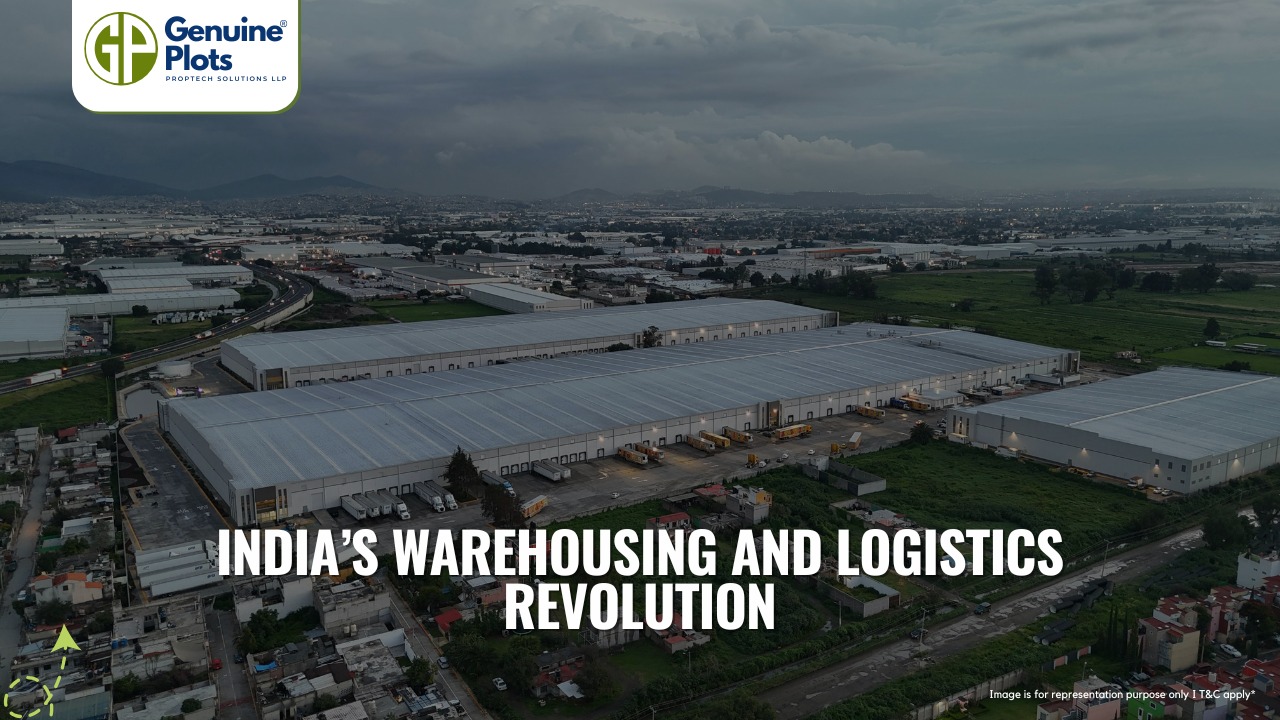
India is experiencing one of the most transformative phases in its economic story, and at its core is a rapidly evolving warehousing and logistics sector. From being recognised as a highly fragmented industry with poor infrastructure to becoming a strong backbone for growth, efficiency, and global competitiveness, logistics in India is emerging with great vigour. Policy reforms, the expansion of e-commerce, improved infrastructure, and technological innovation are strong forces reshaping how goods are stored, moved, and delivered across the country.
A Sector Fueled by Unprecedented Demand
The warehousing market in India has witnessed tremendous growth over the past few years. The demand for organised Grade-A warehousing space has grown significantly, driven by requirements from 3PL players, e-commerce giants, the manufacturing sector, the pharmaceutical industry, and the retail segment. Today, corporations demanding large spaces for storage are also wanting dedicated warehouse infrastructure designed for automation, quality control, and efficiency in flow. The result is transforming warehouses from being cost drivers to value drivers.
One key trend is the rise of large distribution centres near major consumption hubs. Cities such as Delhi-NCR, Mumbai, Bengaluru, Chennai, Pune, and Hyderabad have experienced a huge rise in the construction of warehouses. But that is not the end of it—the rise in warehousing demand is also increasing in Tier-II and Tier-III cities in India. These places are becoming essential nodes in a supply chain and helping products reach the final mile of delivery.
Policy Reforms Changing the Game
The involvement of the government has been catalytic in transforming the sector. The implementation of Goods and Services Tax has ensured ease in inter-state supply, thus eliminating the need to have small warehouse spaces, which were mainly used for tax exemption purposes.
The National Logistics Policy, Gati Shakti, Dedicated Freight Corridors (DFCs), and Multimodal Logistics Parks (MMLPs) are facilitating an integrated approach to logistics through road, rail, air, and seaports. These factors are gradually reducing logistics costs and making India an even more favourable destination for manufacturing and distribution on a global platform.
E-Commerce: The Acceleration Engine
There is not a single industry that has disrupted the Indian logistics market as much as e-commerce has done so far. Millions of deliveries and ever shorter time limits have forced the entire logistics system into a change that has happened overnight because now every company needs regionally scattered micro-warehouses, automatic sorting stations, and last-mile delivery stations for same-day deliveries.
This has ushered in an entirely different warehouse paradigm—one that’s small, tech-enabled, strategically located, and speed-optimised. The trickle-down impact is immense, ranging from automated packaging systems to artificial intelligence-powered inventory routing, all of which cut from the same cloth of innovation in the e-commerce space.
Technology: The New Backbone
The days when shelving and pallet jacks were prominent by their presence in a warehouse are over. Today, the list encompasses automation, robots, tracking systems by IoT, digital inventory management, sophisticated material movement equipment, and even drones to monitor activities. AI and analytics are used to predict consumption, cut wastages, and optimise routes. Blockchain is making its presence felt in documentation and even supply chain transparency.
This will help ensure minimal human error, decrease costs, and remarkably optimise efficiency. They also ensure that Indian logistics services are globally competitive and hence provide opportunities related to export-oriented production.
The Rise of Integrated Logistics Hubs
India is transitioning to mega integrated hubs that encompass warehousing, transportation, cold storage facilities, and added-value services altogether. Such hubs integrate roadways, freight rail corridors, and seaports for easy long-distance transport. The hubs symbolise India’s alignment with the best international practices as far as its logistics system is concerned.
A Future Built on Efficiency and Scale
The future will see an acceleration in the warehousing and logistics evolution in India. The coming trends will witness a focus on automation, sustainability, and multimodal routes. The coming years will see an increasing focus on Tier-II and Tier-III cities and an increasing inflow of investment and innovation in this space.
What was a patchwork system is rapidly developing into one of India’s most exciting and tech-savvy industries, to build a quicker, brighter, and stronger logistics system for the future.
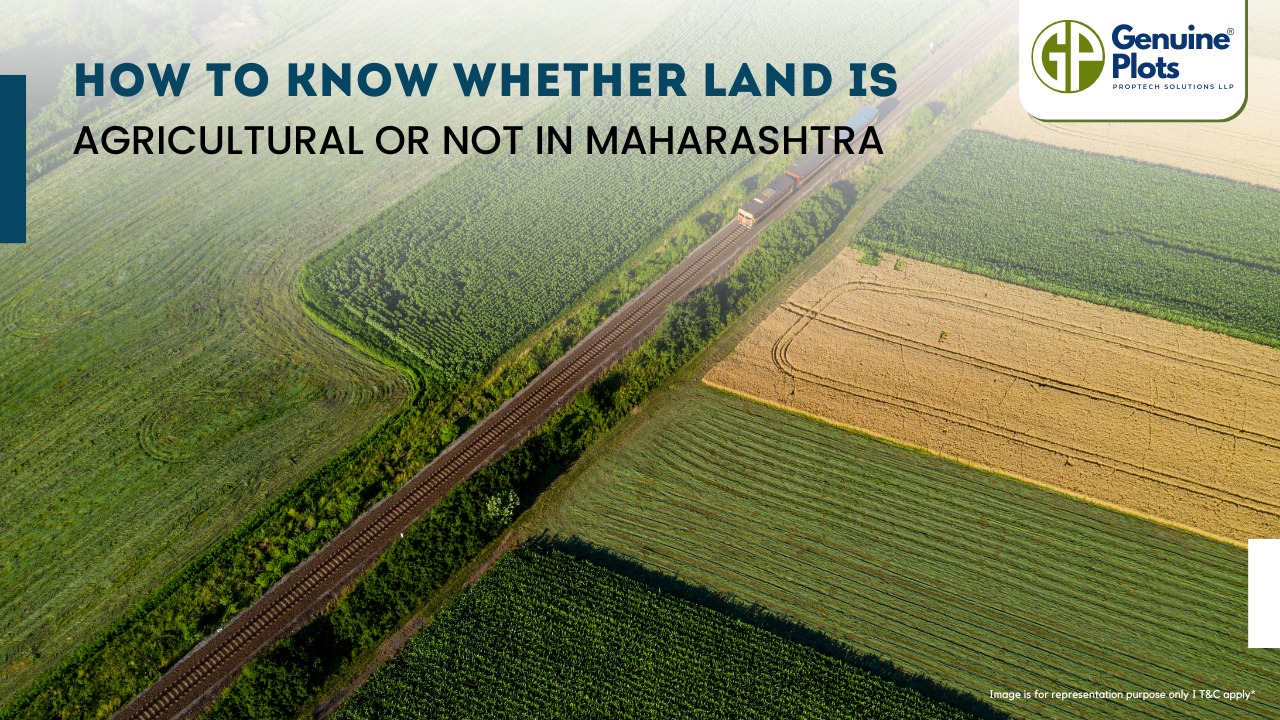
Understanding land type is very important before buying, selling, or developing land. In Maharashtra, the government has clear rules that tell whether land is agricultural or non-agricultural (NA). Here is a simple guide.
1. Check the 7/12 Extract (Satbara Utara)
This is the most important document for land in Maharashtra.
- It shows land ownership, type of land, and current use.
- If it says “agricultural land”, then the land is legally for farming.
- Always check the latest or updated 7/12 extract.
2. Check the Zoning in the Development Plan / Regional Plan
- Every area has a Development Plan (DP) or Regional Plan (RP).
- This plan shows which land is for agriculture, housing, commercial use, green zone, etc.
- If the zoning allows non-agricultural use, the land can be converted or may already be NA.
3. Look for NA Permission (Non-Agricultural Permission)
As per the Maharashtra Land Revenue Code, land used for non-agricultural purposes MUST have NA permission.
- NA permission is given by the Collector of the district.
- If the land does not have NA permission, it is still agricultural by default.
Some lands with approved building permissions automatically get an NA certificate under the newer rules.
4. Check the Land Tax / Assessment Records
- Agricultural land has an agricultural tax.
- Once land becomes NA, the government charges non-agricultural assessment (N.A. tax).
- If the NA tax is charged, the land is officially non-agricultural.
5. Observe the Current Use of the Land
- If crops are grown, it's probably agricultural.
- The construction of homes, businesses, or factories may result in NA or improper use of the land.
- Verify the documents thoroughly if the land has been plotted and sold for development.
6. Check Conversion Documents
To change land from agricultural to NA, the owner must apply to the Collector's office.
- After approval, the Collector issues a Conversion Order.
- A fee or premium must be paid for conversion.
- Ask the owner for a copy of the conversion order if they claim the land is NA.
7. Meet Local Authorities or Experts
- Visit the Talathi, Tehsildar, or Collector’s office to confirm the land status.
- Town Planning departments can confirm zoning and permitted land use.
- A property lawyer or consultant can help check all documents properly.
8. Stay Updated with New Government Rules
- Maharashtra has recently made some processes easier.
- In certain cases, separate NA permission is not required if building permission is already approved.
- Check the latest state circulars before purchasing land.
Summary (Quick Checklist)
✔ Check 7/12 extract
✔ Check zoning in DP/RP
✔ Verify if NA permission exists
✔ Check tax records for NA assessment
✔ Ask for conversion order
✔ Visit local government offices
✔ Consult a property expert
✔ Stay updated with the latest rules

Understanding the types of agricultural land in India helps farmers, investors, and land buyers make better decisions. India’s land is broadly divided into five main categories based on how it is used.
1. Arable Land
- This is land used for growing regular seasonal crops such as wheat, rice, pulses, and vegetables.
- It is also called the net sown area — land that is ploughed and cultivated every year.
- This is the most important land type for India’s food production.
2. Horticultural Land
- Used for fruits, vegetables, flowers, spices, and herbal plants.
- Often provides higher income than regular crops because fruit and vegetable farming can be more profitable.
- Commonly used for orchards (mango, banana, pomegranate), flower farms, and vegetable fields.
3. Pasture / Grazing Land
- Land where cattle, sheep, and goats graze naturally.
- Essential for the dairy and livestock industry.
- The land may not be suitable for crop farming, but it supports rural livelihoods through animals.
4. Plantation Land
- Used for long-term commercial crops like tea, coffee, rubber, coconut, and sugarcane.
- These crops grow for many years and require large, well-managed farmland.
- Plantation land is usually found in regions with a suitable climate and good rainfall.
5. Fallow Land
- Land that is left uncultivated for some time so that the soil can rest and regain fertility.
- Farmers leave land fallow to restore nutrients and improve future crop yield.
- Some land may be fallow for one year, and some may remain unused for a longer period.
Why These Categories Matter
- Helps farmers choose the right type of farming.
- Helps buyers understand what kind of land they are purchasing.
- Helps the government plan water usage, irrigation projects, and agricultural policies.
- Ensures sustainable use of land and better crop management.

What Does “Abadi Land” Mean?
Abadi land = land in a village or town that is built-up and residential, not for farming.
It covers: plots for houses, small shops, and community use.
This type of land is usually within the “inhabited” area of a village or town.
Key Characteristics of Abadi Land
- Purpose: Mainly for living (homes), not for agriculture.
- Location: Inside the populated area, not in farm fields.
- Ownership: People can own it, but local (village) authorities or government/Gram Panchayat often manage it.
- Legal Status: Governed by land revenue laws. Property disputes go to civil courts.
Why Registration Alone Isn’t Enough
Registering a sale deed proves a transaction happened, but it does not mean you are listed in the government land records.
After registration, your name isn’t automatically written in revenue documents like khatuni or jamabandi.
Mutation (Name Change in Government Records) — Why It’s Important
Mutation = process to update your name in the official land revenue records.
In many places, this is now mandatory for abadi land.
The mutation process is called Dakhil Kharij.
Once the mutation is done, your name appears in land records such as khatuni.
What Happens If You Don’t Do Mutation
Even with a registered deed, your name may not appear in official records.
Without a mutation, banks may refuse to offer a home loan because you aren’t the “legal” owner in government records.
Your ownership is less secure; future problems can come up in resale or inheritance.
What the New System Clarifies
Legal ownership no longer just depends on the deed — mutation is essential.
The rules now make it clearer who owns the land, who can sell it, and who has legal rights over it.
These changes protect buyers. With mutation, your name is officially recorded in government documents.
What You Must Do as a Buyer
- Make sure you get a registered sale deed when you buy abadi land.
- Immediately apply for mutation (Dakhil Kharij) with the local revenue office.
- Verify in land revenue records (khatuni/jamabandi) that your name appears.
- Only after these steps will you have full legal ownership rights.
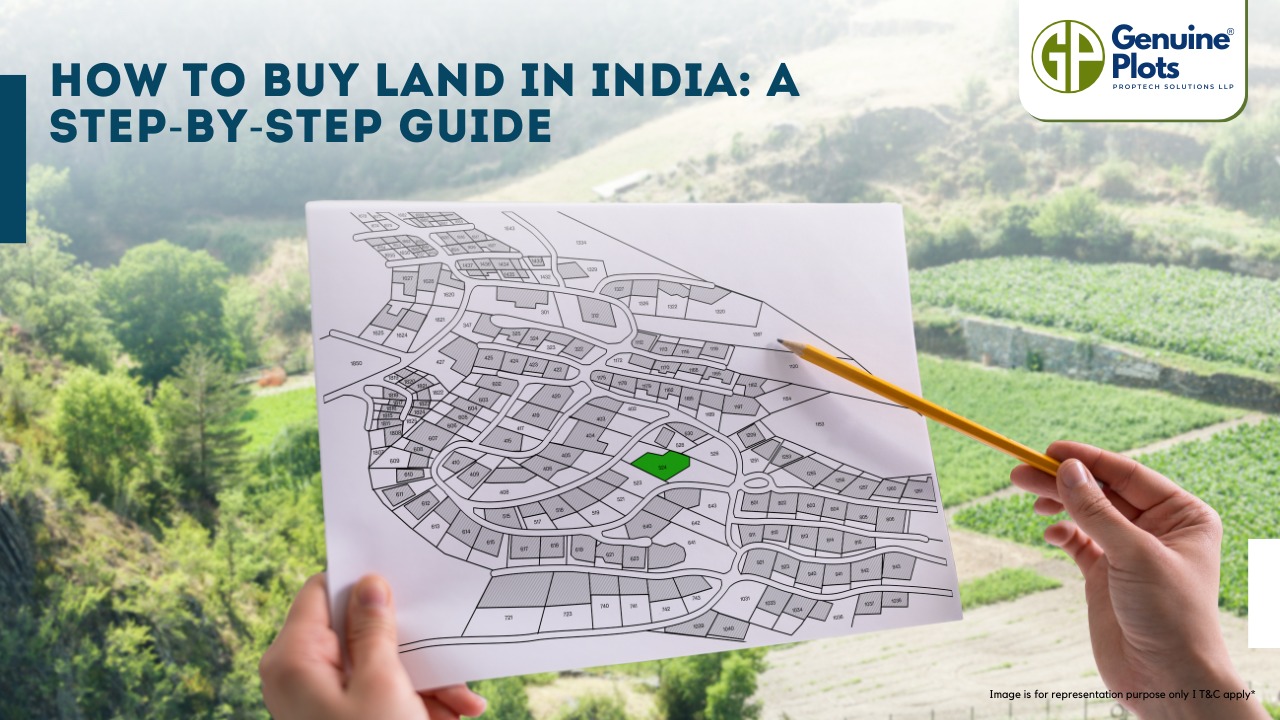
Buying land is a significant decision that involves several key steps. Here’s a simple guide to help you make the right move.
1. Determine your budget.
- Set your budget first, before launching your search.
- Include the cost of the land, registration cost, stamp duty, and all other legal expenses.
2. Pick the Right Location
- Look for areas with good connectivity, upcoming infrastructure, and access to social amenities.
- Check for future growth potential and resale value.
3. Verify Land Documents
- Always check the ownership papers.
- Ask for documents like the sale deed, property tax receipts, and encumbrance certificate.
4. Check Land Use and Zoning
- Verify that the land is fit for your intended purpose: residential, commercial, or agricultural.
- Please check with your local municipal office or town planning department for verification.
5. Seek Legal Assistance
- Hire a property lawyer who will help you review documents and go through the legal processes.
- This cuts down the risk of fraud and implies that the land is dispute-free.
6. Organise Your Finances
- Determine how you'll pay—through savings, a loan, or both.
- Check loan eligibility and interest rates before submitting a loan application.
7. Negotiate the Deal
- Land prices are often negotiable.
- Compare local prices and then bargain before sealing the deal.
8. Registration and Stamp Duty
- Along with the stamp duty, register the sale deed at the local sub-registrar's office.
- Keep all receipts and documents safe for further reference.
9. Take Possession
- Once you are registered, take legal possession of the land.
- Get the property transferred to your name in the local records.
10. Common Mistakes to Avoid
- Skipping legal verification
- Ignoring plans for future development
- Forgetting hidden costs such as registration or stamp duty
- Choosing land only because it is cheap
Final Tip
Buying land is generally a long-term investment, so take your time, verify everything, and make an informed decision.
Legal & Land-Use Pitfalls When Buying Plots in Konkan — What You Must Know
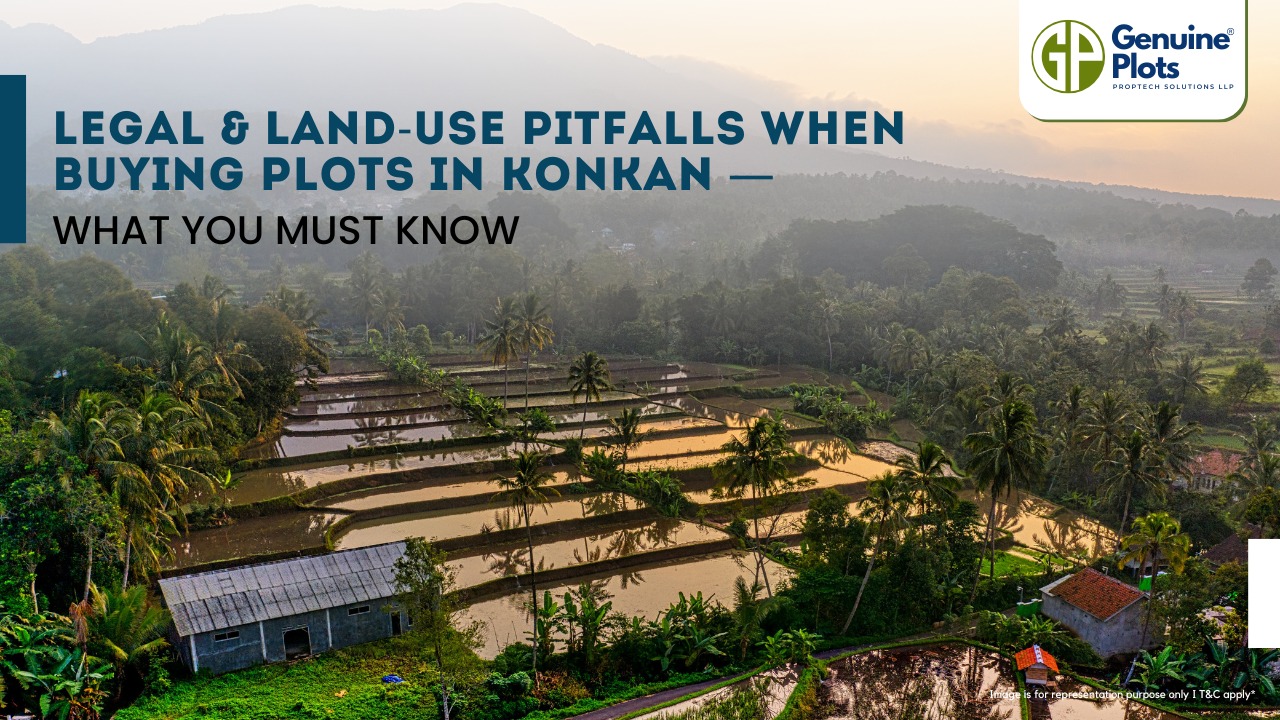
Buying land in the Konkan region sounds like a dream — peaceful beaches, green hills, and a slower pace of life. But before you invest, it’s important to understand the legal and land-use challenges that come with Konkan plots.
Many buyers from cities like Mumbai and Pune jump in too quickly, only to face delays, disputes, or restrictions later. This guide helps you spot common pitfalls and make safe, informed decisions.
1. Agricultural vs. Non-Agricultural (NA) Land Confusion
- Most land in Konkan is agricultural by default.
- Only farmers can buy agricultural land directly — non-farmers need to buy NA (Non-Agricultural) land.
- Many plots are sold as “proposed NA” — meaning the conversion isn’t done yet.
- Without proper NA approval, you cannot legally build a house or commercial structure.
Tip: Always check the 7/12 extract and NA order from the local revenue office before buying.
2. Title and Ownership Issues
- Konkan land often passes through generations without clear documentation.
- Some plots are jointly owned by families, with no single clear titleholder.
- Disputes can arise if a seller doesn’t have full rights to the land.
Tip: Hire a property lawyer to do a title search for at least 30 years of ownership history. Ensure there are no encumbrances or pending disputes.
3. CRZ (Coastal Regulation Zone) Restrictions
- Many parts of Konkan fall under the CRZ rules, which restrict construction near the coast.
- Depending on the zone (CRZ I, II, III, IV), you may not be allowed to build within 200–500 meters of the high-tide line.
- Violating CRZ rules can lead to demolition notices or legal action.
Tip: Get the exact location surveyed to confirm it’s outside restricted CRZ zones before buying any “sea-view” or “beach-touch” property.
4. Access & Infrastructure Challenges
- Some plots are advertised as “road-touch,” but in reality, the access roads may be private or disputed.
- Without proper access, even a valid NA plot becomes useless for development.
- Also check water, electricity, and drainage connections — many rural plots lack basic infrastructure.
Tip: Confirm there’s a public access road to your plot and a right-of-way recorded in government maps.
5. Layout & Subdivision Approvals
- Developers often sell small plots carved from larger agricultural land.
- Each layout must have Town Planning (TP) approval and follow the Maharashtra Regional and Town Planning (MRTP) Act rules.
- Unapproved layouts can be marked as illegal, blocking registration or construction later.
Tip: Ask for the layout approval copy and survey number details from the local collector’s office before booking.
6. Price Traps & Overvaluation
- With rising demand from city buyers, some sellers quote inflated prices.
- Remote plots with limited infrastructure are often priced like prime land.
- Always compare with government ready-reckoner (RR) rates and nearby sale deeds.
Tip: Don’t rush to buy just because of “sea view” or “future tourism zone” promises — check the actual market value and resale demand.
7. Documentation You Must Verify
Here’s a simple checklist before buying a plot in Konkan:
- 7/12 Extract and Mutation Entries
- NA Order (if applicable)
- Title Search Report (30 years minimum)
- Encumbrance Certificate
- Layout / TP Approval
- Sale Deed Draft
- CRZ Clearance (if near coast)
- Access Road and Survey Map
Bonus Tip: Always register the sale deed and get the property mutated in your name right after purchase.
Final Thoughts
Konkan land is beautiful and full of potential — whether for a farmhouse, homestay, or long-term investment. But it’s also full of hidden legal and regulatory traps that can turn your dream into stress.
Recent Posts
Tags
Bhunaksha,
genuine plots,
Land For Sale,
Maharashtra Bhunaksha,
plots for sale,
Gunthewari,
Gunthewari Land,
Gunthewari Rules,
Extract Documents,
Plots and Lands,
Saat Baara,
Extract Saat,
Baara Utara,
Jamabandi,
property tax payments,
Gram Panchayat,
lower prices,
non-agricultural land,
Lower Investment Cost,
Gram Panchayat lands,
Fresh Land Settlements,
Growing demand,
affordable homes,
genuine p,
legal Land,
bungalow plots,
Konkan,
Maharashtra,
Purandar,
Pune,
Karnataka,
Bangalore,
Farm Land,
Kolkata,
Rajarhat,
Indore,
Chhatrapati Sambhajinagar,
Aurangabad,
Mundhwa,
Agricultural Land,
Farmhouse Plot,
Rules And Penalties,
Residential Plots,
NA PLots,
Residential NA Plots,
Commercial NA Plots,
Animal Husbandry Land,
Tathawade,
Vahivat Land Maps,
Vahivat,
Indian Land Records,
Ownership Rights,
Red zone,
PCMC,
Dehu Road,
Land Registration Rules,
Land Investing,
Infrastructure Growth,
Land Ownership,
Land Encroachment,
Panshet Dam,
Varasgaon Dam,
Verified Land,
Plot For Sale,
Land Investment,
Verified Plots,
Land Acquisiton,
Hydrological Survey,
Invest In Land,
Verified Land Plots,
Panshet,
Khadakwasla,
Land Rules,
Dakhil Kharij,
Land Registry,
Property Onwership,
Clean Title Check List,
Property Verification,
Digital Registry,
Farm Plots,
Agro Property,
Land Value Growth,
Urban Expansion,
Senapati Bapat Road,
Registered Land,
Agricultral Plot,
Purandar Airport,
Safe Investment,
Secure Property,
Plot Buyers,
Approved Plots,
Land ROI,
NA Approved Plots,
NA Land,
Welspun One,
Logistic Park,
Talegaon,
PMC Bharat Mandapam,
Urban Development,
Lohgaon,
Close To Nature,
Gated Community Plots,
Buy Land VS Gold Investment,
NRI Investment,
Future Ready Living,
Trusted Plots,
Plot Investment,
Authentic Land,
Safe Land Buying,
Mumbai,
Premium Plots,
MMR Land Investment,
MMR Infrastructure,
Metro Connectivity,
Plots in Mahabaleshwar hill station investment,
Mahabaleshwar land prices and future growth,
Scenic residential plots in Mahabaleshwar,
Mumbai 3.0,
Mumbai 3.0 vs Mumbai 2.0,
Mumbai property investment,
Real estate investment in Mumbai,
Upcoming residential projects in Mumbai,
CIDCO plot auctions,
CIDCO auction Navi Mumbai,
Upcoming CIDCO plot auctions 2026,
CIDCO land auction dates,
Navi Mumbai plot auctions,
CIDCO plots in Navi Mumbai,
CIDCO plots in Kharghar,
CIDCO plots in Ulwe,
NMIA investment opportunities,
Mumbai 3.0 plotted development,
Mumbai 3.0 real estate,
Plots in Mumbai 3.0,
Land investment in Maharashtra,
Residential plots near Mumbai,
Land appreciation in Mumbai 3.0,
Residential land for sale in Mumbai 3.0,
Altamura NA Plots,
Altamura Nadar City,
NA Plots in Nadar City,
Nadar City Plots,
Plots in Nadar City,
YEIDA plots,
YEIDA plots near Noida Airport,
Noida Airport plots,
Jewar Airport investment,
Yamuna Expressway plots,
YEIDA plot scheme 2026,
Noida Airport real estate,
Zepto,
Zepto effect,
D2C brands India,
Urban consumer trends,
Marketplace evolution,
Urban infrastructure growth,
YEIDA Residential Plot Scheme,
Yamuna Expressway Plot Scheme,
YEIDA Residential Plots,
Yamuna Expressway Authority,
Noida Investment,
Residential Plots in Lucknow,
LDA Plots in Lucknow,
Lucknow Real Estate,
LDA Approved Plots,
Plots for Sale in Lucknow,
Lucknow Property Investment,
Land Investment in Lucknow,
Residential Land in Lucknow,
Buy Plot in Lucknow,
Lucknow Development Authority,
Maharashtra Fragmentation Law 2025,
Fragmentation Act Maharashtra,
Maharashtra land law update 2025,
Maharashtra land reforms 2025,
Land subdivision rules Maharashtra,
Maharashtra agriculture land purchase rules,
Agricultural land purchase restrictions Maharashtra,
Can non-farmers buy agricultural land in Maharashtra,
NA conversion process Maharashtra,
Collector permission for land purchase,
farmland prices in Nagpur,
agricultural land price in Nagpur per acre,
farmland cost in Nagpur Maharashtra,
Nagpur agricultural land investment,
per acre agricultural land rate in Nagpur,
Tukdebandi Law Maharashtra,
Maharashtra Fragmentation Act update,
Land subdivision law Maharashtra,
Agricultural land division Maharashtra,
Maharashtra land reform ordinance,
Plot registration Maharashtra,
Farmland prices Nagpur,
Nagpur agricultural land rates,
Farmland per acre Maharashtra,
Agricultural land price Nagpur,
Farm land cost Nagpur,
Nagpur real estate trends,
Land investment Nagpur,
Avani Farms,
Avani Farms Pune,
Farmland near Pune,
Farm plots for sale,
Agricultural land investment,
Gated farmland near Pune,
NRI agricultural land rules India,
Can NRI buy agricultural land in India,
FEMA rules for NRI property purchase,
RBI guidelines for NRI land investment,
NRI farmland investment India,
Agricultural land purchase by NRI,
Maharashtra Fragmentation Act,
Minimum plot size in Maharashtra,
Guntha rules Maharashtra,
Agricultural land division rules,
Minimum land area for sale in Maharashtra,
Legal plot size in guntha,
Guntha conversion rules,
NRI land purchase in India,
Can NRIs buy agricultural land in India,
NRI property investment India,
NRI buying residential land,
NRI real estate guidelines India,
Investment tips for NRIs in India,
Mutation Entry Process,
Land Mutation in India,
Property Mutation Process,
Land Ownership Transfer,
1 guntha na plot prices in pune 2026,
1 guntha plot price in pune,
na plots in pune,
residential na plots pune,
guntha plot rate in pune,
na plot investment in pune,
plots near purandar airport,
1 Acre Land Price in Pune,
Pune Land Rates 2025,
Pune Land Price 2026,
Pune Acre Land Cost,
Land Value Pune,
Agricultural Land Price Pune,
gated community plots in Hinjewadi,
Hinjewadi plots for sale,
residential plots in Hinjewadi Pune,
premium plots in Hinjewadi,
plots near Rajiv Gandhi Infotech Park,
land for sale in Hinjewadi Pune,
Pune property investment,
plots for sale in Pune below 5 lakhs,
Pune rural land investment,
gated plotting projects Pune,
MIDC growth corridor plots,
Residential plots for sale in Hinjewadi,
Plots in Hinjewadi Pune,
Land for sale in Hinjewadi,
Residential NA plots Hinjewadi,
Hinjewadi real estate trends 2026,
Nashik land investment,
Trimbakeshwar land for sale,
Simhastha Kumbh 2026,
Simhastha Kumbh 2027 real estate impact,
Trimbakeshwar property investment,
Land appreciation in Nashik,
plots for sale in pune,
types of plots in pune,
residential plots in pune,
agricultural land in pune,
villa plots in pune,
NRI agricultural land purchase India,
NRI property investment in India,
Agricultural land rules for NRIs,
NRI real estate investment India,
NA plot meaning,
what is NA land,
NA land in Maharashtra,
land investment guide,
NRI agricultural land in Telangana,
Telangana land laws for NRI,
Telangana real estate laws,
NRI investment guide Telangana,
Legal compliance for NRI property,
NRI farmhouse purchase India,
RBI guidelines for NRI property,
NRI land buying rules,
Godham Eco Village,
Godham Eco Village for NRIs,
NRI land investment in India,
Investment plots for NRIs,
Secure land investment India,
NRI property buying guide,
plots in Pune,
NRI buying property in India,
NRI guide to buying land in Pune,
NRI land investment in Pune,
NRI property documents checklist,
Maharashtra land reform 2025,
Maharashtra land laws update,
Agricultural land rules in Maharashtra,
Buying agricultural land in Maharashtra,
Non-agricultural land conversion Maharashtra,
Maharashtra agricultural land rules 2024,
agricultural land purchase in Maharashtra,
non agriculturist land purchase rules,
who can buy agricultural land in Maharashtra,
Maharashtra land laws for non farmers,
Guntha based land rules,
Minimum guntha rule Maharashtra,
Maharashtra land laws,
Maharashtra agricultural land laws,
farmland investment Maharashtra,
buying farmland legally in Maharashtra,
NA conversion rules Maharashtra,
agricultural land eligibility criteria,
Property Mutation in India,
Land Record Update,
Revenue Records,
Property Ownership Transfer,
Mutation of Property,
Farmhouse Plots Near Pune,
NRI Investment in Pune,
Pune Real Estate,
Plots for Sale Near Pune,
Luxury Farmhouse Plots,
Pune plot scams,
Plot buying checklist,
Legal verification for plots,
NA plot verification,
Plot buying tips Pune,
Godrej Properties,
Evora Estate Panipat,
Luxury plots in Panipat,
Premium land investment,
Residential plots in Panipat,
Lodha Developers,
Lodha Developers Q3 acquisition,
Lodha land parcels Q3,
Indian real estate news,
New residential projects India,
Real estate investment news,
Premium housing projects,
Srijan Group,
Kolkata Tech Park,
Commercial Real Estate,
Real Estate Investment,
Real Estate Deal News,
NRI investment in India,
NRI land investment,
Plots for sale in India,
NRI property investment,
Can NRI buy residential plot in India,
NRI land purchase rules,
Residential plots for NRIs,
NRI real estate investment,
NRIs buying property in India,
Can NRIs buy plots in India 2026,
RBI rules for NRI property purchase,
NRI land investment rules,
MMR 3.0,
MMR real estate 2026,
Mumbai real estate market,
Navi Mumbai investment,
Thane property market,
Mumbai property trends 2026,
Land investment in MMR,
Mumbai smart city project,
Korea Mumbai partnership,
MMRDA infrastructure projects,
Korean investment in India,
MMR GDP growth,
MMR economic roadmap 2030,
Mumbai real estate,
Public private partnership projects Mumbai,
Investment opportunities in MMR,
Mumbai Metropolitan Region,
Mumbai urban development,
MMR 2047 vision,
Mumbai infrastructure projects,
Navi Mumbai development,
Goa property investment,
Invest in Goa 2026,
Goa real estate market 2026,
Best places to invest in Goa,
North Goa property,
Property appreciation in Goa,
Goa plots for sale,
Commercial property in Goa,
Buy property in Goa,
YEIDA plots 2026,
Residential plots in YEIDA,
YEIDA new scheme update,
Plots near Noida International Airport,
Yamuna Expressway Authority plots,
YEIDA housing scheme details,
Lucknow land investment,
Property in Lucknow,
Buy plots in Lucknow,
Nashik plots for sale,
Kumbh Mela 2026 Nashik,
Land investment in Nashik,
Nashik property market 2026,
Plots near Kumbh Mela Nashik,
Residential plots in Nashik,
Upcoming projects in Nashik,
Property appreciation in Nashik,
Maharashtra land investment,
Nashik Kumbh Mela 2026,
Kumbh Mela investment opportunities,
Infrastructure development in Nashik,
Plots near Nashik Kumbh Mela,
High ROI land investment,
MIHAN,
MIHAN Nagpur,
Nagpur Real Estate,
Agricultural Land Nagpur,
Nagpur Property,
Plots Near In MIHAN,
Pune residential plots,
best areas to buy plots in Pune,
Pune land investment,
investment plots in Pune,
buy land in Pune,
real estate investment in Pune,
Godrej Plots Doddaballapur,
Doddaballapur plots for sale,
Plots in North Bangalore,
Godrej Properties plots,
Residential plots in Doddaballapur,
Investment plots near Bangalore,
Gated community plots Bangalore,
Premium plots in Doddaballapur,
plots in Mahabaleshwar,
Mahabaleshwar villa plots,
farmhouse plots in Mahabaleshwar,
land for sale in Mahabaleshwar,
bungalow plots in Mahabaleshwar,
hill station property investment,
agricultural land in Mahabaleshwar,
premium land in Mahabaleshwar,
Plots in Pune under 3 lakhs for sale,
Budget residential plots near Pune,
Low cost plots near Pune highway connectivity,
plots in Pune under 3 lakhs,
farmland plots near Pune city,
Investment plots near Pune under budget,
Residential land near Pune,
Godrej plots in Pune,
Premium plotted development by Godrej in Pune,
Residential land for sale by Godrej,
Premium plot by Godrej,
Plots for sale in Hadapsar Pune,
Residential plots in Hadapsar,
Investment plots in Hadapsar,
Gated community plots in Hadapsar,
Ready to build plots in Hadapsar,
1 Guntha plot in Pune,
1 Guntha plot in Pune for sale,
1 Guntha plots near Pune city,
Residential 1 Guntha land in Pune,
Clear title 1 Guntha plot in Pune,
1 guntha plot price in village,
village plot rate per guntha,
affordable 1 guntha land in rural area,
residential plot in village Pune,
farmland plot price per guntha,
Residential 1 Guntha plot near Pune city,
Investment plots in Pune 1 Guntha,
Clear title 1 Guntha land in Pune,
Agricultural 1 Guntha plot near Pune,
1 Guntha plot in Pune Katraj for sale,
Residential plot in Katraj Pune 1 Guntha,
Katraj Pune land for home construction,
1 Guntha NA plot in Katraj Pune,
Pune Katraj plot near highway connectivity,
Gated plot project in Katraj Pune,
NA plots in Pune under 10 lakhs,
Affordable NA plots near Pune city,
NA residential plots in Pune,
NA approved plots in Pune under 10 lakhs,
Investment plots in Pune under 10 lakhs,
Residential NA plots near Pune highway,
Best plots in Pune below 10 lakhs,
Premium villa plots in Pune,
Residential villa plots in Pune near city outskirts,
Luxury villa plots in Pune,
Gated villa plot project in Pune,
Villa plot site visit in Pune,
NA plots in Pimpri Chinchwad for sale,
Residential NA plots in PCMC area,
NA approved plots in Pimpri Chinchwad,
NA land with clear title in PCMC,
NA plots near Pune Mumbai Highway PCMC,
Godrej Villa Plots Doddaballapur,
Godrej plotted development Bangalore,
villa plots in North Bangalore,
premium villa plots Bangalore,
Godrej Properties plots Bangalore,
Brigade Plots Malur,
Brigade Malur plots,
plots in Malur East Bangalore,
investment plots in East Bangalore,
residential plots in Malur Bangalore,
Brigade Group plots Bangalore,
land investment in East Bangalore,
gated community plots in Malur,
prestige plots devanahalli,
prestige plots in devanahalli bangalore,
plots for sale in devanahalli,
prestige plots investment,
premium plots in devanahalli,
residential plots near kempegowda airport,
What is NA plot in real estate,
NA land meaning in property,
NA approved plotsDifference between NA and agricultural land,
Buying NA plots in Maharashtra,
NA plot vs agricultural land,
Plot prices in Mysore,
Mysore infrastructure projects,
Mysore property investment,
Land investment in Mysore,
Plot investment opportunities,
land buying guide in goa,
buy land in goa,
plots for sale in goa,
legal process to buy land in goa,
property in goa,
residential plots in goa,
Nashik Simhastha Kumbh Mela 2026,
Sadhugram expansion Nashik,
Maharashtra Kumbh Mela planning,
Nashik Kumbh Mela preparations,
tourism development in Nashik,
plots in Nagpur,
Nagpur plot investment,
land for sale in Nagpur,
residential plots in Nagpur,
golden rules before buying plots in Nagpur,
Nagpur land investment,
plot investment in Nagpur,
land investment in Nagpur,
plots for sale in Nagpur,
best areas to buy plots in Nagpur,
buying plots in Nagpur,
plot purchase checklist,
legal checklist for buying land,
documents required for plot purchase,
NA plots in Nagpur,
Tattvana,
Tattvana in Kamshet,
Moregaon Farmland Estates,
farmland investment Pune,
agricultural land investment,,
farmland for sale near Pune,
farm plots in Pune,
gated farmland projects,
agricultural plots Maharashtra,
open plot vs NA plot,
difference between open plot and NA plot,
what is NA plot in India,
open plot meaning in real estate,
NA land vs agricultural land,
residential NA plots benefits,
land investment in India,
buying NA plot vs open land,
capital gains on agricultural land,
rural vs urban agricultural land tax,
agricultural land tax rules India,
capital gains tax India property,
is agricultural land taxable,
rural agricultural land exemption,
urban agricultural land tax India,
Runwal Enterprises Alibaug township,
Alibaug real estate,
coastal real estate India,
township projects in Alibaug,
luxury properties in Alibaug,
Mumbai weekend homes investment,
Alibaug property investment,
isprava south goa,
ultra luxury villas in goa,
south goa real estate,
luxury homes in goa,
isprava projects goa,
premium villas in south goa,
land investment advisory services,
secure land investment,
real estate advisory services,
verified land deals,
investment plots near Pune,
land buying guide India,,
#KanpurRealEstate,
#KDAPlots,
#KanpurProperty,
#RealEstateKanpur,
#PropertyTrends,
Gokul Plots investment,,
real estate investment Gokul,,
plots with high appreciation potential,
smart land investment strategies,
plots for sale in North Bangalore,
land investment Bangalore,,
emerging areas in North Bangalore,
residential plots Bangalore,,
Bangalore real estate investment,,
North Bangalore property trends,,
plots near airport Bangalore,,
HUDA plots in Gurgaon,
HUDA plots in Faridabad,
residential plots Haryana,
HUDA approved plots,
plots for sale in Gurgaon,
plots in Faridabad investment,
Prestige Marigold plots,,
Bangalore plotted developments,
land investment Bangalore,
best plots in North Bangalore,
#PlotsForSaleInNellore,
#NelloreRealEstate,
#NellorePlots,
#RealEstate2026,
#PropertyInvestment,
#NelloreProperty,
#AndhraPradeshRealEstate,
GMADA E Auction 2026,
GMADA plots Mohali,
plots in Mohali for sale,
GMADA Mohali auction process,
buy plots in Mohali,
Punjab property investment,
GMADA scheme 2026,
Mohali real estate,
HSVP plots 2026,
HSVP plot investment,
HSVP plots Haryana,
land investment benefits,
residential plots investment,
government approved plots,
buy plot in New Chandigarh,
flats in New Chandigarh,
New Chandigarh real estate,
property investment in New Chandigarh,
residential plots in New Chandigarh,
apartments in New Chandigarh,
#WaveCityGhaziabad,
#GhaziabadPlots,
#PlotsInGhaziabad,
#NCRRealEstate,
#RealEstateInvestment,
#ResidentialPlots,
APIIC vacant plots,
APIIC plots for sale,
industrial plots in Andhra Pradesh,
commercial land for MSMEs,
startup investment plots,
APIIC industrial land,
HUDA plots,
HUDA plots investment,
property appreciation,
plot investment benefits,
high return property investment,
land appreciation,
#GDAPlotsInGhaziabad,
#PlotsForSaleInGhaziabad,
#ResidentialPlotsGhaziabad,
#InvestmentPlots,
#RealEstateGhaziabad,
#GDAApprovedPlots,
#BaliProperty,
#PropertyInBali,
#IndiansInBali,
#BaliRealEstate,
#InternationalPropertyInvestment,
buy plots in Sarjapur Road Bangalore,
plots in Sarjapur Road,
residential plots in Sarjapur Road,
land for sale in Sarjapur Road Bangalore,
investment plots in Bangalore,
plots near IT corridor Bangalore,
how Indians can buy property in Bali,
buy property in Bali for Indians,
Bali property investment,
property in Bali for Indian buyers,
Bali real estate guide,
foreign property investment Bali,
legal checks before buying property in Bali,
Indians invest in Bali property,
due diligence for Bali property,
Bali real estate for Indians,
Bali property legal verification,
verified farmland plots,
100% verified farmland plots,
farmland investment India,
legal farmland plots,
farmland plots for sale,
Konkan land investment,,
high-growth corridors Maharashtra,
land investment 2026,
plots for sale in Maharashtra,



