Prev Post
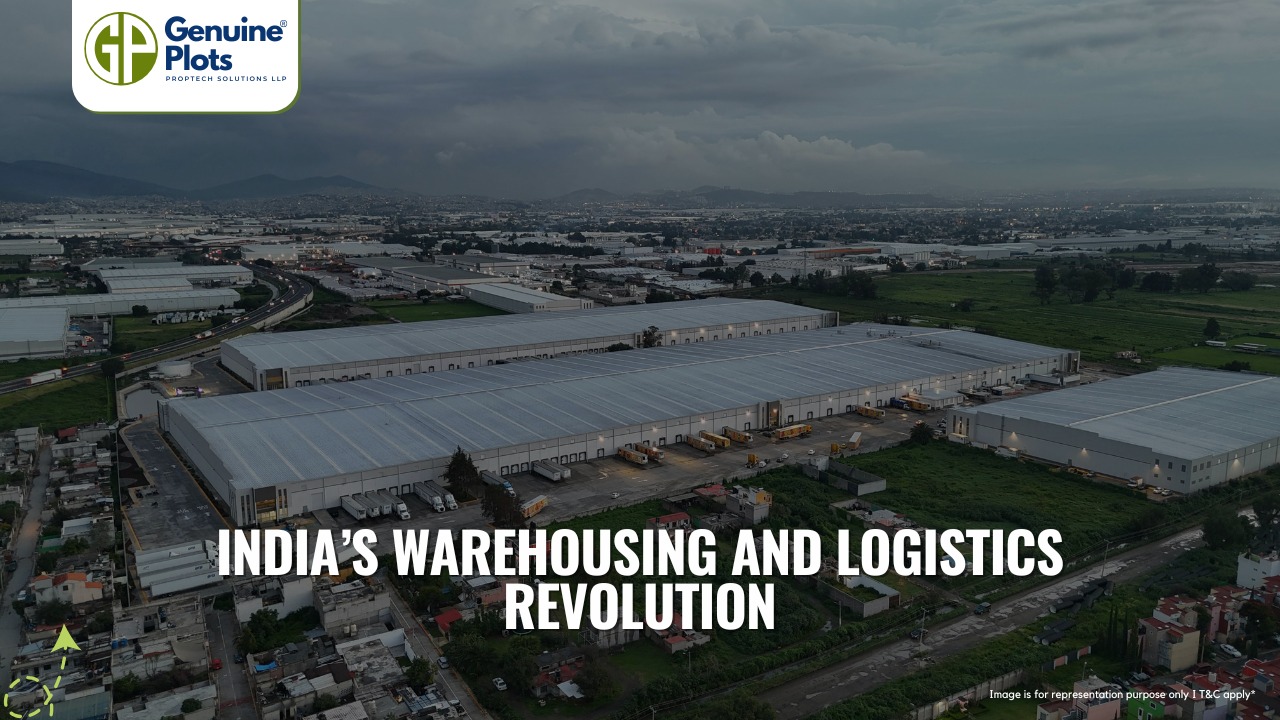
10 Key Factors That Influence Land Appreciation A Complete Guide for Smart InvestorsIndia is experiencing one of the most transformative phases in its economic story, and at its core is a rapidly evolving warehousing and logistics sector. From being recognised as a highly fragmented industry with poor infrastructure to becoming a strong backbone for growth, efficiency, and global competitiveness, logistics in India is emerging with great vigour. Policy reforms, the expansion of e-commerce, improved infrastructure, and technological innovation are strong forces reshaping how goods are stored, moved, and delivered across the country.
A Sector Fueled by Unprecedented Demand
The warehousing market in India has witnessed tremendous growth over the past few years. The demand for organised Grade-A warehousing space has grown significantly, driven by requirements from 3PL players, e-commerce giants, the manufacturing sector, the pharmaceutical industry, and the retail segment. Today, corporations demanding large spaces for storage are also wanting dedicated warehouse infrastructure designed for automation, quality control, and efficiency in flow. The result is transforming warehouses from being cost drivers to value drivers.
One key trend is the rise of large distribution centres near major consumption hubs. Cities such as Delhi-NCR, Mumbai, Bengaluru, Chennai, Pune, and Hyderabad have experienced a huge rise in the construction of warehouses. But that is not the end of it—the rise in warehousing demand is also increasing in Tier-II and Tier-III cities in India. These places are becoming essential nodes in a supply chain and helping products reach the final mile of delivery.
Policy Reforms Changing the Game
The involvement of the government has been catalytic in transforming the sector. The implementation of Goods and Services Tax has ensured ease in inter-state supply, thus eliminating the need to have small warehouse spaces, which were mainly used for tax exemption purposes.
The National Logistics Policy, Gati Shakti, Dedicated Freight Corridors (DFCs), and Multimodal Logistics Parks (MMLPs) are facilitating an integrated approach to logistics through road, rail, air, and seaports. These factors are gradually reducing logistics costs and making India an even more favourable destination for manufacturing and distribution on a global platform.
E-Commerce: The Acceleration Engine
There is not a single industry that has disrupted the Indian logistics market as much as e-commerce has done so far. Millions of deliveries and ever shorter time limits have forced the entire logistics system into a change that has happened overnight because now every company needs regionally scattered micro-warehouses, automatic sorting stations, and last-mile delivery stations for same-day deliveries.
This has ushered in an entirely different warehouse paradigm—one that’s small, tech-enabled, strategically located, and speed-optimised. The trickle-down impact is immense, ranging from automated packaging systems to artificial intelligence-powered inventory routing, all of which cut from the same cloth of innovation in the e-commerce space.
Technology: The New Backbone
The days when shelving and pallet jacks were prominent by their presence in a warehouse are over. Today, the list encompasses automation, robots, tracking systems by IoT, digital inventory management, sophisticated material movement equipment, and even drones to monitor activities. AI and analytics are used to predict consumption, cut wastages, and optimise routes. Blockchain is making its presence felt in documentation and even supply chain transparency.
This will help ensure minimal human error, decrease costs, and remarkably optimise efficiency. They also ensure that Indian logistics services are globally competitive and hence provide opportunities related to export-oriented production.
The Rise of Integrated Logistics Hubs
India is transitioning to mega integrated hubs that encompass warehousing, transportation, cold storage facilities, and added-value services altogether. Such hubs integrate roadways, freight rail corridors, and seaports for easy long-distance transport. The hubs symbolise India’s alignment with the best international practices as far as its logistics system is concerned.
A Future Built on Efficiency and Scale
The future will see an acceleration in the warehousing and logistics evolution in India. The coming trends will witness a focus on automation, sustainability, and multimodal routes. The coming years will see an increasing focus on Tier-II and Tier-III cities and an increasing inflow of investment and innovation in this space.
What was a patchwork system is rapidly developing into one of India’s most exciting and tech-savvy industries, to build a quicker, brighter, and stronger logistics system for the future.
Legal Checklist to Secure Your Investment Before Buying Plots in Nagpur
If you buy a plot of land and don’t check its legal standing first, you may face serious financial and legal complications. A lot of problems can be avoided when investing in the fast-growing real estate market in Nagpur by doing a legal check.
Title Verification
You will need to find out if the seller got a clear and marketable title to the property, and whether there are any liens, disputes, lawsuits, or other title issues.
Layout Approval
You will need to determine if the plot you are purchasing is part of an approved layout plan by the relevant planning authority. This may be MahaRERA, or the NIT or the NMC, as this helps to ensure the accuracy of plot numbers and boundaries.
NA/AGRI Zoning and Permits
You will need to check if the land has Non-Agricultural (NA) zoning and other permits, as for residential or commercial purposes. If NA permits are not available, there is a limit to the activities that can occur on the agricultural land.
Encumbrance Certificate (EC)
The Encumbrance Certificate (EC) will be needed to ascertain that the property is free of encumbrances, liens, mortgages, or any other claims prior to the change of ownership.
7/12 Extraction and Mutation Records
The 7/12 extract provides land details, classification and survey data. Mutation records ensure that ownership shifts are recorded in the government’s revenue department.
Site Inspection and Boundaries
Physically visit the site, and evaluate the boundary demarcations, access roads, rights of way, and location in relation to essential utilities like water and electricity.
RERA Registration and Project Documents
For plots registered with MahaRERA, confirm the status of registration and examine project disclosures. Registration adds a layer of transparency to the process, but deletion of title documents is not permitted.
Importance of this Checklist
If you skip any of the legal checks, you end up risking loss of ownership rights, litigation, or a compromise on the ease of resale. This is a legal due diligence exercise that safeguards your present and future interests in the investment.
The Reasons Why Nagpur Is Increasingly Popular with Plot Investors in 2026
Nagpur is quickly becoming a strategic investment destination for land buyers and plotted development seekers, making it more than just a city in central Maharashtra. Nagpur is appealing due to a number of real estate and macroeconomic factors.
Growth and Affordability
Both first-time purchasers and seasoned investors can afford Nagpur's substantially lower entry prices for land and plots when compared to tier-I cities like Mumbai and Pune. As the city grows, there is a strong demand in addition to this cost advantage.
Extension of Infrastructure
New growth corridors are being opened by initiatives like the Samruddhi Mahamarg and improved expressway connectivity. The surrounding land increases in value as transportation access improves.
Diverse Plot Options
Nagpur’s land market is not one-dimensional. Buyers can choose from:
-
Residential plots
-
Commercial plots
-
Industrial plots
-
Gated community layouts
These options suit different investment goals — from building a home to leasing or reselling at a profit. -
Potential for Appreciation
Nagpur’s plot prices have shown consistent growth due to demand, expanding infrastructure, and limited land availability near urban growth corridors. Early investors in well-located plots often see higher returns as development accelerates.
Investor Confidence
Transparent regulatory frameworks and increasing developer interest have improved buyer confidence. Nagpur’s plotted land, especially in planned developments, is attracting both local and outstation buyers.
Conclusion:
With affordable price points and strong long-term fundamentals, Nagpur is on track to become one of central India’s most sought-after plot investment destinations in 2026.
In Nagpur, the real estate market is expanding. Nevertheless, intelligent plot investment encompasses more than just purchasing inexpensive plots. Making wise choices to protect your investments is also important.
- Pick the Proper Site
A plot's value is greatly influenced by its location. Locations with growth drivers, like highways, industrial areas, or civic developments, are what you should seek out. For example, Nagpur's proximity to the Samruddhi Mahamarg and highways significantly raises a plot's value.
- Confirm Legal Records
Make sure the plot has a clear title, is free of encumbrances, and has current ownership before making any payments. This is important to ensure that there are no future disputes.
- Prefer MahaRERA or Authorised Projects
Plots in sanctioned layouts or projects registered with MahaRERA offer greater transparency and protection. This will help prevent any disputes and will also help in obtaining a bank loan or reselling the plot in the future.
4. Approvals and Zoning
Ensure that the land is approved for your use (residential, commercial, etc.). Ensure the non-agricultural conversion (NA) approval and approvals from the local authority, if the land is situated close to the boundaries of the city.
- Development Potential
Evaluate the availability of basic infrastructure like roads, water, electricity, and civic amenities. A land with connectivity and basic infrastructure available is likely to appreciate faster and be in higher demand with buyers and developers.
Conclusion:
Investing in the real estate sector in Nagpur can be very profitable – but proper planning and due diligence are the keys to success.
Nashik Accelerates Preparations for 2026–2028 Simhastha Kumbh Mela with Major Expansion of Sadhugram
With the countdown to the upcoming 2026-2028 Simhastha Kumbh Mela set to commence in the coming years, Nashik is gearing up to embark on one of the most ambitious development plans in its entire history. An expected participation of 5 to 10 lakhs sadhus and sadhvis has compelled the city to go for massive expansion of Sadhugram, a settlement designated exclusively for sadhus and sadhvis, and other urban development works on an altogether new scale.
Massive Land Acquisition to Expand Sadhugram
In order to meet this influx of sadhus coming for the visit, the Kumbh Mela Authority has approved much-needed financial assistance to the tune of ₹3,200 crore for the civic body. Also, a major part of this fund has been allocated for purchasing an additional 250 acres of land in Tapovan for an amount of ₹1,050 crore. This will add to the existing 100 acres of land owned by the Nashik civic body, which has been designated as a no-development area for the sole purpose of Sadhugram.
However, the need for expansion is evident, and the system of compensating land owners for the land acquired is yet to be finalised. The initial plan was for 50% cash and 50% TDR, or providing the land owners with an alternate land parcel. However, Ashwini Bhide has asked for the plan for acquiring the land to be worked out better.
Infrastructure Push Ahead of the Mega Event
Beyond Sadhugram, Nashik Municipal Corporation has submitted a ₹15,000 crore infrastructure blueprint to the state government aimed at upgrading the city’s core services ahead of the Kumbh Mela. Of this, ₹3,200 crore has already been approved to kick-start essential projects.
The planned upgrades include:
Widening and improving key roads
Strengthening water supply networks
Enhancing sanitation facilities
Deploying 17,000 mobile toilets during the event
Upgrading the quality-control laboratory to ensure high standards in construction materials
These improvements are designed not only to support the influx of millions of pilgrims but also to serve residents long after the festival concludes.
Economic and Social Impact on the City
The expansion of Sadhugram and overall infrastructural development activities are anticipated to give a considerable economic boost to activities in and around Nashik. Job creation and tourism-related income generation activities are some of the great benefits to be derived from this Kumbh Mela. Business activities and sectors will experience a new growth spurt.
Moreover, transforming Sadhugram into a permanent and well-organised facility will reinforce the city’s position as a significant spiritual tourism center. This will include creating a permanent facility for future religious events. This will result in cultural and economic benefits.
A Strategic Vision for a Global Event
The developments made in Nashik in the preparation of the 2026–2028 Simhastha Kumbh Mela event indicate an optimistic approach in the blend of spirituality and urbanisation. With the joint efforts of the Kumbh Mela Authority, the state government, and the municipal corporation, Nashik is ready to host one of the largest spiritual festivals in the world in an efficient, comfortable, and safe manner.
Purchasing a plot of land in Goa is one of the most rewarding decisions you could make with regard to real estate. The state is renowned for its beaches, greenery, culture, and development of amenities.
Whether you dream of building a holiday home, a hospitality business, or appreciating land, this guide will run you through the locations, laws, returns, risks, and tips.
Why Buy Land in Goa?
Among the reasons why the real estate market of Goa attracts buyers are:
Strong Tourism-Driven Demand
Consistent Capital Appreciation
High Short-Term Rental Potential
Peaceful lifestyle with the best connectivity
Safe Environment and Investor-Friendly Culture
Land remains the most valuable asset class in this scenario, especially as land suitable for the prime areas is running out at a rapid pace.
Best Locations to Buy Land in Goa
North Goa
North Goa is the most in-demand zone due to tourism, nightlife, and premium lifestyle pockets.
Top areas include:
Pernem–Mandrem–Ashvem Corridor — boosted by Manohar International Airport, ideal for resorts, villas, and farm plots.
Assagao — a luxury village known for boutique homes and greenery.
Siolim — peaceful yet close to beaches; good for residential investments.
Candolim / Calangute / Baga — high rental demand.
Best for: Rentals, luxury homes, rapid appreciation.
Central Goa
Central Goa blends convenience with connectivity.
Popular regions:
Panaji — perfect for year-round living and commercial investment.
Porvorim — upscale residential hub close to the beach belt.
Mapusa — transport-friendly and ideal for mixed-use land.
Best for: Families, long-term rental income, commercial development.
South Goa
Known for tranquility and natural beauty, South Goa offers larger plots at better prices.
Promising areas:
Colva & Betalbatim — ideal for villas and homestays.
Palolem & Agonda — eco-friendly retreat and hospitality potential.
Margao — commercial and residential growth corridor.
Best for: Retirement homes, boutique resorts, long-term appreciation.
What ROI Can You Expect?
Capital Appreciation
North Goa premium areas: high appreciation due to tourism and airport growth.
Central & South Goa: steady and sustainable long-term growth.
Rental Income
There are opportunities to earn good money on a seasonal basis by renting houses in the vicinity of beaches on
There are long-term rentals available in urban pockets.
Tip: Land located near airport routes, highways, and beach belts appreciates the fastest.
Step-by-Step Process to Buying Land in Goa
Identify Your Purpose
Determine whether you’re buying for:
Investment
Home construction
Rental income
Commercial development
Agriculture / farmhouse
Your objective decides the location, budget, and legal requirements.
Conduct Legal Due Diligence (Most Important)
Before finalizing any land, verify:
Clear Title
Ensure the seller has undisputed ownership. Avoid properties with unclear inheritance or multiple claimants.
Zoning Classification
Check if land is:
Settlement (for residential)
Commercial
Orchard
Agricultural
Industrial
You will need a conversion if buying agricultural land for residential use.
Mutation Records
Land records must be updated in the name of the rightful owner.
Encumbrance Check
The land must be free of loans, liens, and court cases.
Understand CRZ (Coastal Regulation Zone) Rules
Coastal zones have strict restrictions on:
Distance from the high tide line
Construction height
Building permissions
Always consult a local architect or lawyer to verify whether construction is legally permitted.
Evaluate Infrastructure & Utilities
A good plot should have:
Proper road access
Electricity connectivity
Water supply
Internet availability
Drainage systems
Remote plots can seem attractive but may incur high development costs later.
Consider the potential for future growth.
PREFERENCES Look for land near:
Airport routes
New Highway Links
Tourist circuits
Upcoming commercial zones
These areas usually have faster price appreciation.
Common Mistakes to Avoid
Not checking for restrictions in CRZ
Unaware of the fact, some buyers purchase land that partially or totally restricts construction.
Title clarity is ignored.
Inheritance laws in Goa can create multiheir ownership; it is thus important to double-check the documents.
Inaccessibility of access roads not checked
Without a legal access road, the plot becomes unsuitable.
Underestimating the seasonal rental pattern
Rentals peak in season, November through March; off-season income varies.
Bypassing local knowledge
Local architects, lawyers and consultants avoid expensive mistakes.
Summary
Start with a goal: the holiday home, the commercial project, the investment.
Legality: title verification and zoning are not subject to negotiation.
Think long-term: infrastructure development affects land value.
Professionals: Goa property market has its own set of nuances and complexities, and it has to be dealt with by professionals.