Prev Post
Moregaon Farmland Estates: A Premier Agricultural Investment Opportunity
Buying land in Maharashtra can be confusing, especially when terms like Open Plot, NA Plot, Agricultural Land, and Non-Agricultural Land are used interchangeably.
- What is an Open Plot?
An Open Plot usually refers to agricultural land that has NOT yet been converted to NA (Non-Agricultural) status.
Open Plot = Agricultural Land
Legally, it is treated as agricultural land unless converted through NA permission.
Construction is NOT allowed
As per MLRC, you cannot build a house, shop, or commercial building on agricultural land without NA conversion.
Bank Loan is rarely available
Most banks do NOT give home loans, construction loans, or commercial loans on agricultural land.
Only farm loans may be available — but only if you are a certified farmer.
Cheaper Price
Since construction is not immediately allowed, prices are much lower than those of NA plots.
Future potential depends on NA conversion
If the government allows NA conversion later and the area develops, the land value increases.
Legal Risk if purchased for home
Buying agricultural land for living purposes is illegal unless NA conversion is done.
Open Plot = Just land. Construction is NOT legally allowed yet.
- What is an NA Plot (Non-Agricultural Plot)?
NA (Non-Agricultural) land is agricultural land that has officially been converted for non-farming use with government approval.
There are various types of NA:
NA – Residential
NA – Commercial
NA – Industrial
NA – Resort / Non-speculative / Mixed-use
Legal for construction
Once NA permission is granted, you can build a house, bungalow, shop, or commercial building, depending on the NA category.
Approval from the Gram Panchayat/Municipality
NA land comes with clear land-use permission & official sanction under MLRC Section 44.
Full eligibility for Bank Loan
Home loans, construction loans & commercial loans are available on NA plots.
Higher Cost
NA plots cost more because they:
have clear legal status
are construction-ready
have better infrastructure provisions
Safe for home buying
NA Residential plots are the safest option for building a house or bungalow.
NA Plot = Agricultural land legally converted to NON-agricultural use. Construction allowed.
Which Plot Should You Buy?
For Investment → Open Plot
Open plots appreciate more in developing areas.
Cheaper to buy + future NA conversion = high returns.
For Living / Construction → NA Plot
If you want to build:
House
Bungalow
Shop
Office
Commercial property
→ Only NA land is legal.
Most Common Misconceptions
Misconception: Open plots will automatically become NA in future
Reality: NA conversion is a government decision, not automatic.
Misconception: Gram Panchayat NOC = NA land
Reality: GP NOC alone does NOT make the land NA.
You need Collector NA approval under MLRC.
Misconception: You can construct “temporary” structures on open plots
Reality: Any construction on agricultural land is illegal without NA.
Summary
Open Plot = Agricultural Land (No construction allowed)
NA Plot = Legally approved Non-Agricultural Land (Construction allowed)
Open plots = Good for investment
NA plots = Best for home/commercial use
NA plots are safer, more expensive, and legally clear
Open plots are cheaper but riskier if used for living
Residential & LDA Plots in Lunknow: What You Need to Know Before Investing

- What are LDA plots in Lucknow?
LDA plots in Lucknow are land parcels developed and regulated by the Lucknow Development Authority (LDA). These plots undergo strict checks for land title, zoning, legality, and infrastructure planning. The authority ensures the plot is free from disputes, making it one of the safest options for people looking to buy residential plots in Lucknow.
- Is it safe to invest in LDA-approved plots in Lucknow?
Yes. Investing in LDA-approved plots in Lucknow is considered highly safe because they come with government approval, verified ownership, proper documentation, and planned infrastructure. Whether you are exploring residential plots in Lucknow or Lucknow land for sale, LDA plots offer transparency and long-term value appreciation.
- Which are the best areas to buy residential plots in Lucknow?
Some of the top locations for plots for sale in Lucknow include:
Sultanpur Road – Rapidly developing with township projects and strong connectivity.
Shaheed Path – Well-planned expressway stretch with premium residential zones.
Gomti Nagar Extension – One of Lucknow’s most in-demand areas with modern infrastructure.
These areas are ideal for those looking to buy residential plots in Lucknow for personal use or investment.
- What is the price of an LDA plot in Lucknow?
Prices for LDA plots in Lucknow vary by sector and location. Generally, rates range based on development stage, road access, and demand. Premium areas such as Gomti Nagar Extension and Shaheed Path tend to have higher valuations due to superior urban planning and amenities. Always check the latest LDA notifications for updated pricing.
- What is the circle rate in Lucknow under LDA jurisdiction?
The circle rate in Lucknow (LDA areas) depends on the sector, location category, and road width. Circle rates are government-defined minimum property prices used for stamp duty calculations. Popular micro-locations like Sultanpur Road and Gomti Nagar Extension often have higher circle rates due to strong demand and rapid growth.
- Are there good options for residential and LDA plots for sale in Lucknow right now?
Yes. You can find numerous residential plots in Lucknow, including secure, legally verified LDA plots in Lucknow, especially in fast-growing corridors such as Shaheed Path, Sultanpur Road, and Gomti Nagar Extension. These locations offer excellent connectivity, planned infrastructure, and long-term value appreciation for investors seeking Lucknow land for sale.

- What is the YEIDA residential plot scheme RPS-10 launching in 2026?
The YEIDA residential plot scheme RPS-10 is a new offering by the Yamuna Expressway Industrial Development Authority featuring 973 YEIDA residential plots in Sectors 15C, 18, and 24A near Jewar Airport. These plots range from 162 to 290 sq m, making them ideal for homebuilding and long-term investment.
- Are YEIDA plots for sale near Jewar Airport a good investment?
Yes. The upcoming Noida International Airport significantly boosts demand for YEIDA plots for sale, especially in sectors around the expressway. The connectivity, infrastructure development, and future commercial hubs make this an excellent opportunity for both living and investment.
- What are the price and size details of plots under the YEIDA plot scheme RPS-10?
Under the YEIDA plot scheme, plot sizes range from 162 to 290 sq m, priced at around ₹35,000 per sq m. With 973 plots available, the scheme aims to provide affordable and well-located land options near high-growth areas.
- How does the allotment process work in the YEIDA housing scheme?
The YEIDA housing scheme uses a transparent lucky draw system. Applicants submit their forms with an earnest money deposit, and allotment is done fairly through a computerised draw, ensuring transparency and equal opportunity.
- Can individuals apply for YEIDA land for sale under this scheme?
Yes. Any Indian citizen aged 18+ can apply for YEIDA land for sale under the RPS-10 scheme. Applicants may apply individually or jointly with immediate family members. Full details will be provided in the official brochure when released.
- What makes the YEIDA residential project area attractive for buyers?
The YEIDA residential project zones—especially Sectors 15C, 18, and 24A—are strategically located near the Yamuna Expressway and Jewar Airport. The combination of connectivity, rapid development, and future appreciation makes these plots highly desirable for homebuyers and investors.

Goa has quietly moved from being just a holiday hotspot to becoming one of India’s most rewarding real estate markets. With the new Mopa airport running at full capacity, major infrastructure work underway, and a steady rise in tourism and NRI demand, 2026 presents a rare investment window. If you’re exploring where to buy in Goa—whether for appreciation, rentals, or a second home—these five locations stand out for all the right reasons.
- Mopa Airport Corridor (Pernem – Tuem)
The biggest movement in Goa's property market is happening around the Mopa airport. Better connectivity has unlocked massive appreciation, and the upcoming IT and logistics parks are expected to boost demand further. Currently, Investors seeking plots, gated villa communities, or hospitality-driven land parcels are seeing strong returns. This corridor presents the maximum potential for growth over the next few years.
- Mandrem – Morjim – Ashwem
This is a prime stretch of coastline that still attracts world travellers, long-stay tourists, and luxury renters. The proximity to the airport just adds to its attractions. It is an excellent area that is suited to luxury villas and resorts that also perform strongly as a holiday home opportunity. If you are after a lifestyle opportunity with proximity to beaches and strong returns on a rental platform, you cannot go past this belt.
- Korgao – Torxem – Uguem
These picturesque villages of North Goa are gaining traction with buyers looking for serene surroundings without being too far removed from the action. With rolling greens, waterfrontage, and relatively lower price points, this area is perfectly suited for farmhouse land purchases or private estate developments. As growth continues to spill out from the airport side, this area is experiencing solid, stable growth.
- Vasco – Chicalim – Bogmalo
A dependable property market in South Goa lies around Dabolim airport. Therefore, an established neighbourhood, good infrastructure, and a well-grounded tenant base make it suitable for buyers looking for an assured rental income and ready-to-move homes. Families, corporate employees, and defence personnel ensure a continuous demand for both apartments and villas.
- Colva – Benaulim – Cavelossim
This sleepy coastal zone offers the quintessential experience of South Goa: pristine beaches, easy living, and high-end villas. It caters to NRIs, holiday makers, and lease seekers who are looking for high-end living without any crowds. These properties assure you of high appreciation and are worth buying.
MMR 3.0: How the Mumbai Metropolitan Region Aims to Become a $1+ Trillion Urban Economy by 2047
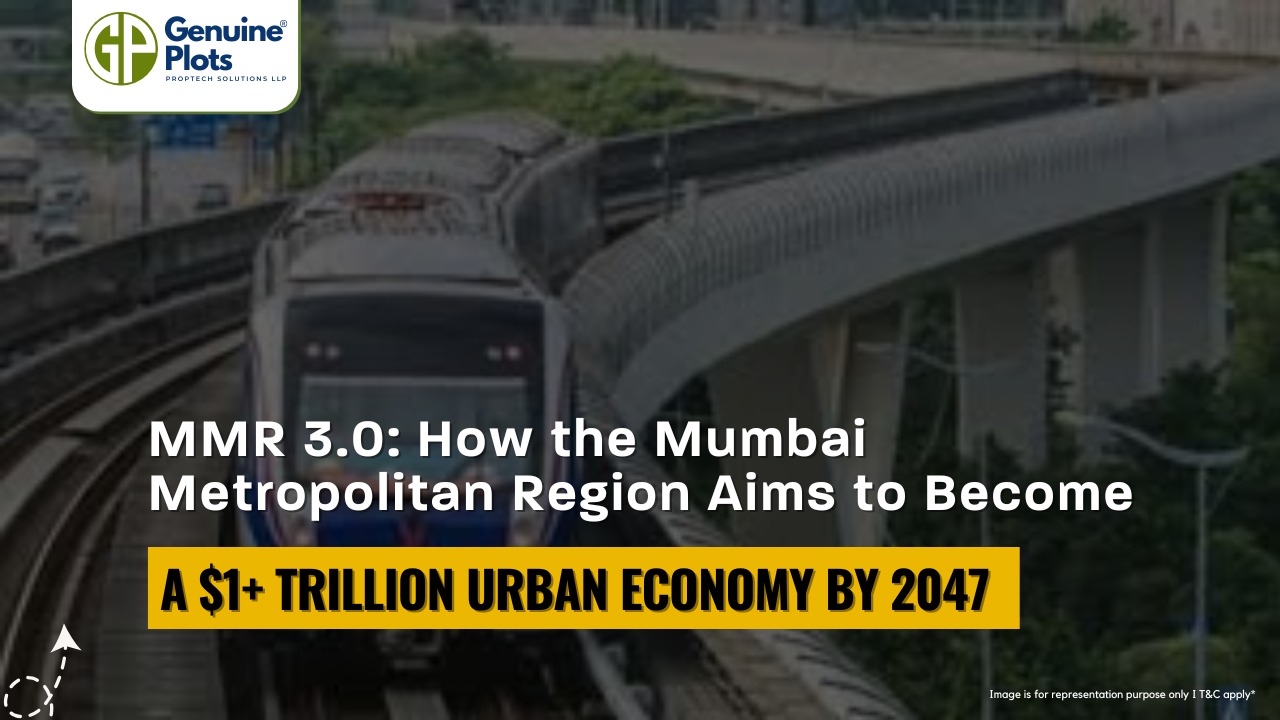
The MMR is poised at the threshold of the most transformative journey ever. Powered by a strong aspiration to grow as a $1 trillion urban economy by 2047, this will take shape through a new growth model comprising expanded infrastructure, diversified industry clusters, and next-generation urban planning. The vision for "MMR 3.0" is well in tune with the national aspiration for India to become a developed nation by 2047, with Mumbai at the forefront of innovation, mobility, and economic leadership.
At the core of the proposed roadmap for the GDP is a plan to increase the output of the region two-fold by 2030. Policymakers have set their sights on sectors like financial services, logistics, technology, tourism, manufacturing, and green mobility, which have higher productivity levels. While the region’s legacy industries have been largely based on real estate and traditional services, a new, more diversified structure is arising, with a greater emphasis on the creation of jobs at various skill levels. Emerging employment hubs include Navi Mumbai, Thane, Panvel, Kalyan-Dombivli, Vasai-Virar, and the upcoming Third Mumbai node, helping to end decades of employment concentrations within South Mumbai and its western suburbs.
Infrastructure is the backbone of the GDP expansion plan. Over 374 km of metro lines, major expressways, coastal roads, trans-harbour links, tunnels, new suburban rail corridors, and multimodal hubs aim to compress travel time dramatically. This enhanced connectivity is expected to unlock productivity, create new business districts, and decentralize population pressures. The Navi Mumbai International Airport and its surrounding Aerotropolis are poised to become one of India’s most influential logistics and services zones, driving aviation-linked trade and global investment.
A vital element of MMR’s trillion-dollar ambition is sustainability. With climate risks rising and the region being coastal, future-ready planning emphasises flood management, green mobility, resilient infrastructure, and balanced urbanisation. Large-scale transit-oriented development (TOD), walkable districts, digital governance, and smart-city frameworks are being embedded into upcoming projects.
The demographics of the region—the large population of working-age citizens, one of the largest in India—also increases the certainty of the region’s high growth. However, some of the weaknesses of the region include affordability gaps, infrastructure constrains, environmental concerns, and inclusive development. MMR 3.0 seeks to address these through a coordinated system of governance and “public-private partnerships and policy reforms.
Roadmap to Double MMR’s GDP by 2030- Sectoral Opportunities & Challenges

MMR hopes to double its GDP by 2030, achieving a stronger and more competitive $300 billion urban economy.
This requires significant private investments, as well as the creation of millions of new jobs in new sectors.
Service as the Growth Driver
The objective is to become a global services hub.
Expansion to sectors like IT, fintech, banking, media, and global capability centers.
New job clusters being developed in Thane, Navi Mumbai, Kalyan, and Panvel.
Housing & Urban Upgrade
A larger push for affordable housing and redevelopment.
Goal: Ease pressures on South Mumbai and promote growth in the region.
New townships, as well as micro-cities, will be established to accommodate
Infrastructure as the Backbone
Massive upgrades to metro networks, expressways, rail corridors, and multimodal hubs.
Improved mobility → higher productivity, better connectivity, and new real estate hotspots.
Ports, Logistics & Manufacturing
Strengthened logistics chains through port modernisation, industrial parks, and warehousing zones.
Diversifies MMR beyond a finance-led economy.
Tourism & Lifestyle Economy
Development of coastal, heritage, and leisure circuits to improve tourism revenue and job creation.
Main Challenges
Mobilising private capital
Land + Environmental Constraints
Making sure the infrastructure keeps pace with economic growth
Why It Matters
MMR is in the midst of a rapid expansion phase—more jobs, better housing, increased connectivity, and increased economic opportunities.
Recent Posts
Tags
Bhunaksha,
genuine plots,
Land For Sale,
Maharashtra Bhunaksha,
plots for sale,
Gunthewari,
Gunthewari Land,
Gunthewari Rules,
Extract Documents,
Plots and Lands,
Saat Baara,
Extract Saat,
Baara Utara,
Jamabandi,
property tax payments,
Gram Panchayat,
lower prices,
non-agricultural land,
Lower Investment Cost,
Gram Panchayat lands,
Fresh Land Settlements,
Growing demand,
affordable homes,
genuine p,
legal Land,
bungalow plots,
Konkan,
Maharashtra,
Purandar,
Pune,
Karnataka,
Bangalore,
Farm Land,
Kolkata,
Rajarhat,
Indore,
Chhatrapati Sambhajinagar,
Aurangabad,
Mundhwa,
Agricultural Land,
Farmhouse Plot,
Rules And Penalties,
Residential Plots,
NA PLots,
Residential NA Plots,
Commercial NA Plots,
Animal Husbandry Land,
Tathawade,
Vahivat Land Maps,
Vahivat,
Indian Land Records,
Ownership Rights,
Red zone,
PCMC,
Dehu Road,
Land Registration Rules,
Land Investing,
Infrastructure Growth,
Land Ownership,
Land Encroachment,
Panshet Dam,
Varasgaon Dam,
Verified Land,
Plot For Sale,
Land Investment,
Verified Plots,
Land Acquisiton,
Hydrological Survey,
Invest In Land,
Verified Land Plots,
Panshet,
Khadakwasla,
Land Rules,
Dakhil Kharij,
Land Registry,
Property Onwership,
Clean Title Check List,
Property Verification,
Digital Registry,
Farm Plots,
Agro Property,
Land Value Growth,
Urban Expansion,
Senapati Bapat Road,
Registered Land,
Agricultral Plot,
Purandar Airport,
Safe Investment,
Secure Property,
Plot Buyers,
Approved Plots,
Land ROI,
NA Approved Plots,
NA Land,
Welspun One,
Logistic Park,
Talegaon,
PMC Bharat Mandapam,
Urban Development,
Lohgaon,
Close To Nature,
Gated Community Plots,
Buy Land VS Gold Investment,
NRI Investment,
Future Ready Living,
Trusted Plots,
Plot Investment,
Authentic Land,
Safe Land Buying,
Mumbai,
Premium Plots,
MMR Land Investment,
MMR Infrastructure,
Metro Connectivity,
Plots in Mahabaleshwar hill station investment,
Mahabaleshwar land prices and future growth,
Scenic residential plots in Mahabaleshwar,
Mumbai 3.0,
Mumbai 3.0 vs Mumbai 2.0,
Mumbai property investment,
Real estate investment in Mumbai,
Upcoming residential projects in Mumbai,
CIDCO plot auctions,
CIDCO auction Navi Mumbai,
Upcoming CIDCO plot auctions 2026,
CIDCO land auction dates,
Navi Mumbai plot auctions,
CIDCO plots in Navi Mumbai,
CIDCO plots in Kharghar,
CIDCO plots in Ulwe,
NMIA investment opportunities,
Mumbai 3.0 plotted development,
Mumbai 3.0 real estate,
Plots in Mumbai 3.0,
Land investment in Maharashtra,
Residential plots near Mumbai,
Land appreciation in Mumbai 3.0,
Residential land for sale in Mumbai 3.0,
Altamura NA Plots,
Altamura Nadar City,
NA Plots in Nadar City,
Nadar City Plots,
Plots in Nadar City,
YEIDA plots,
YEIDA plots near Noida Airport,
Noida Airport plots,
Jewar Airport investment,
Yamuna Expressway plots,
YEIDA plot scheme 2026,
Noida Airport real estate,
Zepto,
Zepto effect,
D2C brands India,
Urban consumer trends,
Marketplace evolution,
Urban infrastructure growth,
YEIDA Residential Plot Scheme,
Yamuna Expressway Plot Scheme,
YEIDA Residential Plots,
Yamuna Expressway Authority,
Noida Investment,
Residential Plots in Lucknow,
LDA Plots in Lucknow,
Lucknow Real Estate,
LDA Approved Plots,
Plots for Sale in Lucknow,
Lucknow Property Investment,
Land Investment in Lucknow,
Residential Land in Lucknow,
Buy Plot in Lucknow,
Lucknow Development Authority,
Maharashtra Fragmentation Law 2025,
Fragmentation Act Maharashtra,
Maharashtra land law update 2025,
Maharashtra land reforms 2025,
Land subdivision rules Maharashtra,
Maharashtra agriculture land purchase rules,
Agricultural land purchase restrictions Maharashtra,
Can non-farmers buy agricultural land in Maharashtra,
NA conversion process Maharashtra,
Collector permission for land purchase,
farmland prices in Nagpur,
agricultural land price in Nagpur per acre,
farmland cost in Nagpur Maharashtra,
Nagpur agricultural land investment,
per acre agricultural land rate in Nagpur,
Tukdebandi Law Maharashtra,
Maharashtra Fragmentation Act update,
Land subdivision law Maharashtra,
Agricultural land division Maharashtra,
Maharashtra land reform ordinance,
Plot registration Maharashtra,
Farmland prices Nagpur,
Nagpur agricultural land rates,
Farmland per acre Maharashtra,
Agricultural land price Nagpur,
Farm land cost Nagpur,
Nagpur real estate trends,
Land investment Nagpur,
Avani Farms,
Avani Farms Pune,
Farmland near Pune,
Farm plots for sale,
Agricultural land investment,
Gated farmland near Pune,
NRI agricultural land rules India,
Can NRI buy agricultural land in India,
FEMA rules for NRI property purchase,
RBI guidelines for NRI land investment,
NRI farmland investment India,
Agricultural land purchase by NRI,
Maharashtra Fragmentation Act,
Minimum plot size in Maharashtra,
Guntha rules Maharashtra,
Agricultural land division rules,
Minimum land area for sale in Maharashtra,
Legal plot size in guntha,
Guntha conversion rules,
NRI land purchase in India,
Can NRIs buy agricultural land in India,
NRI property investment India,
NRI buying residential land,
NRI real estate guidelines India,
Investment tips for NRIs in India,
Mutation Entry Process,
Land Mutation in India,
Property Mutation Process,
Land Ownership Transfer,
1 guntha na plot prices in pune 2026,
1 guntha plot price in pune,
na plots in pune,
residential na plots pune,
guntha plot rate in pune,
na plot investment in pune,
plots near purandar airport,
1 Acre Land Price in Pune,
Pune Land Rates 2025,
Pune Land Price 2026,
Pune Acre Land Cost,
Land Value Pune,
Agricultural Land Price Pune,
gated community plots in Hinjewadi,
Hinjewadi plots for sale,
residential plots in Hinjewadi Pune,
premium plots in Hinjewadi,
plots near Rajiv Gandhi Infotech Park,
land for sale in Hinjewadi Pune,
Pune property investment,
plots for sale in Pune below 5 lakhs,
Pune rural land investment,
gated plotting projects Pune,
MIDC growth corridor plots,
Residential plots for sale in Hinjewadi,
Plots in Hinjewadi Pune,
Land for sale in Hinjewadi,
Residential NA plots Hinjewadi,
Hinjewadi real estate trends 2026,
Nashik land investment,
Trimbakeshwar land for sale,
Simhastha Kumbh 2026,
Simhastha Kumbh 2027 real estate impact,
Trimbakeshwar property investment,
Land appreciation in Nashik,
plots for sale in pune,
types of plots in pune,
residential plots in pune,
agricultural land in pune,
villa plots in pune,
NRI agricultural land purchase India,
NRI property investment in India,
Agricultural land rules for NRIs,
NRI real estate investment India,
NA plot meaning,
what is NA land,
NA land in Maharashtra,
land investment guide,
NRI agricultural land in Telangana,
Telangana land laws for NRI,
Telangana real estate laws,
NRI investment guide Telangana,
Legal compliance for NRI property,
NRI farmhouse purchase India,
RBI guidelines for NRI property,
NRI land buying rules,
Godham Eco Village,
Godham Eco Village for NRIs,
NRI land investment in India,
Investment plots for NRIs,
Secure land investment India,
NRI property buying guide,
plots in Pune,
NRI buying property in India,
NRI guide to buying land in Pune,
NRI land investment in Pune,
NRI property documents checklist,
Maharashtra land reform 2025,
Maharashtra land laws update,
Agricultural land rules in Maharashtra,
Buying agricultural land in Maharashtra,
Non-agricultural land conversion Maharashtra,
Maharashtra agricultural land rules 2024,
agricultural land purchase in Maharashtra,
non agriculturist land purchase rules,
who can buy agricultural land in Maharashtra,
Maharashtra land laws for non farmers,
Guntha based land rules,
Minimum guntha rule Maharashtra,
Maharashtra land laws,
Maharashtra agricultural land laws,
farmland investment Maharashtra,
buying farmland legally in Maharashtra,
NA conversion rules Maharashtra,
agricultural land eligibility criteria,
Property Mutation in India,
Land Record Update,
Revenue Records,
Property Ownership Transfer,
Mutation of Property,
Farmhouse Plots Near Pune,
NRI Investment in Pune,
Pune Real Estate,
Plots for Sale Near Pune,
Luxury Farmhouse Plots,
Pune plot scams,
Plot buying checklist,
Legal verification for plots,
NA plot verification,
Plot buying tips Pune,
Godrej Properties,
Evora Estate Panipat,
Luxury plots in Panipat,
Premium land investment,
Residential plots in Panipat,
Lodha Developers,
Lodha Developers Q3 acquisition,
Lodha land parcels Q3,
Indian real estate news,
New residential projects India,
Real estate investment news,
Premium housing projects,
Srijan Group,
Kolkata Tech Park,
Commercial Real Estate,
Real Estate Investment,
Real Estate Deal News,
NRI investment in India,
NRI land investment,
Plots for sale in India,
NRI property investment,
Can NRI buy residential plot in India,
NRI land purchase rules,
Residential plots for NRIs,
NRI real estate investment,
NRIs buying property in India,
Can NRIs buy plots in India 2026,
RBI rules for NRI property purchase,
NRI land investment rules,
MMR 3.0,
MMR real estate 2026,
Mumbai real estate market,
Navi Mumbai investment,
Thane property market,
Mumbai property trends 2026,
Land investment in MMR,
Mumbai smart city project,
Korea Mumbai partnership,
MMRDA infrastructure projects,
Korean investment in India,
MMR GDP growth,
MMR economic roadmap 2030,
Mumbai real estate,
Public private partnership projects Mumbai,
Investment opportunities in MMR,
Mumbai Metropolitan Region,
Mumbai urban development,
MMR 2047 vision,
Mumbai infrastructure projects,
Navi Mumbai development,
Goa property investment,
Invest in Goa 2026,
Goa real estate market 2026,
Best places to invest in Goa,
North Goa property,
Property appreciation in Goa,
Goa plots for sale,
Commercial property in Goa,
Buy property in Goa,
YEIDA plots 2026,
Residential plots in YEIDA,
YEIDA new scheme update,
Plots near Noida International Airport,
Yamuna Expressway Authority plots,
YEIDA housing scheme details,
Lucknow land investment,
Property in Lucknow,
Buy plots in Lucknow,
Nashik plots for sale,
Kumbh Mela 2026 Nashik,
Land investment in Nashik,
Nashik property market 2026,
Plots near Kumbh Mela Nashik,
Residential plots in Nashik,
Upcoming projects in Nashik,
Property appreciation in Nashik,
Maharashtra land investment,
Nashik Kumbh Mela 2026,
Kumbh Mela investment opportunities,
Infrastructure development in Nashik,
Plots near Nashik Kumbh Mela,
High ROI land investment,
MIHAN,
MIHAN Nagpur,
Nagpur Real Estate,
Agricultural Land Nagpur,
Nagpur Property,
Plots Near In MIHAN,
Pune residential plots,
best areas to buy plots in Pune,
Pune land investment,
investment plots in Pune,
buy land in Pune,
real estate investment in Pune,
Godrej Plots Doddaballapur,
Doddaballapur plots for sale,
Plots in North Bangalore,
Godrej Properties plots,
Residential plots in Doddaballapur,
Investment plots near Bangalore,
Gated community plots Bangalore,
Premium plots in Doddaballapur,
plots in Mahabaleshwar,
Mahabaleshwar villa plots,
farmhouse plots in Mahabaleshwar,
land for sale in Mahabaleshwar,
bungalow plots in Mahabaleshwar,
hill station property investment,
agricultural land in Mahabaleshwar,
premium land in Mahabaleshwar,
Plots in Pune under 3 lakhs for sale,
Budget residential plots near Pune,
Low cost plots near Pune highway connectivity,
plots in Pune under 3 lakhs,
farmland plots near Pune city,
Investment plots near Pune under budget,
Residential land near Pune,
Godrej plots in Pune,
Premium plotted development by Godrej in Pune,
Residential land for sale by Godrej,
Premium plot by Godrej,
Plots for sale in Hadapsar Pune,
Residential plots in Hadapsar,
Investment plots in Hadapsar,
Gated community plots in Hadapsar,
Ready to build plots in Hadapsar,
1 Guntha plot in Pune,
1 Guntha plot in Pune for sale,
1 Guntha plots near Pune city,
Residential 1 Guntha land in Pune,
Clear title 1 Guntha plot in Pune,
1 guntha plot price in village,
village plot rate per guntha,
affordable 1 guntha land in rural area,
residential plot in village Pune,
farmland plot price per guntha,
Residential 1 Guntha plot near Pune city,
Investment plots in Pune 1 Guntha,
Clear title 1 Guntha land in Pune,
Agricultural 1 Guntha plot near Pune,
1 Guntha plot in Pune Katraj for sale,
Residential plot in Katraj Pune 1 Guntha,
Katraj Pune land for home construction,
1 Guntha NA plot in Katraj Pune,
Pune Katraj plot near highway connectivity,
Gated plot project in Katraj Pune,
NA plots in Pune under 10 lakhs,
Affordable NA plots near Pune city,
NA residential plots in Pune,
NA approved plots in Pune under 10 lakhs,
Investment plots in Pune under 10 lakhs,
Residential NA plots near Pune highway,
Best plots in Pune below 10 lakhs,
Premium villa plots in Pune,
Residential villa plots in Pune near city outskirts,
Luxury villa plots in Pune,
Gated villa plot project in Pune,
Villa plot site visit in Pune,
NA plots in Pimpri Chinchwad for sale,
Residential NA plots in PCMC area,
NA approved plots in Pimpri Chinchwad,
NA land with clear title in PCMC,
NA plots near Pune Mumbai Highway PCMC,
Godrej Villa Plots Doddaballapur,
Godrej plotted development Bangalore,
villa plots in North Bangalore,
premium villa plots Bangalore,
Godrej Properties plots Bangalore,
Brigade Plots Malur,
Brigade Malur plots,
plots in Malur East Bangalore,
investment plots in East Bangalore,
residential plots in Malur Bangalore,
Brigade Group plots Bangalore,
land investment in East Bangalore,
gated community plots in Malur,
prestige plots devanahalli,
prestige plots in devanahalli bangalore,
plots for sale in devanahalli,
prestige plots investment,
premium plots in devanahalli,
residential plots near kempegowda airport,
What is NA plot in real estate,
NA land meaning in property,
NA approved plotsDifference between NA and agricultural land,
Buying NA plots in Maharashtra,
NA plot vs agricultural land,
Plot prices in Mysore,
Mysore infrastructure projects,
Mysore property investment,
Land investment in Mysore,
Plot investment opportunities,
land buying guide in goa,
buy land in goa,
plots for sale in goa,
legal process to buy land in goa,
property in goa,
residential plots in goa,
Nashik Simhastha Kumbh Mela 2026,
Sadhugram expansion Nashik,
Maharashtra Kumbh Mela planning,
Nashik Kumbh Mela preparations,
tourism development in Nashik,
plots in Nagpur,
Nagpur plot investment,
land for sale in Nagpur,
residential plots in Nagpur,
golden rules before buying plots in Nagpur,
Nagpur land investment,
plot investment in Nagpur,
land investment in Nagpur,
plots for sale in Nagpur,
best areas to buy plots in Nagpur,
buying plots in Nagpur,
plot purchase checklist,
legal checklist for buying land,
documents required for plot purchase,
NA plots in Nagpur,
Tattvana,
Tattvana in Kamshet,
Moregaon Farmland Estates,
farmland investment Pune,
agricultural land investment,,
farmland for sale near Pune,
farm plots in Pune,
gated farmland projects,
agricultural plots Maharashtra,
open plot vs NA plot,
difference between open plot and NA plot,
what is NA plot in India,
open plot meaning in real estate,
NA land vs agricultural land,
residential NA plots benefits,
land investment in India,
buying NA plot vs open land,
capital gains on agricultural land,
rural vs urban agricultural land tax,
agricultural land tax rules India,
capital gains tax India property,
is agricultural land taxable,
rural agricultural land exemption,
urban agricultural land tax India,
Runwal Enterprises Alibaug township,
Alibaug real estate,
coastal real estate India,
township projects in Alibaug,
luxury properties in Alibaug,
Mumbai weekend homes investment,
Alibaug property investment,
isprava south goa,
ultra luxury villas in goa,
south goa real estate,
luxury homes in goa,
isprava projects goa,
premium villas in south goa,
land investment advisory services,
secure land investment,
real estate advisory services,
verified land deals,
investment plots near Pune,
land buying guide India,,
#KanpurRealEstate,
#KDAPlots,
#KanpurProperty,
#RealEstateKanpur,
#PropertyTrends,
Gokul Plots investment,,
real estate investment Gokul,,
plots with high appreciation potential,
smart land investment strategies,
plots for sale in North Bangalore,
land investment Bangalore,,
emerging areas in North Bangalore,
residential plots Bangalore,,
Bangalore real estate investment,,
North Bangalore property trends,,
plots near airport Bangalore,,
HUDA plots in Gurgaon,
HUDA plots in Faridabad,
residential plots Haryana,
HUDA approved plots,
plots for sale in Gurgaon,
plots in Faridabad investment,
Prestige Marigold plots,,
Bangalore plotted developments,
land investment Bangalore,
best plots in North Bangalore,
#PlotsForSaleInNellore,
#NelloreRealEstate,
#NellorePlots,
#RealEstate2026,
#PropertyInvestment,
#NelloreProperty,
#AndhraPradeshRealEstate,
GMADA E Auction 2026,
GMADA plots Mohali,
plots in Mohali for sale,
GMADA Mohali auction process,
buy plots in Mohali,
Punjab property investment,
GMADA scheme 2026,
Mohali real estate,
HSVP plots 2026,
HSVP plot investment,
HSVP plots Haryana,
land investment benefits,
residential plots investment,
government approved plots,
buy plot in New Chandigarh,
flats in New Chandigarh,
New Chandigarh real estate,
property investment in New Chandigarh,
residential plots in New Chandigarh,
apartments in New Chandigarh,
#WaveCityGhaziabad,
#GhaziabadPlots,
#PlotsInGhaziabad,
#NCRRealEstate,
#RealEstateInvestment,
#ResidentialPlots,
APIIC vacant plots,
APIIC plots for sale,
industrial plots in Andhra Pradesh,
commercial land for MSMEs,
startup investment plots,
APIIC industrial land,
HUDA plots,
HUDA plots investment,
property appreciation,
plot investment benefits,
high return property investment,
land appreciation,
#GDAPlotsInGhaziabad,
#PlotsForSaleInGhaziabad,
#ResidentialPlotsGhaziabad,
#InvestmentPlots,
#RealEstateGhaziabad,
#GDAApprovedPlots,
#BaliProperty,
#PropertyInBali,
#IndiansInBali,
#BaliRealEstate,
#InternationalPropertyInvestment,
buy plots in Sarjapur Road Bangalore,
plots in Sarjapur Road,
residential plots in Sarjapur Road,
land for sale in Sarjapur Road Bangalore,
investment plots in Bangalore,
plots near IT corridor Bangalore,
how Indians can buy property in Bali,
buy property in Bali for Indians,
Bali property investment,
property in Bali for Indian buyers,
Bali real estate guide,
foreign property investment Bali,
legal checks before buying property in Bali,
Indians invest in Bali property,
due diligence for Bali property,
Bali real estate for Indians,
Bali property legal verification,
verified farmland plots,
100% verified farmland plots,
farmland investment India,
legal farmland plots,
farmland plots for sale,
Konkan land investment,,
high-growth corridors Maharashtra,
land investment 2026,
plots for sale in Maharashtra,



