Prev Post
Moregaon Farmland Estates: A Premier Agricultural Investment Opportunity
Buying land in Maharashtra can be confusing, especially when terms like Open Plot, NA Plot, Agricultural Land, and Non-Agricultural Land are used interchangeably.
- What is an Open Plot?
An Open Plot usually refers to agricultural land that has NOT yet been converted to NA (Non-Agricultural) status.
Open Plot = Agricultural Land
Legally, it is treated as agricultural land unless converted through NA permission.
Construction is NOT allowed
As per MLRC, you cannot build a house, shop, or commercial building on agricultural land without NA conversion.
Bank Loan is rarely available
Most banks do NOT give home loans, construction loans, or commercial loans on agricultural land.
Only farm loans may be available — but only if you are a certified farmer.
Cheaper Price
Since construction is not immediately allowed, prices are much lower than those of NA plots.
Future potential depends on NA conversion
If the government allows NA conversion later and the area develops, the land value increases.
Legal Risk if purchased for home
Buying agricultural land for living purposes is illegal unless NA conversion is done.
Open Plot = Just land. Construction is NOT legally allowed yet.
- What is an NA Plot (Non-Agricultural Plot)?
NA (Non-Agricultural) land is agricultural land that has officially been converted for non-farming use with government approval.
There are various types of NA:
NA – Residential
NA – Commercial
NA – Industrial
NA – Resort / Non-speculative / Mixed-use
Legal for construction
Once NA permission is granted, you can build a house, bungalow, shop, or commercial building, depending on the NA category.
Approval from the Gram Panchayat/Municipality
NA land comes with clear land-use permission & official sanction under MLRC Section 44.
Full eligibility for Bank Loan
Home loans, construction loans & commercial loans are available on NA plots.
Higher Cost
NA plots cost more because they:
have clear legal status
are construction-ready
have better infrastructure provisions
Safe for home buying
NA Residential plots are the safest option for building a house or bungalow.
NA Plot = Agricultural land legally converted to NON-agricultural use. Construction allowed.
Which Plot Should You Buy?
For Investment → Open Plot
Open plots appreciate more in developing areas.
Cheaper to buy + future NA conversion = high returns.
For Living / Construction → NA Plot
If you want to build:
House
Bungalow
Shop
Office
Commercial property
→ Only NA land is legal.
Most Common Misconceptions
Misconception: Open plots will automatically become NA in future
Reality: NA conversion is a government decision, not automatic.
Misconception: Gram Panchayat NOC = NA land
Reality: GP NOC alone does NOT make the land NA.
You need Collector NA approval under MLRC.
Misconception: You can construct “temporary” structures on open plots
Reality: Any construction on agricultural land is illegal without NA.
Summary
Open Plot = Agricultural Land (No construction allowed)
NA Plot = Legally approved Non-Agricultural Land (Construction allowed)
Open plots = Good for investment
NA plots = Best for home/commercial use
NA plots are safer, more expensive, and legally clear
Open plots are cheaper but riskier if used for living
PMRDA, District Administration Push for Land Acquisition for Nashik Phata–Khed Elevated Corridor
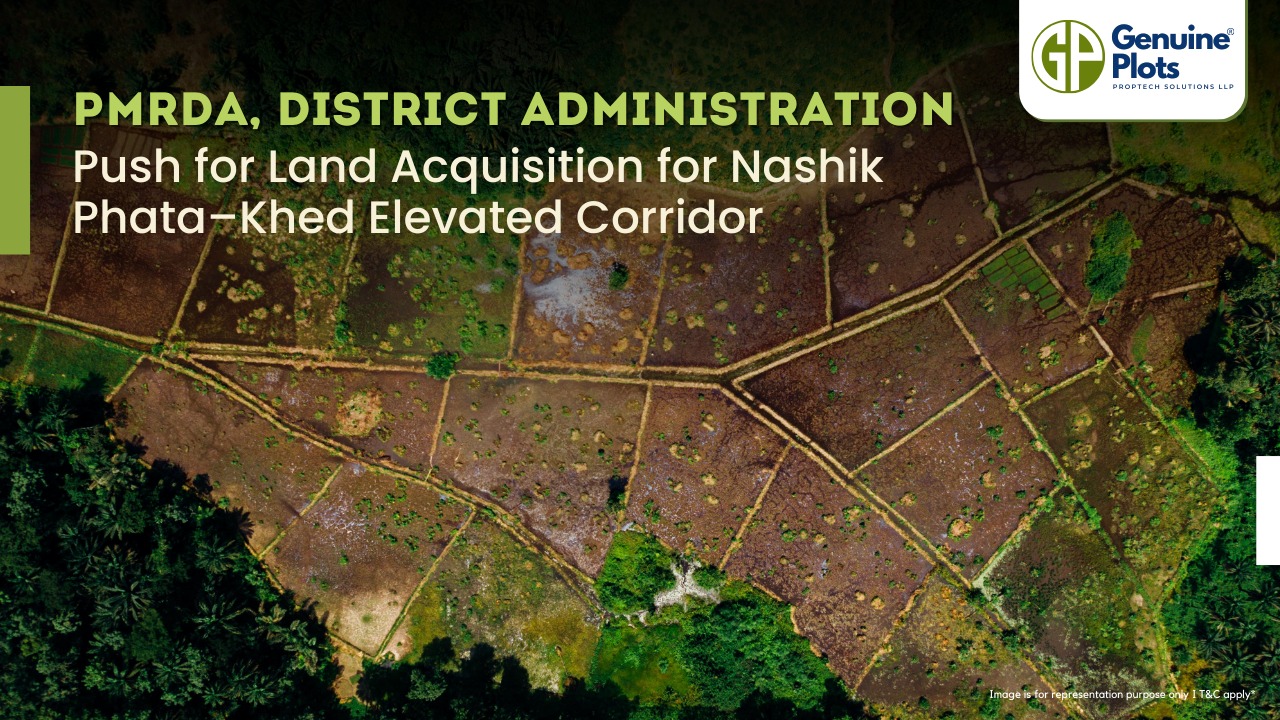
In order to alleviate traffic congestion along the Pune–Nashik highway, the district administration and the Pune Metropolitan Region Development Authority (PMRDA) have stepped up their efforts to finish the land acquisition for the upcoming Nashik Phata–Khed elevated corridor.
Project Overview
The 30-km elevated corridor between Nashik Phata and Rajgurunagar (Khed) will be developed by the National Highways Authority of India (NHAI). The project, estimated at ₹7,827 crore, is expected to significantly reduce travel time and traffic snarls on this vital route, especially near industrial hubs like Chakan.
Land Requirement & Acquisition
Authorities have identified around 14 hectares of land needed for the project, primarily for entry and exit points. Out of this, 9.74 hectares belonging to around 150 landowners within PMRDA limits—covering villages such as Nanekarwadi, Waki Khurd, Waki Budruk, Chimbali, Kuruli, Medankarwadi, and parts of Chakan have been earmarked.
In areas under the Pimpri-Chinchwad Municipal Corporation (PCMC), particularly in Bhosari and Moshi, land acquisition is being facilitated through Transfer of Development Rights (TDR) and Floor Space Index (FSI) transfers.
Financial Support
To cover remaining acquisition costs, a proposal seeking ₹262 crore in state aid has already been submitted. Authorities have assured that landowners will receive due compensation for the acquired land.
Challenges Ahead
Concerns have been voiced by a few Chakan landowners who demand payment for their holdings and assert that previous acquisitions for highway construction were never formally transferred. If these disagreements are not settled right away, the process may be delayed.
Road Ahead
The district administration has set a goal to finish the land acquisition by October 2025. Following the conclusion of the bidding process, construction is anticipated to start. Once the corridor is up and running, it should improve connectivity to the Chakan MIDC belt and beyond while also providing relief to thousands of daily commuters.
Source: Times of India
K Raheja Corp Subsidiary Acquires 7.43 Acres in Mahalunge, Pune for ₹195 Crore

Mumbai-based real estate major K Raheja Corp, through its subsidiary KRC Queens Pvt Ltd, has acquired 7.43 acres of land in Mahalunge near Hinjewadi, on the outskirts of Pune, for ₹195 crore, according to property registration documents accessed by CRE Matrix.
Mahalunge Real Estate Developers Pvt Ltd sold the land parcel, which was designated for a residential township project. On July 21, 2025, the deal was registered after ₹13.67 crore in stamp duty was paid.
As per the agreement, the plot is part of a notified integrated township project and offers a development potential of 1.51 lakh sq. metres (16.28 lakh sq. ft.), translating to a saleable area of approximately 17 lakh sq. ft.
Mahalunge, which is close to the busy Hinjewadi IT district, has become one of Pune's most popular real estate areas because of its better infrastructure and close proximity to job hubs.
This purchase complements K Raheja Corp's most recent expansion efforts. . Earlier in January 2025, the developer entered into an agreement to purchase 5.75 acres of land in Mumbai’s Kandivali area for ₹466 crore.
The newly acquired land in Mahalunge is expected to be developed into a premium residential township, leveraging the area’s connectivity and demand from professionals working in nearby IT and commercial hubs.
Property Division Now Possible for Just ₹100: A Major Relief for Families and Farmers

In India, family property disputes have long been a source of stress, frequently lasting years because of ambiguous ownership and expensive registration fees. Because formal land division was costly, time-consuming, and legally complex, many families have avoided it until now. Instead, verbal agreements were common, leading to misunderstandings, conflicts, and in many cases, prolonged court battles.
In a major reform, the government has now simplified the rules for legal land division, allowing families to complete the process officially at a cost of just ₹100.
The New Simplified Process
According to recent reports, the process has been made much more transparent and affordable:
- Family Register Update – Every family member must be listed in the Parivarik Register maintained by the local Circle Officer. Missing names will not be eligible for a share.
- Application Submission – Applicants need to provide ID proof, land ownership documents, and family relationship certificates, such as a ration card or family ID.
- ₹100 Stamp Paper – After approval, families can purchase a ₹100 stamp paper on which the division details, such as boundaries, shares, and names of each member, are recorded.
- Legal Ownership Issued – Once verified and registered, each member receives official ownership documents, enabling them to sell, mortgage, or apply for government benefits.
Benefits of the Reform
For farmers: Having clear land ownership makes it easier for them to access government programs and obtain agricultural loans.
For women, stronger property rights are ensured by the legal recognition of their share.
For Families: Makes land distribution clear and legally binding, preventing future conflicts.
A Step Towards Transparency
Experts note that this initiative will reduce land-related litigation and bring clarity to property ownership. This action is anticipated to greatly reduce the burden of the millions of cases involving inheritance and division that are still pending in Indian courts. Additionally, it supports the government's overarching objective of establishing an effective, transparent, and fraud-free land record system that benefits both urban and rural households.
Conclusion
All societal segments can now afford property division thanks to the government's simplification of the procedure and reduction of the cost to just ₹100. This reform ensures economic strength for farmers, legal empowerment for women, and peace of mind for families by simplifying and lowering the cost of what was once a complex legal process.
Sources:
SCMM News
The Times of India
Hindustan Times
Residents Request Halt to PMRDA’s Auction of Amenity Plots, Seek Civic Use
Residents have urged the Pune Metropolitan Region Development Authority (PMRDA) to halt its proposed auction of amenity plots, emphasising that the land should instead be utilised for civic purposes.
The availability of essential community infrastructure, such as parks, schools, health facilities, water systems, and public safety facilities, may be impacted by the sale of these plots, the locals stressed. Amenity plots are designed to satisfy public needs in accordance with regional planning regulations.
PMRDA has planned the auction of 35 amenity plots across various areas in the region, with a combined estimated base value of approximately ₹91 crore. Earnest money deposits for the plots vary according to their size and location.
Officials from PMRDA stated that the auction is being conducted in line with the Unified Development Control and Promotion Regulations (UDCPR). Additionally, they mentioned that some plots are set aside for public buildings like cultural centres and libraries. Similar amenity plot auctions have been held in the area before by PMRDA.
In spite of this, locals insist that these plots are essential for community growth and shouldn't be viewed as extra resources for making money. They have called for these lands to be preserved for civic purposes, citing the need for public infrastructure to support local population growth and development.
Source:TOI
Hiranandani Group & Krisala Group Join Forces for 105 Acre Landmark Township in Pune

Global professional services firm Colliers India has successfully facilitated a major joint development deal in Pune between two leading real estate developers — Hiranandani Group and Krisala Group.
The land parcel, spanning 105 acres in North Hinjewadi, Pune, is owned by Hiranandani Group. Colliers India suggested that a joint development model would maximise results for both parties when the company was first being considered for sale. The team created a well-balanced joint development agreement for a mixed-use project that would benefit both developers by minimizing up-front expenses and optimising potential returns.
The project is especially appealing because of the land's advantageous location. Professionals and locals alike can easily access North Hinjewadi thanks to the expanding infrastructure connectivity between Mumbai and Pune. Pune has a lot of potential for residential and commercial development because of the city's growing urban demand and the fast growth of its IT hubs.
In order to meet the needs of the present market and changing lifestyle trends, the future mixed-use township is designed to have high-end residential apartments, shops, and contemporary conveniences. It is anticipated that the partnership between Hiranandani Group and Krisala Group will establish a standard for excellent, punctual, and carefully thought-out developments in the area.
Source: The Reality Today
Recent Posts
Tags
Bhunaksha,
genuine plots,
Land For Sale,
Maharashtra Bhunaksha,
plots for sale,
Gunthewari,
Gunthewari Land,
Gunthewari Rules,
Extract Documents,
Plots and Lands,
Saat Baara,
Extract Saat,
Baara Utara,
Jamabandi,
property tax payments,
Gram Panchayat,
lower prices,
non-agricultural land,
Lower Investment Cost,
Gram Panchayat lands,
Fresh Land Settlements,
Growing demand,
affordable homes,
genuine p,
legal Land,
bungalow plots,
Konkan,
Maharashtra,
Purandar,
Pune,
Karnataka,
Bangalore,
Farm Land,
Kolkata,
Rajarhat,
Indore,
Chhatrapati Sambhajinagar,
Aurangabad,
Mundhwa,
Agricultural Land,
Farmhouse Plot,
Rules And Penalties,
Residential Plots,
NA PLots,
Residential NA Plots,
Commercial NA Plots,
Animal Husbandry Land,
Tathawade,
Vahivat Land Maps,
Vahivat,
Indian Land Records,
Ownership Rights,
Red zone,
PCMC,
Dehu Road,
Land Registration Rules,
Land Investing,
Infrastructure Growth,
Land Ownership,
Land Encroachment,
Panshet Dam,
Varasgaon Dam,
Verified Land,
Plot For Sale,
Land Investment,
Verified Plots,
Land Acquisiton,
Hydrological Survey,
Invest In Land,
Verified Land Plots,
Panshet,
Khadakwasla,
Land Rules,
Dakhil Kharij,
Land Registry,
Property Onwership,
Clean Title Check List,
Property Verification,
Digital Registry,
Farm Plots,
Agro Property,
Land Value Growth,
Urban Expansion,
Senapati Bapat Road,
Registered Land,
Agricultral Plot,
Purandar Airport,
Safe Investment,
Secure Property,
Plot Buyers,
Approved Plots,
Land ROI,
NA Approved Plots,
NA Land,
Welspun One,
Logistic Park,
Talegaon,
PMC Bharat Mandapam,
Urban Development,
Lohgaon,
Close To Nature,
Gated Community Plots,
Buy Land VS Gold Investment,
NRI Investment,
Future Ready Living,
Trusted Plots,
Plot Investment,
Authentic Land,
Safe Land Buying,
Mumbai,
Premium Plots,
MMR Land Investment,
MMR Infrastructure,
Metro Connectivity,
Plots in Mahabaleshwar hill station investment,
Mahabaleshwar land prices and future growth,
Scenic residential plots in Mahabaleshwar,
Mumbai 3.0,
Mumbai 3.0 vs Mumbai 2.0,
Mumbai property investment,
Real estate investment in Mumbai,
Upcoming residential projects in Mumbai,
CIDCO plot auctions,
CIDCO auction Navi Mumbai,
Upcoming CIDCO plot auctions 2026,
CIDCO land auction dates,
Navi Mumbai plot auctions,
CIDCO plots in Navi Mumbai,
CIDCO plots in Kharghar,
CIDCO plots in Ulwe,
NMIA investment opportunities,
Mumbai 3.0 plotted development,
Mumbai 3.0 real estate,
Plots in Mumbai 3.0,
Land investment in Maharashtra,
Residential plots near Mumbai,
Land appreciation in Mumbai 3.0,
Residential land for sale in Mumbai 3.0,
Altamura NA Plots,
Altamura Nadar City,
NA Plots in Nadar City,
Nadar City Plots,
Plots in Nadar City,
YEIDA plots,
YEIDA plots near Noida Airport,
Noida Airport plots,
Jewar Airport investment,
Yamuna Expressway plots,
YEIDA plot scheme 2026,
Noida Airport real estate,
Zepto,
Zepto effect,
D2C brands India,
Urban consumer trends,
Marketplace evolution,
Urban infrastructure growth,
YEIDA Residential Plot Scheme,
Yamuna Expressway Plot Scheme,
YEIDA Residential Plots,
Yamuna Expressway Authority,
Noida Investment,
Residential Plots in Lucknow,
LDA Plots in Lucknow,
Lucknow Real Estate,
LDA Approved Plots,
Plots for Sale in Lucknow,
Lucknow Property Investment,
Land Investment in Lucknow,
Residential Land in Lucknow,
Buy Plot in Lucknow,
Lucknow Development Authority,
Maharashtra Fragmentation Law 2025,
Fragmentation Act Maharashtra,
Maharashtra land law update 2025,
Maharashtra land reforms 2025,
Land subdivision rules Maharashtra,
Maharashtra agriculture land purchase rules,
Agricultural land purchase restrictions Maharashtra,
Can non-farmers buy agricultural land in Maharashtra,
NA conversion process Maharashtra,
Collector permission for land purchase,
farmland prices in Nagpur,
agricultural land price in Nagpur per acre,
farmland cost in Nagpur Maharashtra,
Nagpur agricultural land investment,
per acre agricultural land rate in Nagpur,
Tukdebandi Law Maharashtra,
Maharashtra Fragmentation Act update,
Land subdivision law Maharashtra,
Agricultural land division Maharashtra,
Maharashtra land reform ordinance,
Plot registration Maharashtra,
Farmland prices Nagpur,
Nagpur agricultural land rates,
Farmland per acre Maharashtra,
Agricultural land price Nagpur,
Farm land cost Nagpur,
Nagpur real estate trends,
Land investment Nagpur,
Avani Farms,
Avani Farms Pune,
Farmland near Pune,
Farm plots for sale,
Agricultural land investment,
Gated farmland near Pune,
NRI agricultural land rules India,
Can NRI buy agricultural land in India,
FEMA rules for NRI property purchase,
RBI guidelines for NRI land investment,
NRI farmland investment India,
Agricultural land purchase by NRI,
Maharashtra Fragmentation Act,
Minimum plot size in Maharashtra,
Guntha rules Maharashtra,
Agricultural land division rules,
Minimum land area for sale in Maharashtra,
Legal plot size in guntha,
Guntha conversion rules,
NRI land purchase in India,
Can NRIs buy agricultural land in India,
NRI property investment India,
NRI buying residential land,
NRI real estate guidelines India,
Investment tips for NRIs in India,
Mutation Entry Process,
Land Mutation in India,
Property Mutation Process,
Land Ownership Transfer,
1 guntha na plot prices in pune 2026,
1 guntha plot price in pune,
na plots in pune,
residential na plots pune,
guntha plot rate in pune,
na plot investment in pune,
plots near purandar airport,
1 Acre Land Price in Pune,
Pune Land Rates 2025,
Pune Land Price 2026,
Pune Acre Land Cost,
Land Value Pune,
Agricultural Land Price Pune,
gated community plots in Hinjewadi,
Hinjewadi plots for sale,
residential plots in Hinjewadi Pune,
premium plots in Hinjewadi,
plots near Rajiv Gandhi Infotech Park,
land for sale in Hinjewadi Pune,
Pune property investment,
plots for sale in Pune below 5 lakhs,
Pune rural land investment,
gated plotting projects Pune,
MIDC growth corridor plots,
Residential plots for sale in Hinjewadi,
Plots in Hinjewadi Pune,
Land for sale in Hinjewadi,
Residential NA plots Hinjewadi,
Hinjewadi real estate trends 2026,
Nashik land investment,
Trimbakeshwar land for sale,
Simhastha Kumbh 2026,
Simhastha Kumbh 2027 real estate impact,
Trimbakeshwar property investment,
Land appreciation in Nashik,
plots for sale in pune,
types of plots in pune,
residential plots in pune,
agricultural land in pune,
villa plots in pune,
NRI agricultural land purchase India,
NRI property investment in India,
Agricultural land rules for NRIs,
NRI real estate investment India,
NA plot meaning,
what is NA land,
NA land in Maharashtra,
land investment guide,
NRI agricultural land in Telangana,
Telangana land laws for NRI,
Telangana real estate laws,
NRI investment guide Telangana,
Legal compliance for NRI property,
NRI farmhouse purchase India,
RBI guidelines for NRI property,
NRI land buying rules,
Godham Eco Village,
Godham Eco Village for NRIs,
NRI land investment in India,
Investment plots for NRIs,
Secure land investment India,
NRI property buying guide,
plots in Pune,
NRI buying property in India,
NRI guide to buying land in Pune,
NRI land investment in Pune,
NRI property documents checklist,
Maharashtra land reform 2025,
Maharashtra land laws update,
Agricultural land rules in Maharashtra,
Buying agricultural land in Maharashtra,
Non-agricultural land conversion Maharashtra,
Maharashtra agricultural land rules 2024,
agricultural land purchase in Maharashtra,
non agriculturist land purchase rules,
who can buy agricultural land in Maharashtra,
Maharashtra land laws for non farmers,
Guntha based land rules,
Minimum guntha rule Maharashtra,
Maharashtra land laws,
Maharashtra agricultural land laws,
farmland investment Maharashtra,
buying farmland legally in Maharashtra,
NA conversion rules Maharashtra,
agricultural land eligibility criteria,
Property Mutation in India,
Land Record Update,
Revenue Records,
Property Ownership Transfer,
Mutation of Property,
Farmhouse Plots Near Pune,
NRI Investment in Pune,
Pune Real Estate,
Plots for Sale Near Pune,
Luxury Farmhouse Plots,
Pune plot scams,
Plot buying checklist,
Legal verification for plots,
NA plot verification,
Plot buying tips Pune,
Godrej Properties,
Evora Estate Panipat,
Luxury plots in Panipat,
Premium land investment,
Residential plots in Panipat,
Lodha Developers,
Lodha Developers Q3 acquisition,
Lodha land parcels Q3,
Indian real estate news,
New residential projects India,
Real estate investment news,
Premium housing projects,
Srijan Group,
Kolkata Tech Park,
Commercial Real Estate,
Real Estate Investment,
Real Estate Deal News,
NRI investment in India,
NRI land investment,
Plots for sale in India,
NRI property investment,
Can NRI buy residential plot in India,
NRI land purchase rules,
Residential plots for NRIs,
NRI real estate investment,
NRIs buying property in India,
Can NRIs buy plots in India 2026,
RBI rules for NRI property purchase,
NRI land investment rules,
MMR 3.0,
MMR real estate 2026,
Mumbai real estate market,
Navi Mumbai investment,
Thane property market,
Mumbai property trends 2026,
Land investment in MMR,
Mumbai smart city project,
Korea Mumbai partnership,
MMRDA infrastructure projects,
Korean investment in India,
MMR GDP growth,
MMR economic roadmap 2030,
Mumbai real estate,
Public private partnership projects Mumbai,
Investment opportunities in MMR,
Mumbai Metropolitan Region,
Mumbai urban development,
MMR 2047 vision,
Mumbai infrastructure projects,
Navi Mumbai development,
Goa property investment,
Invest in Goa 2026,
Goa real estate market 2026,
Best places to invest in Goa,
North Goa property,
Property appreciation in Goa,
Goa plots for sale,
Commercial property in Goa,
Buy property in Goa,
YEIDA plots 2026,
Residential plots in YEIDA,
YEIDA new scheme update,
Plots near Noida International Airport,
Yamuna Expressway Authority plots,
YEIDA housing scheme details,
Lucknow land investment,
Property in Lucknow,
Buy plots in Lucknow,
Nashik plots for sale,
Kumbh Mela 2026 Nashik,
Land investment in Nashik,
Nashik property market 2026,
Plots near Kumbh Mela Nashik,
Residential plots in Nashik,
Upcoming projects in Nashik,
Property appreciation in Nashik,
Maharashtra land investment,
Nashik Kumbh Mela 2026,
Kumbh Mela investment opportunities,
Infrastructure development in Nashik,
Plots near Nashik Kumbh Mela,
High ROI land investment,
MIHAN,
MIHAN Nagpur,
Nagpur Real Estate,
Agricultural Land Nagpur,
Nagpur Property,
Plots Near In MIHAN,
Pune residential plots,
best areas to buy plots in Pune,
Pune land investment,
investment plots in Pune,
buy land in Pune,
real estate investment in Pune,
Godrej Plots Doddaballapur,
Doddaballapur plots for sale,
Plots in North Bangalore,
Godrej Properties plots,
Residential plots in Doddaballapur,
Investment plots near Bangalore,
Gated community plots Bangalore,
Premium plots in Doddaballapur,
plots in Mahabaleshwar,
Mahabaleshwar villa plots,
farmhouse plots in Mahabaleshwar,
land for sale in Mahabaleshwar,
bungalow plots in Mahabaleshwar,
hill station property investment,
agricultural land in Mahabaleshwar,
premium land in Mahabaleshwar,
Plots in Pune under 3 lakhs for sale,
Budget residential plots near Pune,
Low cost plots near Pune highway connectivity,
plots in Pune under 3 lakhs,
farmland plots near Pune city,
Investment plots near Pune under budget,
Residential land near Pune,
Godrej plots in Pune,
Premium plotted development by Godrej in Pune,
Residential land for sale by Godrej,
Premium plot by Godrej,
Plots for sale in Hadapsar Pune,
Residential plots in Hadapsar,
Investment plots in Hadapsar,
Gated community plots in Hadapsar,
Ready to build plots in Hadapsar,
1 Guntha plot in Pune,
1 Guntha plot in Pune for sale,
1 Guntha plots near Pune city,
Residential 1 Guntha land in Pune,
Clear title 1 Guntha plot in Pune,
1 guntha plot price in village,
village plot rate per guntha,
affordable 1 guntha land in rural area,
residential plot in village Pune,
farmland plot price per guntha,
Residential 1 Guntha plot near Pune city,
Investment plots in Pune 1 Guntha,
Clear title 1 Guntha land in Pune,
Agricultural 1 Guntha plot near Pune,
1 Guntha plot in Pune Katraj for sale,
Residential plot in Katraj Pune 1 Guntha,
Katraj Pune land for home construction,
1 Guntha NA plot in Katraj Pune,
Pune Katraj plot near highway connectivity,
Gated plot project in Katraj Pune,
NA plots in Pune under 10 lakhs,
Affordable NA plots near Pune city,
NA residential plots in Pune,
NA approved plots in Pune under 10 lakhs,
Investment plots in Pune under 10 lakhs,
Residential NA plots near Pune highway,
Best plots in Pune below 10 lakhs,
Premium villa plots in Pune,
Residential villa plots in Pune near city outskirts,
Luxury villa plots in Pune,
Gated villa plot project in Pune,
Villa plot site visit in Pune,
NA plots in Pimpri Chinchwad for sale,
Residential NA plots in PCMC area,
NA approved plots in Pimpri Chinchwad,
NA land with clear title in PCMC,
NA plots near Pune Mumbai Highway PCMC,
Godrej Villa Plots Doddaballapur,
Godrej plotted development Bangalore,
villa plots in North Bangalore,
premium villa plots Bangalore,
Godrej Properties plots Bangalore,
Brigade Plots Malur,
Brigade Malur plots,
plots in Malur East Bangalore,
investment plots in East Bangalore,
residential plots in Malur Bangalore,
Brigade Group plots Bangalore,
land investment in East Bangalore,
gated community plots in Malur,
prestige plots devanahalli,
prestige plots in devanahalli bangalore,
plots for sale in devanahalli,
prestige plots investment,
premium plots in devanahalli,
residential plots near kempegowda airport,
What is NA plot in real estate,
NA land meaning in property,
NA approved plotsDifference between NA and agricultural land,
Buying NA plots in Maharashtra,
NA plot vs agricultural land,
Plot prices in Mysore,
Mysore infrastructure projects,
Mysore property investment,
Land investment in Mysore,
Plot investment opportunities,
land buying guide in goa,
buy land in goa,
plots for sale in goa,
legal process to buy land in goa,
property in goa,
residential plots in goa,
Nashik Simhastha Kumbh Mela 2026,
Sadhugram expansion Nashik,
Maharashtra Kumbh Mela planning,
Nashik Kumbh Mela preparations,
tourism development in Nashik,
plots in Nagpur,
Nagpur plot investment,
land for sale in Nagpur,
residential plots in Nagpur,
golden rules before buying plots in Nagpur,
Nagpur land investment,
plot investment in Nagpur,
land investment in Nagpur,
plots for sale in Nagpur,
best areas to buy plots in Nagpur,
buying plots in Nagpur,
plot purchase checklist,
legal checklist for buying land,
documents required for plot purchase,
NA plots in Nagpur,
Tattvana,
Tattvana in Kamshet,
Moregaon Farmland Estates,
farmland investment Pune,
agricultural land investment,,
farmland for sale near Pune,
farm plots in Pune,
gated farmland projects,
agricultural plots Maharashtra,
open plot vs NA plot,
difference between open plot and NA plot,
what is NA plot in India,
open plot meaning in real estate,
NA land vs agricultural land,
residential NA plots benefits,
land investment in India,
buying NA plot vs open land,
capital gains on agricultural land,
rural vs urban agricultural land tax,
agricultural land tax rules India,
capital gains tax India property,
is agricultural land taxable,
rural agricultural land exemption,
urban agricultural land tax India,
Runwal Enterprises Alibaug township,
Alibaug real estate,
coastal real estate India,
township projects in Alibaug,
luxury properties in Alibaug,
Mumbai weekend homes investment,
Alibaug property investment,
isprava south goa,
ultra luxury villas in goa,
south goa real estate,
luxury homes in goa,
isprava projects goa,
premium villas in south goa,
land investment advisory services,
secure land investment,
real estate advisory services,
verified land deals,
investment plots near Pune,
land buying guide India,,
#KanpurRealEstate,
#KDAPlots,
#KanpurProperty,
#RealEstateKanpur,
#PropertyTrends,
Gokul Plots investment,,
real estate investment Gokul,,
plots with high appreciation potential,
smart land investment strategies,
plots for sale in North Bangalore,
land investment Bangalore,,
emerging areas in North Bangalore,
residential plots Bangalore,,
Bangalore real estate investment,,
North Bangalore property trends,,
plots near airport Bangalore,,
HUDA plots in Gurgaon,
HUDA plots in Faridabad,
residential plots Haryana,
HUDA approved plots,
plots for sale in Gurgaon,
plots in Faridabad investment,
Prestige Marigold plots,,
Bangalore plotted developments,
land investment Bangalore,
best plots in North Bangalore,
#PlotsForSaleInNellore,
#NelloreRealEstate,
#NellorePlots,
#RealEstate2026,
#PropertyInvestment,
#NelloreProperty,
#AndhraPradeshRealEstate,
GMADA E Auction 2026,
GMADA plots Mohali,
plots in Mohali for sale,
GMADA Mohali auction process,
buy plots in Mohali,
Punjab property investment,
GMADA scheme 2026,
Mohali real estate,
HSVP plots 2026,
HSVP plot investment,
HSVP plots Haryana,
land investment benefits,
residential plots investment,
government approved plots,
buy plot in New Chandigarh,
flats in New Chandigarh,
New Chandigarh real estate,
property investment in New Chandigarh,
residential plots in New Chandigarh,
apartments in New Chandigarh,
#WaveCityGhaziabad,
#GhaziabadPlots,
#PlotsInGhaziabad,
#NCRRealEstate,
#RealEstateInvestment,
#ResidentialPlots,
APIIC vacant plots,
APIIC plots for sale,
industrial plots in Andhra Pradesh,
commercial land for MSMEs,
startup investment plots,
APIIC industrial land,
HUDA plots,
HUDA plots investment,
property appreciation,
plot investment benefits,
high return property investment,
land appreciation,
#GDAPlotsInGhaziabad,
#PlotsForSaleInGhaziabad,
#ResidentialPlotsGhaziabad,
#InvestmentPlots,
#RealEstateGhaziabad,
#GDAApprovedPlots,
#BaliProperty,
#PropertyInBali,
#IndiansInBali,
#BaliRealEstate,
#InternationalPropertyInvestment,
buy plots in Sarjapur Road Bangalore,
plots in Sarjapur Road,
residential plots in Sarjapur Road,
land for sale in Sarjapur Road Bangalore,
investment plots in Bangalore,
plots near IT corridor Bangalore,
how Indians can buy property in Bali,
buy property in Bali for Indians,
Bali property investment,
property in Bali for Indian buyers,
Bali real estate guide,
foreign property investment Bali,
legal checks before buying property in Bali,
Indians invest in Bali property,
due diligence for Bali property,
Bali real estate for Indians,
Bali property legal verification,
verified farmland plots,
100% verified farmland plots,
farmland investment India,
legal farmland plots,
farmland plots for sale,
Konkan land investment,,
high-growth corridors Maharashtra,
land investment 2026,
plots for sale in Maharashtra,



